Myfanwy Thomas’s amnesia
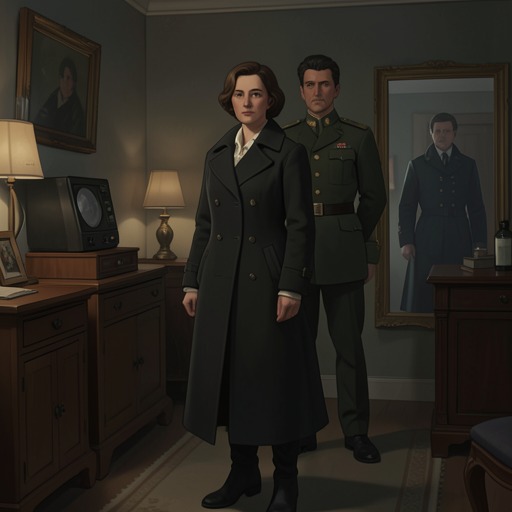
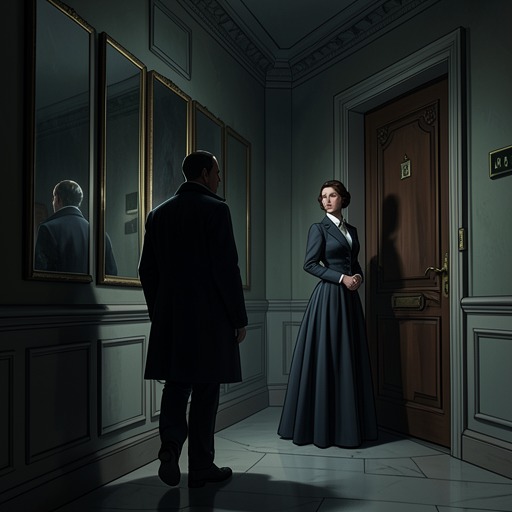
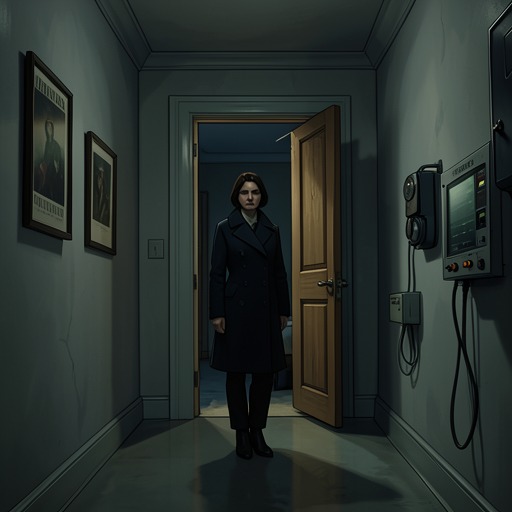
The RookMyfanwy Thomas’s amnesia separates memory from the person who must live its consequences. After her memories and former personality are erased, a new Myfanwy wakes in the same body, without the experiences that explain who she was or what the Checquy expects of her. The loss makes her vulnerable to forces that know her history, but it also turns identity into an active problem: she must decide what to do with an inherited life, and whether that life can become hers.
The loss and its preparation
The amnesia is anticipated before it is understood. In a letter to her successor, the former Myfanwy writes that she knows she will lose her memory, though she does not know why, and intends to make the event easier for the person who comes after her. She leaves instructions that the successor should find somewhere safe and open the next letter. The correspondence makes preparation possible, but it cannot preserve the person who wrote it; it addresses someone who will share her body and responsibilities while lacking her memories.
The new Myfanwy first encounters that inheritance as disorientation. She has no reliable sense of who she was, whether she had family or friends, or what her position as Rook means. Even the word Rook prompts a fleeting question about whether it refers to a bird. She tries to gather ordinary clues about herself, but immediate concerns have displaced any settled understanding of her past. The gap between her body and her knowledge of it is the starting point from which she has to reconstruct a life.
The letters also explain why the new Myfanwy chose to continue rather than take the alternative life prepared for her. The former Myfanwy assumes that a severe manifestation of her successor’s power—an ability to disrupt another person’s control of their body—will have prompted the choice. She describes the first emergence of that ability as an undeniable opening, one that can follow intense stress and pain. The successor’s decision therefore links the mystery of her identity to the discovery of a power she did not know she possessed.
A foretold rupture
The former Myfanwy learns from a prediction that her memories will be taken and that someone new will open her eyes in the rain, surrounded by bodies. The warning gives the eventual loss a shape before it occurs, but it does not give her control over it. She imagines the successor as a person who will not know who she is, and says that thinking about this future stranger—someone more alone than herself—helps her endure the night and motivates her to write the letters.
The prediction turns a private disaster into a relationship across the break. The former Myfanwy cannot meet or guide her successor in the ordinary way; she can only leave a record and anticipate the loneliness that record cannot erase. Her letters are thus both practical instructions and an acknowledgment that the person who will inherit her life is not simply a continuation of her remembered self. The new Myfanwy receives not memories, but a warning, a set of responsibilities, and evidence that someone tried to prepare for her arrival.
Living inside an inherited identity
The amnesiac Myfanwy enters the Rookery and begins conducting business as Rook Thomas. The Checquy’s response makes clear that recovery of memory would not be the same as freedom: she is privy to state secrets, and simply returning to work gives her access to information outsiders must not know. Her superior considers her a security risk and says that leaving the organization was never an option. Even a possible secluded retirement is only an arrangement to be contemplated by someone with authority over her, not a choice she can assume for herself.
The new Myfanwy is also unsure how to perform the identity everyone recognizes. People have described the former Rook Thomas as painfully shy but bold in policy, quiet and withdrawn yet capable of rising to the Court. The successor knows that she is physically the same person and would pass physical tests, but she worries that acting differently could expose her. At the same time, she reasons that Rook Thomas has latitude to behave as she likes if she gets the job done. Her uncertainty is not only about what she remembers; it concerns whether outward continuity and effective action are enough to make the inherited role hers.
She nevertheless develops a working life amid the missing past. She describes having lived in a drug-induced fog and being helped to find a flat and a job, with much of her attention consumed by work and detox. She rarely goes out into the wider world and remains nervous there. Memories of her family are vague, more like a dream than a secure account. The result is an uneven continuity: she can take up the work attached to her name while feeling estranged from the experiences and ordinary relationships that would usually make that name familiar.
Memory returns as relationship and danger
The former Myfanwy’s loss is not merely predicted; Ingrid Woodhouse witnesses its onset. Ingrid recalls finding Rook Myfanwy Thomas in her office, weeping and saying that she could feel her memories evaporating. The former Myfanwy says that her thoughts are drifting away and that the person responsible has taken them from her. As she tries to warn Ingrid that she must leave because there is a traitor, the identity she has worked out slips away before she can disclose it. The account shows the loss erasing not only personal history but also knowledge crucial to immediate survival.
Even as the memories disappear, the former Myfanwy tries to prepare for departure. She tells Ingrid that she has done something to her brain and believes she has a little time before losing everything; she has to go while she still can. Ingrid later reports that this was the last she saw of her. She leaves the office, collects her daughter, and spends the weekend behind locked doors, uncertain what will happen. When the successor appears at the Rookery on Monday, Ingrid does not know how to interpret the return. For her, the same face and name do not settle whether this is the woman she knew.
The new Myfanwy initially answers that uncertainty with concealment. When Ingrid reveals that she knows about the memory loss, Myfanwy uses her power to restrict Ingrid’s bodily control, leaving her able to speak, see, and hear, and asks how long Ingrid has known. Once Ingrid explains that she witnessed the former Myfanwy’s collapse, the successor recognizes a connection between the person in the memory and herself. She releases her hold and tells Ingrid that she opened her eyes standing in the rain—the predicted scene now understood as part of her own beginning.
A reunion with Bronwyn gives the new Myfanwy a different kind of evidence. She recognizes her sister’s features in a taller woman with long, highlighted blond hair, though the revelation stuns her. Myfanwy explains that she left when she was young and that much has happened since; she has difficulty approaching family life because she spent so long focused on work and detox, and her memories of her relatives remained indistinct. When she and Bronwyn embrace, Myfanwy senses their genetic connection through the flare of her power and recognizes her own patterns reflected in her sister. She concludes that this sister belongs to her as much as to the former Myfanwy, and that the body is as much hers as Thomas’s. The recognition lets her relax into a self she can claim without recovering the earlier person’s memories.
That claim does not restore a complete family past. Bronwyn was three when Myfanwy left and does not really remember her, while Jonathan was eleven and, Myfanwy believes, had been close to her. She has no clear account of what to tell him. The contrast makes the limits of recovery concrete: a biological relation can become an immediate bond, but shared history cannot be summoned merely because it once existed.
Repetition, concealment, and continuity
The novel returns to the possibility of another memory loss. The new Myfanwy asks a prophetic duck whether she will lose her memory within a month; its answer is yes. She covers her face and recalculates her schedule, recognizing that the event she had expected might someday arrive is now only weeks away. The recurrence changes the meaning of the first amnesia: it is not a completed misfortune safely left behind, but a threat that may again separate her from everything she has become.
In a later confrontation, Conrad Grantchester identifies Norman Goblet as the person responsible for Myfanwy’s current amnesia. He explains that Norman had canceled her powers and erased her personality, on the assumption that an amnesiac Myfanwy would be less likely to attack. According to Grantchester, the usual result is a period in which the person can do nothing while the personality dissolves and a more pliable person emerges. Myfanwy’s response breaks that expectation: she screams and launches a psychic assault that leaves Grantchester and Norman incapacitated for several minutes, then disappears into the Rookery. The loss is therefore also the immediate circumstance of her escape, not simply a condition imposed upon her.
After these revelations, Myfanwy chooses not to disclose the full truth to the Court. She has already been deliberately vague about Norman’s abilities and has avoided linking her injuries to the earlier episode. Though hiding the truth exhausts her and she had considered explaining everything when exposing Grantchester, she decides that she likes her job and believes she can perform it well. She doubts that Court members would let her keep it if they knew the truth. Her choice preserves her working identity, but it also keeps the amnesia’s consequences within the secrecy and power structures that made her vulnerable.
The state of amnesia thus exposes a tension between continuity and replacement. The Checquy treats the returned Rook as the holder of a dangerous office and its secrets, while the former Myfanwy’s letters address her as a distinct successor who must make choices without a past. A body, name, ability, and job cross the divide; remembered experience does not. The new Myfanwy’s strongest claim to herself emerges not from recovered autobiography but from decisions made in the present, from the work she elects to continue, and from a bond with Bronwyn that she experiences as genuinely her own.