Panic Lines
The RookPanic Lines are the Checquy’s concealed information and alert network: they connect the organization to government officials and key institutions, channel reports of unnatural events, and warn its personnel when a crisis breaks. They let the Checquy gather intelligence without openly disclosing its existence, though the system’s reach also brings a torrent of calls and practical work after an incident.
Information and Institutional Links
The Checquy receives far more information than it can use directly. Analysts sift through reports, figures, and files to identify patterns, including signs that an apparently ordinary matter such as the wheat market may be affected by a supernatural actor. Panic Lines extend this information flow into government: high-placed officials at national and local levels receive discreet briefings that are deliberately specific enough to prompt action but vague enough to avoid openly describing supernatural threats.
The briefings prompt calls from a wide range of sources, including police chiefs, ministers, military officers, councillors, intelligence agents, churchmen, surgeons, diplomats, and hospital administrators. The Checquy also places people within key organizations to keep it informed of significant developments. Panic Lines therefore operate as part of a broader network of reporting and institutional contacts, rather than as a single public-facing hotline.
Secrecy and Emergency Alerts
The Checquy maintains secrecy even while drawing information from outside its own ranks. Its name does not appear on documents beyond the organization, few outsiders know it exists, and information reaches it through indirect channels. Its computer network is not connected to external systems. This separation allows the Checquy to receive reports without making itself readily traceable through ordinary communications infrastructure.
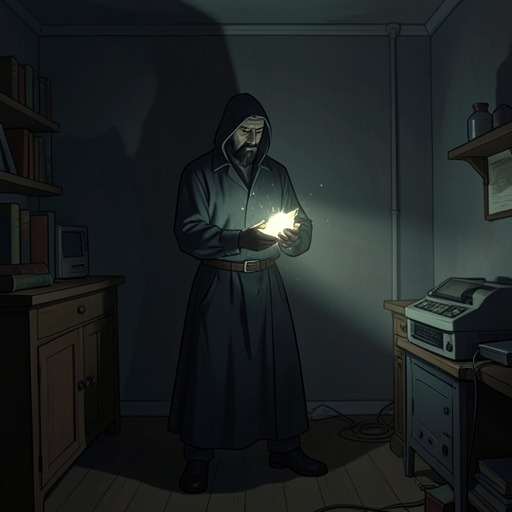
Within the organization, the alert system is conspicuous to the people it serves. The lights in the Rooks’ offices and quarters are connected to Panic Lines, so a sudden failure of a bulb can signal an incoming incident. In a major emergency, the desk phone flashes a red light and rings with a distinctive tone; a mobile phone rings differently, and a message appears on both computer screens. The multiple signals make an alert difficult to miss, though they also train staff to react sharply to ordinary interruptions.
Crisis Response and Its Aftermath
The Liverpool ectoplasmic-animal emergency shows how an alert becomes an operational response. Myfanwy first noticed the office lights flashing, then received the same warning through her desk phone, mobile phone, and computer screens. Reports described civilian deaths, property damage, and uncontrolled animals around the woman whose manifestation had precipitated the crisis. The shift commander of the Crisis Office in London contacted her, while Liverpool teams were already deployed or on their way.
Once the immediate emergency had been contained, the work continued through the same institutional connections. After Myfanwy ordered services restored, calls arrived from senior officials and agencies including the Home Office, the Department for Environment, Food, and Rural Affairs, Liverpool City Council, Liverpool Police, the power company, and the Royal Society for the Prevention of Cruelty to Animals. The incident itself lasted about half an hour, but managing its aftermath took more than an hour and a half. Panic Lines thus serve both as an early-warning mechanism and as an entry point into the complicated process of coordinating response, managing public exposure, and answering to outside authorities.