Reading Police Station Flesh Cube Incident
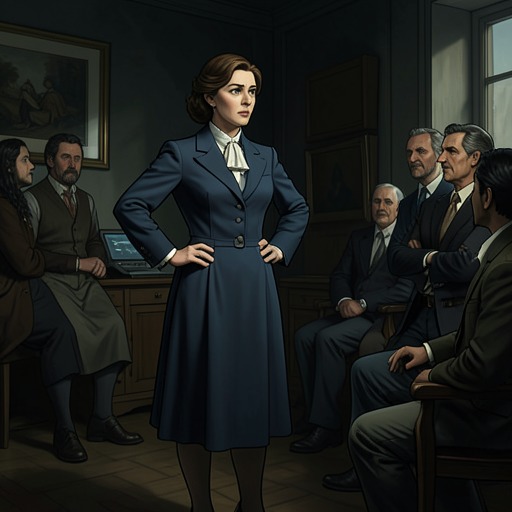
The RookThe Reading Police Station Flesh Cube Incident is a confrontation between the Checquy and a Grafter biological weapon: a mass of flesh that absorbs its victims, attacks the response team, and nearly kills Rook Thomas. Its decisive reversal comes when Myfanwy, trapped inside the cube and close to losing control, unleashes her powers against it. She survives and destroys the weapon, but the incident leaves several members of the Checquy dead and exposes a dangerous new fact about her abilities.
Discovery and Escalation
The Checquy’s initial picture of the threat comes from Pawn Carmine, whose millimeter-wave vision detects a cube of flesh filling the police station’s front room. He reports no other life forms inside. When Cyrus asks whether the people in the building have been absorbed, the team can only infer that they have: the flesh presses against the windows, blocking sight into the room. What appears at first to be a contained mass is therefore already both a weapon and evidence of what it has done.
As the team watches the cube through cameras mounted beneath the troops’ guns, it begins to move. Pawn Motha reports that its coils of muscle are flexing and its bones shifting. The changes are not merely internal: the cube suddenly strikes the incident trailer, and tentacles extend through the police-station wall to latch onto it. Carmine warns that the trailer is being pulled toward the building. The response team’s mobile command point has become part of the weapon’s reach.
Myfanwy orders everyone out and directs the Checquy troops to fire on the tentacles, asking where Pawn Steele is with his chainsaws. A mental prod to the nervous systems of those around her helps galvanize the evacuation. The order shifts the scene from observation to immediate survival: the team must escape the trailer while preventing the cube from dragging it into the station.
The Failed Counterattack
The retreat does not immediately break the cube’s hold. The trailer is dragged almost to the police station’s steps before concrete bollards catch it, and Pawn Steele climbs onto its roof in plastic armor to attack one of the tentacles with a chainsaw. His blow severs it, and the trailer stops moving; for a moment, the strike appears to have worked. But the cut end does not fall inert. It shudders, sprouts writhing tendrils, and seizes Steele, flinging away his chainsaw. The new growth reaches Myfanwy and a bodyguard as well, binding them and hauling them toward the station. The apparent success has instead brought the weapon’s danger directly onto its rescuers.
Captured Inside the Cube
Dragged through a breach in the police-station wall, Myfanwy is pulled into a crevice in the cube and loses sight as its pressure overwhelms her. Inside, she cannot draw breath to scream. The mass is trying to incorporate her into the same fused body as its other victims, but her experience of the victims’ many nervous systems is not identical to theirs: she recognizes that their impulses are being forced together, while her own awareness remains distinct. Recalling the colony encountered in Bath, she sees the difference between bodies anesthetized and relatively willing there and the bodies now enslaved by the cube. The threat is not simply to consume her, but to submerge her sense of self in its disordered collective.
Myfanwy’s ability to distinguish herself from the competing sensations gives her a brief chance to resist. She sends out a wave that stills the surrounding muscles, then tries to locate the source directing the cube and cut it off from the rest. She also attempts to overwhelm its brain with sensations, drawing on a technique Thomas had described. The brain absorbs and redistributes the assault among the lobes taken from the victims, however, and the effort leaves Myfanwy exhausted. As her breath runs out and the cube begins to invade her nervous system, she loses control of her limbs and then of her powers.
At the brink of unconsciousness, those powers erupt without deliberate direction: a chaotic torrent of orders and impulses strikes the flesh holding her. The cube’s grip changes, and Myfanwy is levered upright as its tendrils withdraw. She regains enough air and awareness to see the walls peeling away. The reversal comes not from a controlled attack but from the uncontrolled force released as she is losing command of herself.
Destruction, Losses, and Aftermath
The cube dissolves around Myfanwy, breaking down into liquid as its internal framework of bones falls away and its brain disintegrates. The weapon’s destruction is the incident’s decisive reversal: Myfanwy emerges alive, though her skin is reddened by exposure to the cube’s corrosive contents. Watson explains that her immune system protected her, but only incompletely. The team understands that survival was a matter of timing as well as resistance; Motha says the acid would soon have caused serious damage had Myfanwy not destroyed the cube from within.
The Checquy does not emerge intact. Myfanwy asks about the colleagues pulled into the cube, including her bodyguard and Steele, and Ingrid tells her they did not survive. Myfanwy recalls their bodies among the remains and recognizes that the victims inside the weapon were consumed. Her response is not triumph but melancholy: while resisting the cube, she had experienced memories belonging to those it had absorbed, making their deaths more than an abstract operational loss.
The incident also changes the danger surrounding Myfanwy. She concludes that the cube was a Grafter weapon and that her ability to destroy it could make her a target if the Grafters learned what had happened. She considers the possibility of an ordinary gun as well as another biological attack, and cannot assume that everyone present is loyal: Ingrid, like the others, has not yet been checked for Grafter implants. Before reporting the Grafters’ involvement in the attacks to the Court, Myfanwy decides that she must establish whom she can trust. The weapon is gone, but its defeat exposes a new vulnerability and leaves the Checquy facing both an internal screening problem and a renewed threat from its enemy.