Reading flesh cube
The RookThe Reading flesh cube is a Grafter weapon whose human material is not merely contained within it: the cube moves, attacks, and attempts to incorporate Rook Thomas. Its appearance at a Reading police station turns an emergency response into a confrontation with an active mass of absorbed people, and its destruction comes when Thomas’s powers erupt beyond her control.
Identification and scale
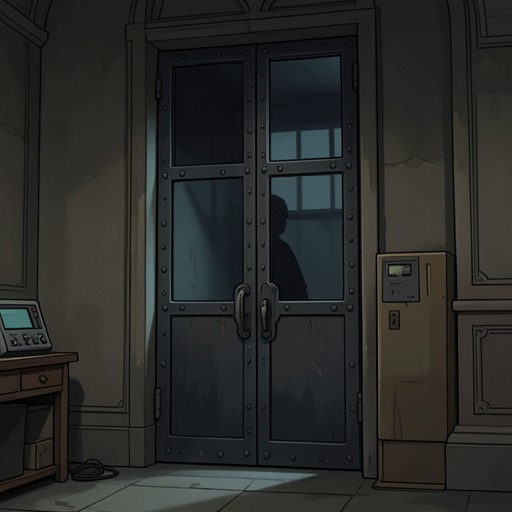
The Checquy first learns what is inside the police station through Pawn Carmine, whose millimeter-wave vision detects a cube of flesh and no other life forms in the building. The workers infer that the people previously inside have been absorbed. Flesh pressed against the windows blocks the view from outside, making the weapon’s surface both its visible boundary and the barrier to discovering what remains within it.
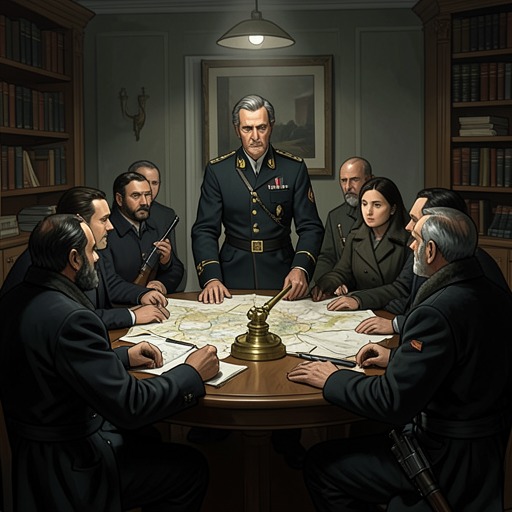
The cube measures five meters by four meters and two and a half meters high, large enough to fill the front room. The detailed dimensions turn an initially reported anomaly into a physical presence that dictates the terms of the response. A little drone supplies the measurements while the team waits for Pawn Motha, who has magnetic-resonance ability, to assess what lies inside.
Threat and attempted containment
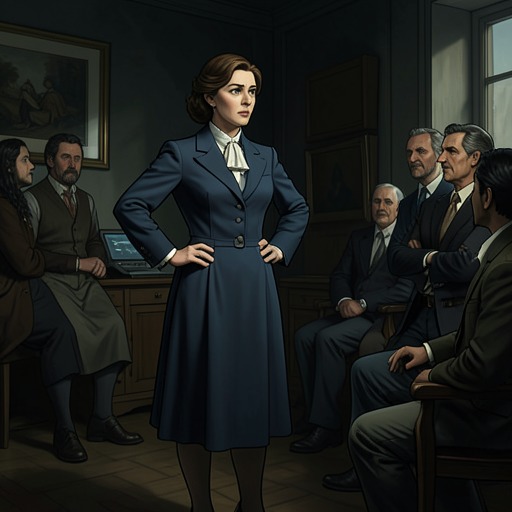
Rook Thomas concludes that the people in the cube cannot be retrieved. She directs the team to end the situation quickly and calls for the cube and site to be destroyed. The decision frames the object not as a container from which victims can simply be released, but as a Grafter weapon that must be stopped. Thomas’s concern that civilians have been plugged into a Grafter war machine underscores the human cost behind its military function.
The cube does not remain inert while the Checquy considers its options. As its muscle coils flex and its bones shift, the team sees signs that the mass is reorganizing itself. It then sends muscle tentacles through the police-station wall and fastens them to the incident trailer, pulling the Checquy personnel toward the building. The response becomes a struggle to escape and sever the connections, not a controlled demolition of a stationary object.
Pawn Steele attacks one tentacle with a chainsaw and cuts through it, briefly stopping the trailer’s movement. But the severed end sprouts tendrils, which seize Steele and Rook Thomas and pull them toward the station. The attempt to disable the cube therefore demonstrates its capacity to respond to injury and continue the attack; what appears to be a successful cut instead opens a new route for its tendrils to spread.
Inside the cube and its destruction
Once drawn inside, Thomas experiences the cube as a collection of competing nervous systems. The scene recalls the colony at Bath, but the contrast is decisive: there, the minds and bodies had been anesthetized, whereas here they are being forced together. The cube’s human contents are thus not only material components of a weapon; their conflicting impulses make its interior a site of imposed control.
Thomas tries to use her ability to examine the mass, as she had done at Bath. Instead, she encounters not only what its constituent bodies are doing but their accumulated memories. As she loses control of her limbs and then her powers, the powers surge outward in chaotic orders and impulses. The cube’s grip changes, and Thomas is lifted onto her own legs as the surrounding flesh begins to dissolve.
The weapon breaks down into fluid, leaving a skeletal framework and gray tissue before those remnants dissolve as well. Thomas survives, and the remaining Checquy team finds her inside the police station. The outcome is not a planned victory by the response team: the attempt to cut through the cube has failed, and its destruction coincides with Thomas’s involuntary loss of control over her powers.
Function in the Reading incident
The cube makes the costs of the Grafter war machine physically inseparable from the threat it poses. Its immense size and capacity to move give the weapon agency in the confrontation, while its human contents complicate any simple distinction between object and victim. The shift from remote observation—measurements, visual reports, and plans—to Thomas being pulled inside makes that distinction immediate and perilous.
Its destruction also marks a turning point in the Checquy response: Thomas’s powers can affect the weapon, but only when she herself is nearly overwhelmed. The Reading incident therefore presents the cube as both a tactical threat and an imposed human assemblage, with the effort to stop it exposing the danger of treating people as components of a weapon.
Threat and attempted containment
Rook Thomas concludes that the people in the cube cannot be retrieved. She directs the team to end the situation quickly and calls for the cube and site to be destroyed. The decision frames the object not as a container from which victims can simply be released, but as a Grafter weapon that must be stopped. Thomas’s concern that civilians have been plugged into a Grafter war machine underscores the human cost behind its military function.
The cube does not remain inert while the Checquy considers its options. As its muscle coils flex and its bones shift, the team sees signs that the mass is reorganizing itself. It then sends muscle tentacles through the police-station wall and fastens them to the incident trailer, pulling the Checquy personnel toward the building. The response becomes a struggle to escape and sever the connections, not a controlled demolition of a stationary object.
Pawn Steele attacks one tentacle with a chainsaw and cuts through it, briefly stopping the trailer’s movement. But the severed end sprouts tendrils, which seize Steele and Rook Thomas and pull them toward the station. The attempt to disable the cube therefore demonstrates its capacity to respond to injury and continue the attack; what appears to be a successful cut instead opens a new route for its tendrils to spread.
Inside the cube and its destruction
Once drawn inside, Rook Thomas encounters the cube not as a single organism but as a crush of competing nervous systems. The experience recalls the colony in Bath, yet the difference is crucial: the minds and bodies there had been anesthetized, while the people inside the Reading weapon are forced together and enslaved. The cube’s human contents are therefore not passive material. Their nervous systems remain active within an imposed collective structure, and that conflict overwhelms Thomas’s perception.
Thomas tries to examine the mass as she had examined the colony at Bath. Instead, she senses not only what the bodies are doing but everything they have ever done; accumulated memories flood into her. As she loses command of her limbs and then her powers, those powers erupt as a chaotic torrent of orders and impulses projected into the surrounding flesh. The cube’s grip changes, and Thomas is brought upright as the walls of meat peel away.
The weapon then dissolves, leaving a framework of bones and gray tissue before those remnants break down as well. Thomas survives inside the police station, where her large bodyguard and members of the Checquy team, including Ingrid and Pawn Alan, find her. Its destruction is not a controlled result of the team’s plan: after the chainsaw attack fails to stop it, the cube comes apart as Thomas’s powers surge beyond her control.
Significance as a weapon and an assemblage
The Reading flesh cube makes the human cost of the Grafter war machine impossible to separate from its threat. Its scale, movement, and capacity to attack give it an active role in the confrontation, but the mass is also made up of people whose nervous systems and memories remain present. The distinction between object and victim therefore collapses: the Checquy faces a weapon that is dangerous precisely because human beings have been incorporated into it.
The encounter’s progression sharpens that tension. At first, the cube is apprehended through measurements and reports from beyond the police station; then it reaches out, pulls the incident trailer toward itself, and draws Rook Thomas inside. Thomas’s involuntary power surge coincides with the weapon’s destruction, turning the resolution into no simple demonstration of command. The cube is stopped, but only after its human contents and Thomas herself have become part of the struggle. Its presence exposes the peril of treating people as components, while the means of ending it shows how little control the Checquy has over the forces it must confront.