The Checquy’s internal betrayal crisis
The RookThe Checquy’s internal betrayal crisis is the threat that a member of the organization’s own ruling Court has turned against Myfanwy Thomas. Its defining contradiction is that the Checquy exists to protect Britain from dangers hidden from ordinary people, yet Myfanwy’s warning identifies its most intimate danger as someone she should be able to trust. Because the attack is tied to an attempt to erase her memory, the crisis puts not only her life but also her identity and confidence in the institution at risk.
Origins of the Threat
The former Myfanwy’s letter prepares her successor for two linked events: memory loss and an attack by men wearing latex gloves. She insists that the gloves matter, though the successor does not yet understand why; the detail signals that the attack has implications beyond a straightforward assault. The writer cannot identify the person responsible or explain the motive, and allows that the decision to remove Myfanwy might concern something she has not yet done. Her warning therefore presents the danger as both immediate and unresolved: the betrayal is real, but its source and purpose remain concealed.
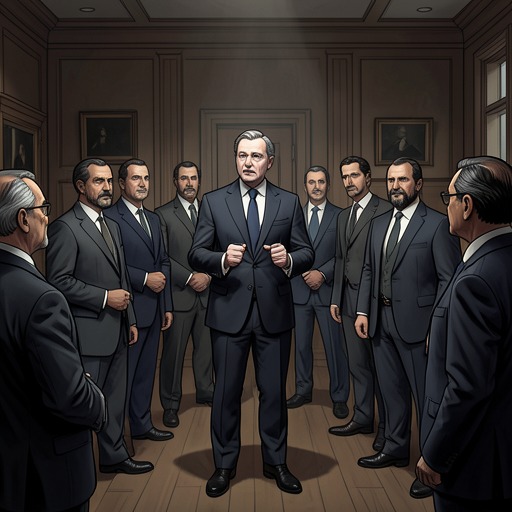
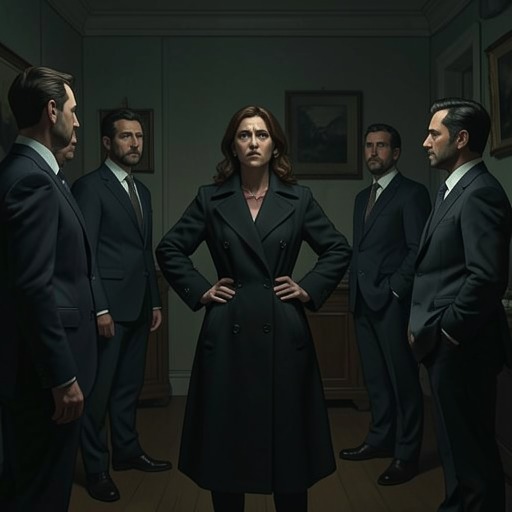
The uncertainty is sharpened by the possibility that the attacker is someone Myfanwy ought to trust. She does not name a culprit, and says that a psychic has established only that there are seven candidates: the other members of the Court. The warning narrows suspicion to the ruling circle without resolving it. Instead of furnishing the successor with a reliable name, it makes the organization’s highest level itself the field of danger.
Why Betrayal Threatens the Institution
Myfanwy’s alarm rests on the Checquy’s own history and character. In her account, internal assassination of Court members is rare despite the organization’s centuries of existence, its military function, its secrecy, its members’ powers and training, and the Court’s extensive authority. She treats the attack against her as a breach of an established boundary, not as an ordinary hazard of office. Her insistence that such violence is not done, and especially should not be done to her, makes the attempted removal a challenge to the institution’s internal order as well as a threat to an individual.
That danger is especially consequential because Myfanwy is proud of the organization and believes in the work it performs. She describes the Checquy as protecting ordinary people from threats they cannot be told about, and understands her own administrative work as part of that defense even though she does not go into the field. Her concern is therefore not simply that a colleague may harm her. If a member of the Court turns against another, she reasons, something is rotten at the organization’s core, and everyone may be in danger. Personal suspicion becomes a judgment about institutional reliability.
Memory, Exposure, and Self-Protection
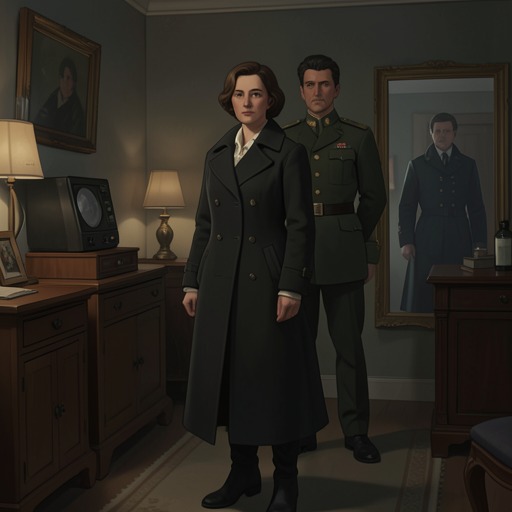
The effort to destroy Myfanwy’s memory makes the crisis an attack on continuity as well as safety. The former Myfanwy writes with the expectation that her successor may encounter the consequences without possessing the memories needed to interpret them. Her letters, copied into the coats and jackets she owns, are a practical attempt to leave evidence where the future Myfanwy might find it. She cannot ensure that the recipient will read them, but tries to make her partial knowledge useful. The warning’s form thus reflects the very rupture it anticipates: one version of Myfanwy tries to protect a later version who may not recognize her past as her own.
The former Myfanwy considers requesting a full-time bodyguard but rejects the idea because explaining the request would invite speculation and constant protection would draw attention to the danger. She also believes a bodyguard would not help. Her decision exposes the limits of ordinary security inside a secret organization whose members possess unusual capabilities and whose suspected enemies may be drawn from its leadership. Protection risks revealing that Myfanwy knows she is threatened, while secrecy leaves her exposed. The crisis offers no uncomplicated safeguard.
Historical Contrast and Institutional Stakes
The Checquy’s history supplies a contrast to this concealed internal danger. In 1677, Grafters brought their creations onto the Isle of Wight, beginning a supernatural war on British soil. The Checquy responded with its Pawns under the Rooks’ command; the fighting lasted three weeks and killed hundreds of civilians. The conflict was devastating, but it was an external attack, met openly within the organization’s own understanding of its purpose.
After the invasion ended, the Checquy negotiated a treaty with the Belgian ruler that required the Grafters to be dissolved. The organization believed the danger had been eliminated, and the settlement helped establish a picture of the Checquy as a force able to identify an enemy and contain it. The betrayal crisis reverses that reassuring pattern: here, the threat is not readily separated from the institution tasked with confronting it. The danger within the Court is harder to answer precisely because trust and authority, ordinarily the means of protection, may be part of the vulnerability.
From Concealment to the Prospect of Alliance
The later encounter between Myfanwy and Graaf Ernst von Suchtlen reveals that institutional mistrust extends beyond the Checquy’s own ranks. Von Suchtlen explains that the Grafters did not intend to invade Britain again; their display of force concealed a different purpose. He describes a world in which a country’s conquest could no longer be hidden, while the existence of supernatural organizations still had to remain secret. Their conflict is consequently bound up with a shared need to keep their world concealed, even as each side fears what the other might do.
Von Suchtlen acknowledges that the Checquy had destroyed the Grafters’ former efforts and that his own initial response was to hide their survival and inflict pain. Over time, he says, his view changed: he came to see the Checquy as a flawed but potentially suitable governing body and began cultivating collaborators within it to make the case for joining the organizations. He presents the infiltration as an effort to establish mutual advantage, but Myfanwy recognizes the pressure behind that proposal. Her reply that a war would be difficult to conceal connects their strategic dispute to the Checquy’s mandate to protect in secrecy. The crisis thus reaches beyond identifying a betrayer: it raises the question of whether a secret institution can preserve its purpose when both internal loyalty and its external boundaries are contested.