United Kingdom
The RookThe United Kingdom is more than the Checquy’s jurisdiction: it is the population and political order the organization claims to defend, and the territory where that defense must remain secret. Its protection brings the Checquy into contact with threats that could devastate a town, but the duty of concealment also constrains how the organization may act. In the confrontation with the Grafters, secrecy is at once the Checquy’s mandate and the leverage through which its enemies hope to control it.
Territory and the Checquy’s Mandate
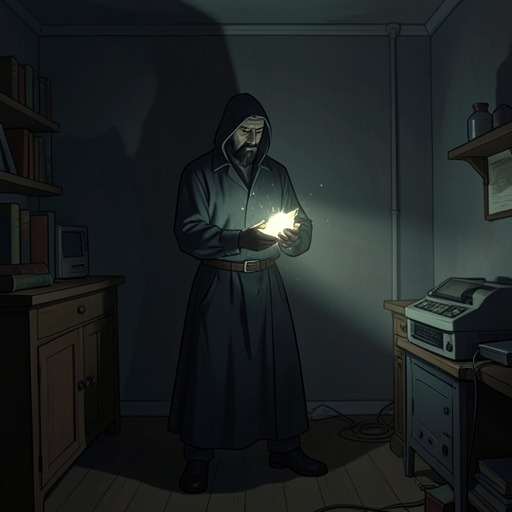
The Checquy’s responsibility to the United Kingdom is made explicit when Myfanwy is pressed to act during the Reading crisis. She invokes her office in a formal declaration identifying herself as a Rook, the Hidden Sword of the Crown, and the General of Britain’s Secret Army, then calls Harper Callahan, a ward of the Estate, into service. The archaic wording may sound ceremonial, but it has immediate legal force: it transfers responsibility for the operation onto Myfanwy and authorizes the deployment of a force classified as capable of physical obliteration.
That power is tightly controlled. On British soil, only the Rooks, Bishops, and the Checquy’s Lord and Lady can authorize such an agent’s use. The narrative specifies that the United Kingdom has only three individuals at that level, one kept in a vault in the Shetland Islands. Deployment also requires notification of the Prime Minister, the Minister of Defense, the ruler of the country, and every member of the Checquy Court. As the control-room staff begin calling those authorities and summoning the student, the United Kingdom appears not simply as a map beneath the operation, but as a constitutional chain of responsibility surrounding it.
The scale of the threat makes that procedure more than bureaucracy. Myfanwy believes the Reading cube is a Grafter weapon and accepts the possibility that the child she has unleashed could turn the entire town into molten rock. She authorizes the intervention because she judges it necessary, while recognizing that the consequences—including the child’s possible death—belong to the series of terrible outcomes set in motion by her decision to take up her predecessor’s life. Protection of the country therefore entails exposure to extraordinary risk, not a clean separation between safety and sacrifice.
A Threat Within the Country
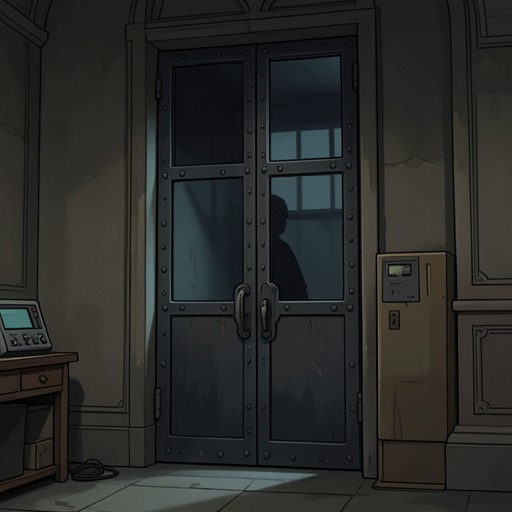
Myfanwy’s caution is sharpened by the immediate history of the operation. Her previous encounter with a manifestation cost three Checquy teams, including a team of the Barghests, and nearly broke down her brain. When the police station gives her a severe headache, she orders everyone to stay away rather than risk more members being swallowed by amorphous entities. The danger is not abstract or distant: it is lodged in a local police station, within the ordinary civic landscape the Checquy is supposed to keep safe.
The contrast between the everyday institution and the unnatural threat helps define the Checquy’s British role. A police station is ordinarily a visible arm of public order; here, it becomes a site that the secret organization must cordon off, interpret, and confront without openly disclosing why it is dangerous. The response is not simply to defeat a monster, but to decide how much force can be risked and who may legally bear that risk. Myfanwy’s warning to Pawn Steele and her subsequent invocation of authority join personal caution to institutional accountability.
Secrecy as Protection and Constraint
The Checquy describes its duty in compact terms: to protect in secrecy. Myfanwy argues that the organization cannot surrender to the Grafters, even with traitors inside the Court, because a fight between the two groups would leave England changed and make an international conflict difficult to conceal. The possibility of victory is not enough to make open war acceptable. Preserving the United Kingdom’s hidden order is itself part of the Checquy’s mandate.
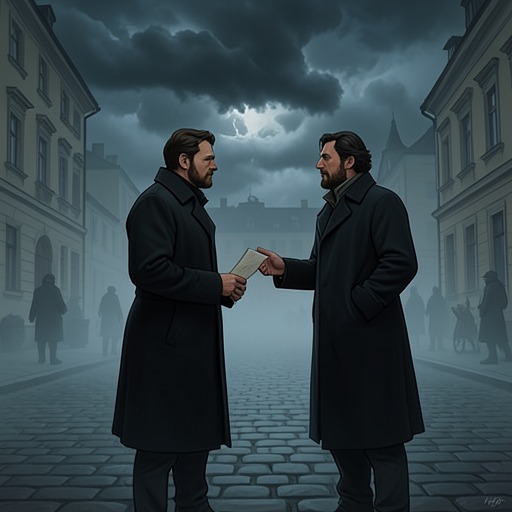
That commitment gives secrecy a double edge. It allows the Checquy to address supernatural dangers without making their existence public knowledge, but it also limits the forms its defense can take. In the conversation with Ernst von Suchtlen, Myfanwy recognizes that the Grafters have also entered the country in secret, and that von Suchtlen has concealed his presence from both the Checquy and his own partner. The clandestine meeting makes secrecy more than a British policy: it is a condition shared by adversaries who cannot openly wage the struggle they are conducting.
The United Kingdom in the Grafter Strategy
Von Suchtlen rejects Myfanwy’s assumption that the Grafters intend to invade. Their first invasion attempt was disastrous and, he says, had largely been instigated by his country’s rulers. The later threat is a feint: while the Checquy watches for a conventional assault, the Grafters have spent years inside the organization preparing for their arrival and eventual triumph. Their target is not simply British territory but the Checquy’s control of a secret world.
The distinction changes the stakes of the conflict. In a world where conquest can no longer be kept secret, von Suchtlen argues, an invasion would be both impractical and incompatible with the Grafters’ need to hide their existence. The Checquy, too, depends on secrecy. That shared vulnerability creates a narrow opening for negotiation: Myfanwy infers that von Suchtlen has come not to demand surrender but to discuss an alliance between the organizations. The fate of the United Kingdom is thus tied to a concealed struggle over who will govern the supernatural world within it—and whether that world can remain hidden at all.