
Fantasy and Reality in the Cell
The RoomThis flow traces how the prisoner’s imagined victories increasingly replace his confinement until fantasy becomes the only reality he can inhabit.
increasing Bearing strength in each event
 decreasing
Bearing strength in each eventdecreasingThe Cell’s Fixed Details
The Cell’s Fixed Details
Orientation Through Repetition
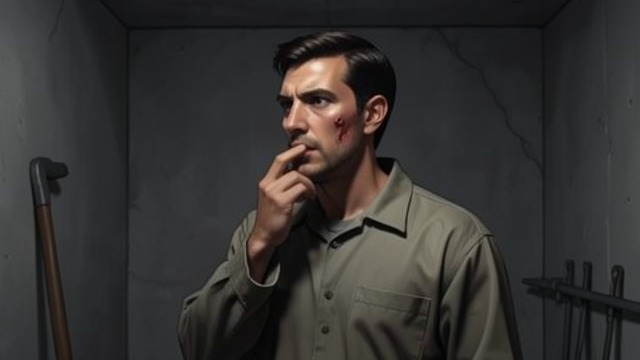
The Unnamed protagonist studies the corridor signs, the gray walls, and the small blemish on his cheek, relying on repeated inspection to confirm where he is. He knows the room is a jail cell, yet its dimness changes as his eyes adjust, making perception itself feel unreliable.
A Reality That Resists Escape
His reflections move from the light to the passage of time and then to memories of childhood. Each subject offers a temporary path away from the present, but the locked door, bunk, sink, and commode remain in place. The familiar objects anchor him to confinement even as his thoughts wander.
The early pattern establishes a tension that will deepen: he can recognize the physical world, but he cannot make it meaningful or tolerable. Repetition gives him something to do, while also revealing how little control he has over the conditions around him.
The Imagined Liberation

The Imagined Liberation
A Rescue Takes Shape
After composing the Letter to the Editor, the Unnamed protagonist imagines Donald Preston and Stacey Lowry arriving to hear his account. In the scene he presents himself as composed and courageous, while the visitors recognize him as an eloquent victim of institutional abuse.
Public Vindication Replaces Confinement
The fantasy quickly expands beyond release. A newspaper campaign, public appearances, and legislative action turn his private arrest into a national cause. He imagines that influential allies understand both his character and the larger political meaning of his case.
The imagined rescue matters because it offers more than a way out of the cell: it gives him an audience, status, and a role in history. Yet the narration repeatedly returns him to the bunk. The contrast reveals how the fantasy supplies what actual confinement withholds, without changing the locked room itself.
Revenge as Public Spectacle

Revenge as Public Spectacle
A Trial Rewritten
The Unnamed protagonist imagines himself succeeding where his appointed lawyer failed: he exposes contradictions, impresses the jury, and helps secure guilty verdicts against the officers. The imagined courtroom gives him a public platform on which he is neither powerless nor ignored.
The Cost Hidden by Applause
The scene grows into a wider spectacle of punishment, press attention, and official praise. His imagined opponents suffer professional and personal ruin, while he receives recognition as a defender of the public. The reward is not simply legal vindication; it is the pleasure of watching those who once controlled him become vulnerable.
Because the victory is assembled in his mind rather than confirmed in the present, its triumphant detail sharpens the gap between imagined agency and actual imprisonment. Fantasy changes his position inside the story, but not the cell around him.
The Senate Chamber in the Cell

The Senate Chamber in the Cell
A Detailed Inner Stage
The Unnamed protagonist imagines testifying before the United States Senate Special Investigating Committee. He pictures his suit, the polished table, the cameras, the officials, and the attentive public with such precision that the imagined chamber acquires sensory force.
Recognition Without Release
In the fantasy, his testimony exposes institutional brutality and earns formal gratitude. The committee treats him as a courageous representative of people harmed by authority, and he feels his importance confirmed by the room’s attention. Yet the imagined honor exists alongside the continuing facts of his cell and its routines.
The Senate scene shows fantasy reaching its most elaborate form: it does not merely revise a hearing but supplies an entire alternate identity. He becomes a public figure with purpose and power, even as the actual prisoner remains physically confined.
The Final Courtroom Refusal
The Final Courtroom Refusal
A Return to the Case
As a new court appearance approaches, the Unnamed protagonist revisits the imagined trial and its promise of a chance to expose the police. His thoughts continue to furnish him with scenes in which he can challenge witnesses and overcome the authorities who have wronged him.
Withdrawal From the Outside World
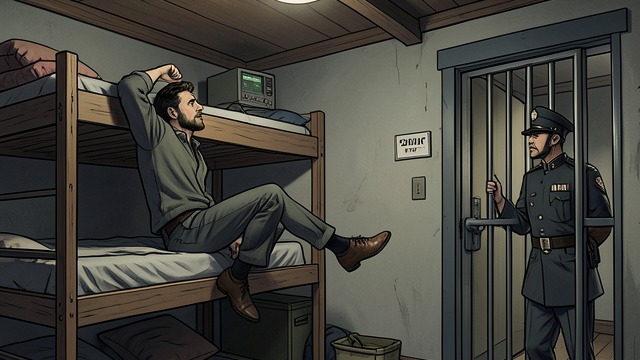
When the cell door opens and the guard calls court time, he does not move. Instead, he remains with the bodily distress he has come to call his friend, his legs swinging slowly from the bunk. The summons, which once might have opened onto a scene of vindication, no longer draws him outward.
The ending leaves the imagined struggle unresolved and the real journey suspended. His refusal does not prove that the courtroom fantasy has vanished; it shows that his attachment to the inner world and its familiar suffering has become stronger than the immediate demand of the outside world.
At the opening, during the first sleepless night in the cell
After the first imagined visit from the publisher and lawyer
After the imagined courtroom victory over the two officers
Near the later part of his imprisonment, during the imagined Senate testimony
At the ending, when court time is announced
