
Victimhood and Self-Exculpation
The RoomThis flow follows the protagonist’s shifting explanations of harm, from memories of vulnerability to increasingly strained efforts to separate his own actions from others’ suffering.
increasing Bearing strength in each event
 decreasing
Bearing strength in each eventdecreasingThe Broken Hand
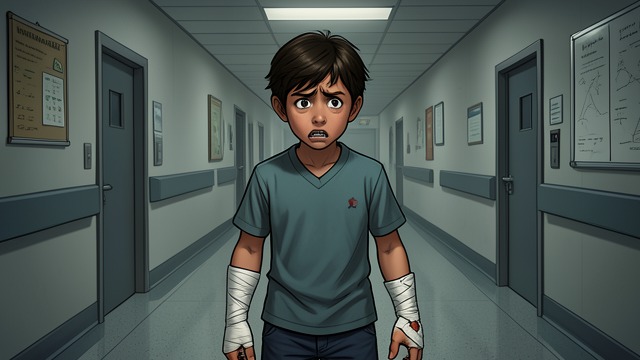
The Broken Hand
A Childhood Injury
The Unnamed protagonist remembers being struck by a police officer while reaching for money during a childhood dice game. He hides the incident from his parents because he fears having to explain what he was doing, and the broken bones are discovered at the hospital the next morning.
Pain Without a Public Account
When his mother questions him, he resists her effort to understand how the injury happened. He experiences her concern as pressure and cannot give her a truthful explanation that might expose the circumstances. The memory holds together injury, secrecy, and the fear of being blamed.
The episode gives his later suspicion of police a history in bodily harm. It also establishes an early pattern: he is genuinely vulnerable, yet concealment and defensive anger make it difficult for others to recognize his experience on its own terms.
The Adolescent Cell
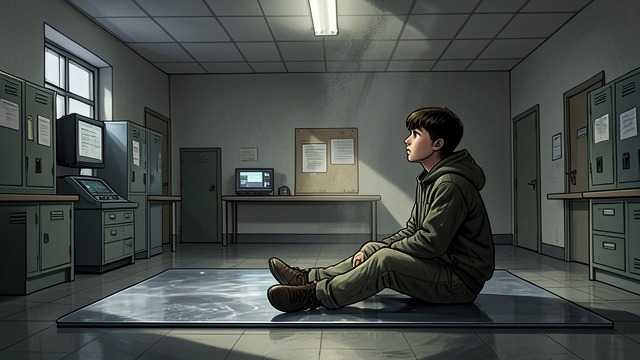
The Adolescent Cell
Fear of a Long Sentence
At fifteen, the Unnamed protagonist is detained in Providence after police question him about a girl he and a companion had met. A detective tells him he could receive twenty years, and the boy sits alone on a steel slab, imagining that his future has ended before he can comprehend what that sentence would mean.
Release Without Resolution
He is eventually released, but the experience leaves him with shame, fear, and a memory of police power that he cannot readily explain to his mother. His thoughts return to home and to what she would say, while his silence protects him from immediate disclosure rather than helping him process what happened.
The adolescent detention becomes one source of his later identification with the accused and confined. His vulnerability is real, but the memory also shows how fear and secrecy can prevent a coherent account of harm from forming.
The Accused Man’s Defense
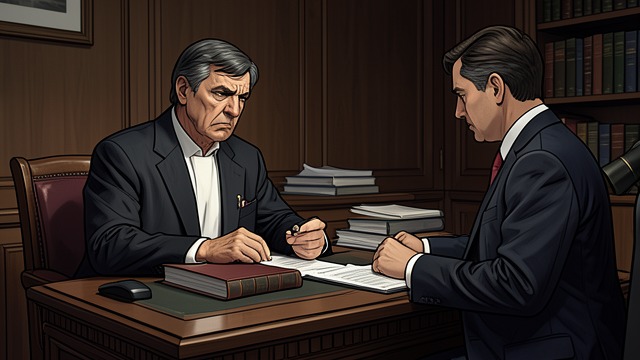
The Accused Man’s Defense
From Confusion to Suspicion
After being arrested on suspicion, the Unnamed protagonist recalls feeling unable to understand the booking process or the formal language of court. He believes the public defender has abandoned him and interprets the hearing’s stipulations and waivers as evidence that his interests do not matter.
A Self-Image Under Pressure
He imagines that a skilled lawyer and a fair audience would confirm his innocence and expose official misconduct. Yet his account of himself as a wronged man also allows him to set aside questions about his own motives, reactions, and behavior. His conviction that he has been targeted grows stronger than his ability to examine the full situation.
The thread shows the double force of victimhood: it names the real vulnerability of a person caught in a coercive system, but it can also become a defense against moral self-scrutiny. The prisoner increasingly treats being harmed as proof that he cannot be responsible for harming others.
Other People’s Pain

Other People’s Pain
A Public Account of Injury
In his imagined Senate testimony, the Unnamed protagonist describes Mrs. Haagstromm’s assault and its devastating aftermath. He speaks of her injuries, her psychiatric collapse, and the consequences for her child and family, presenting the case as an example of the cost of unchecked police authority.
Compassion and Appropriation
His account recognizes the scale of another person’s suffering, but the testimony also makes her story part of his imagined public campaign. He occupies the role of the witness who can explain her experience to powerful listeners and win their admiration, even though the story’s perspective remains his own.
The episode complicates any simple division between empathy and self-interest. He can register the gravity of another person’s pain while also using it to build a narrative of his own significance and vindication.
The Failed Accounting

The Failed Accounting
Defending Past Conduct
The Unnamed protagonist thinks through memories of childhood misbehavior and past injuries to others, often stressing that events were accidental, provoked, or not intended to cause serious harm. He recalls apologizing and insists that he tried to behave differently, even as his memories include moments of cruelty and aggression.
Responsibility Without Relief
He measures his conduct against the larger violence of war, abusive parents, and police brutality, using those comparisons to argue that his own actions should not define him. At the same time, his imagined punishments for others are extreme and sustained, exposing an imbalance between the mercy he seeks for himself and the suffering he wishes on his enemies.
This late self-accounting does not arrive at a stable judgment. He acknowledges, denies, and rationalizes in rapid succession, revealing how deeply the identity of the wronged person protects him from recognizing the full moral weight of his own fantasies.
In an early childhood memory recalled during detention
At age fifteen, during detention in Providence
During his present-day arrest and pretrial detention
Near the late stages of the imagined Senate testimony
Near the end, during the reflections before the court summons
