Brooklyn
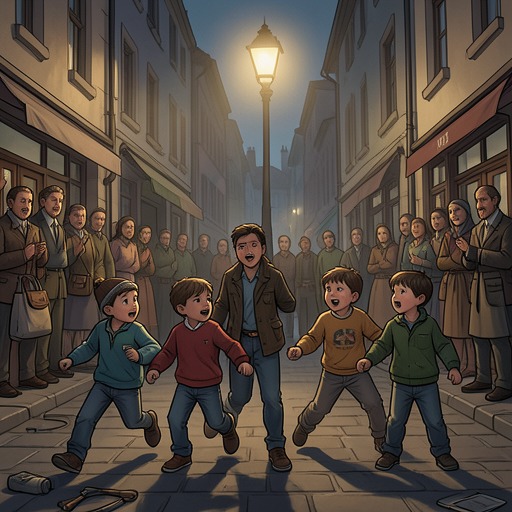
The RoomBrooklyn enters the narrative through a modest, uncertain measure of belonging: the narrator remembers a scouting troop that may have been the smallest in the city, or at least in Brooklyn. Rather than offering a broad portrait of the borough, the recollection makes it a point of reference for a close-knit childhood world of troop activities, games, and remembered embarrassments.
The Troop and Its Setting
The troop’s size is remembered comparatively, not as a verified record: it seemed to have been the smallest in the city, or perhaps only in Brooklyn. The uncertainty gives the place a personal scale. Brooklyn matters here as the boundary against which the narrator measures the troop, not as a developed urban landscape.
The scouting memories extend beyond the troop’s size. The narrator recalls learning to box the compass and to tie knots, including the sheepshank, stevedore’s knot, square knot, bowline, half hitch, and clove hitch. Looking at illustrations in a scout manual prompts him to test what remains in memory; he believes he can still tie the knots, though he cannot remember every one. He places these skills about twenty-five years in the past.
Games and Recalled Mishaps
The troop is remembered as a source of fun, especially the game of pom-pom-pullaway. The narrator recalls Hanson tackling him when he tried to jump over him; they both went down hard. The anecdote gives the memory of Brooklyn a physical, unceremonious texture: companionship is recalled through a collision and its force, rather than through a formal account of organized activity.
A separate football recollection carries the same mixture of bravado and self-reproach. Attempting to tackle Pee Wee Day, the narrator hit his legs with his head instead of using his shoulder, was knocked onto his backside, and came close to losing consciousness. He imagines that a tackle from the side would have stopped the runner, who gained twenty yards after the missed attempt. The passage does not establish that this game took place in Brooklyn, but it echoes the earlier memory’s emphasis on youthful play and physical failure.
Narrative Significance
Brooklyn is evoked through recollection rather than description. The narrator cannot be sure whether the troop was the smallest in the city or just in the borough, and he cannot settle whether the missed tackle affected the game’s outcome. Instead, the memories linger on what can still be pictured or performed: the hard fall, the open-field mistake, and the knots recalled from a manual. That unevenness makes the borough a marker of the narrator’s remembered past, where small scenes remain vivid even as their surrounding facts grow uncertain.