Fantasy and Reality
The RoomFantasy and Reality is the unstable boundary between the Unnamed protagonist’s confinement and the scenes of legal and political vindication he constructs around himself. His imagined successes are carefully rehearsed, populated by real-seeming allies and public audiences, and eventually felt as more substantial than the bunk and cell around him. The narrative makes the boundary visible, but also shows how readily his feelings cross it: a fantasy can end in sleep while leaving him, on waking, with a genuine sense of strength.
The making of an imagined victory
The protagonist does not encounter fantasy only as an involuntary image; he also handles it as something composed and revised. He rereads his letter, emphasizing particular words and lines with satisfaction. In another moment, with his eyes closed, he reviews scenes and dialogue and decides that nothing needs improvement. His satisfaction rests partly on the belief that others will support him and that, with their backing, he will confront his opponents. The imagined campaign thus begins with a form of authorship: he can select, inspect, and affirm the words and scenes through which he anticipates success.
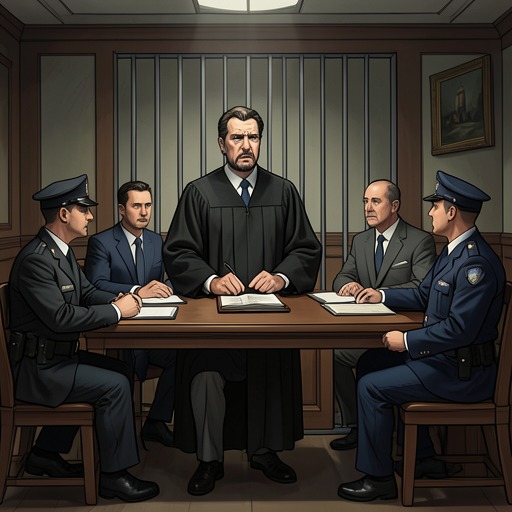
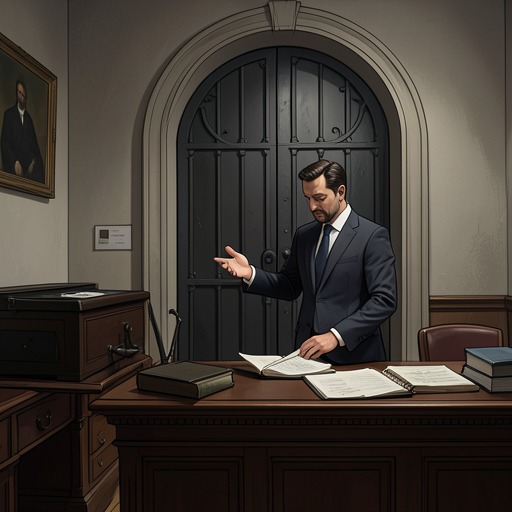
A courtroom scene gives that anticipated success a concrete institutional form. The protagonist appears there well dressed and confident, pleads not guilty, and listens as the preliminary hearing proceeds. After the prosecution questions an arresting officer, Stacey Lowry questions the witness briefly, then asks the court to dismiss the charges, citing State v Rubens. The court grants the motion. The scene’s composed procedure and favorable outcome stand in striking contrast to imprisonment; the protagonist’s imagined vindication takes place through the very legal process that otherwise holds him. Its orderly details make the reversal feel not like a vague wish, but like a complete public result.
Performance, allies, and self-confirmation
The imagined world also supplies an audience before which the protagonist can present himself. In an interview, he is asked about his connection to the men who have become involved. He declines to explain how he contacted them, while saying that he reached the newspaper and that this brought Donald Preston and Stacey Lowry into the matter. The answer preserves a secret even as it offers an account. Its controlled manner turns concealment into part of the performance: he appears to possess access and knowledge that he chooses not to disclose.
The protagonist later treats his growing confidence as something established by experience. He recalls traveling to the Capitol Building with Donald Preston and Stacey Lowry, and describes interviews with reporters and on television as helping him gain poise. But he revises his own account of where that confidence began. The campaign and interviews, he decides, were not the true beginning; it was his handling of the defense attorney at trial, where he says he remained steady on the stand for days. He regards that performance as concrete evidence that he can cope with any situation. The distinction matters: imagined public acclaim is supported, in his account, by an earlier courtroom success that he treats as proof about himself.
The Senate scene and the crossing of boundaries
The imagined campaign reaches its fullest public scale in a scene of testimony before a Senate committee. The protagonist watches the members enter and take their seats, attends to their clothes and papers, and hears the television cameras humming behind him. The scene grants him a place at the center of public scrutiny: the committee’s attention is directed toward him, and its formal gathering appears to confirm his stature. Yet the narrative identifies the other setting at the same time. He is lying on his bunk with his eyes shut, and the committee room is vivid within his mind.
That double presentation becomes more pronounced as the imagined testimony continues. The scene remains fixed for what seems like minutes or hours, while the protagonist fears that opening his eyes might make him lose it. He experiences the imagined room as more real than the bunk beneath him and the cell in which he is locked. Rather than simply cutting between fantasy and actuality, the narration places the two claims of reality side by side: the committee scene has intense presence, while the prison remains the material circumstance from which he imagines it. The duration and force of the vision expose how much emotional weight the imagined recognition carries.
In the scene’s conclusion, Stacey Lowry addresses the committee, and the protagonist receives the tribute of the assembled people. He imagines people taking his picture and shaking his hand, committee members speaking with him, and the police asking him for help and forgiveness. These gestures complete a reversal: the man confined and accused becomes a public figure whose former antagonists seek his favor. As tiredness overtakes him, he and the image seem to merge, and he drifts into sleep. The fantasy does not culminate in a waking change to his circumstances; its immediate consequence is that it carries him out of wakefulness.
What remains after waking
The cell reasserts itself when the door opens and the protagonist awakens. He hears the disturbance but stays on the bed, detached from it, and feels light, strong, and untroubled. The political triumph has not occurred in the external world described by the scene, but the feeling of fearlessness is present after the fantasy has ended. This aftermath complicates any simple division between unreal content and real effect: the imagined victory cannot free him, yet it alters his immediate experience of being confined.
A later episode of looking toward the overhead light extends this pattern without returning to the Senate scene. The protagonist repeatedly closes and opens his eyes, then relaxes as the discomfort subsides; the passage also places him in a bed, under a cool breeze and moonlight, sinking into himself and into the comfort of the future. The concrete surroundings and inward retreat remain in tension. Fantasy and Reality therefore turns on more than the question of whether a particular scene happened. It tracks how an imagined future can organize attention, provide a sense of agency, and leave an emotional residue in the present, even while the protagonist remains in the prison cell.