Harry
The RoomHarry is a police officer whose partnership with Fred turns a routine traffic stop into the abduction and assault of Mrs. Haagstromm. He invokes police procedure to isolate her, participates in the attack, and uses the threat of a false accusation to silence her afterward. In the episode, the uniform and the language of official business do not restrain abuse; they make it easier to carry out.
Identity and Role
Harry appears alongside Fred as a working police partner, first in the patrol car and then in the account of their treatment of Mrs. Haagstromm. Their exchange makes clear that they are acting together: Harry proposes that he drive her car while Fred follows, and the two leave the patrol car to continue the encounter away from populated streets. The text supplies no broader biography or account of Harry’s life, so his characterization rests on his actions in this episode and the authority he wields as an officer.
Harry’s role is not simply that of a bystander to Fred’s conduct. He helps create the conditions for it, controls Mrs. Haagstromm’s movement, and takes part in the assault. The division of actions between the two men shifts during the episode, but the partnership remains active throughout: one officer restrains or supports her while the other acts, and they coordinate their movements rather than interrupting one another. Their shared laughter further marks their alignment against the woman they have taken into their power.
The Traffic Stop and Deception
The episode begins with Harry and Fred questioning Mrs. Haagstromm about her car. Harry asks for her key and examines her license and registration, presenting the interaction as an ordinary check. When the officers speak privately, however, their conversation reduces her to a sexual object and settles on taking her away together. The gap between the official reason for the stop and their private purpose establishes the central abuse: the appearance of procedure conceals a deliberate misuse of police authority.
Harry then tells Mrs. Haagstromm that a discrepancy requires her to go to the station. When she explains that she must pick up her young daughter and is already late, he reassures her that the matter should not take long. Instead, after driving away from populated areas, he turns onto a wooded side road and stops in a clearing. When she asks about the destination, he falsely describes it as an overnight motor-vehicle office. The lie delays her understanding of the danger and keeps the encounter framed as an official inconvenience until the officers have isolated her.
At the clearing, Harry prevents Mrs. Haagstromm from leaving and helps restrain her while Fred removes her clothing. Her fear and attempts to resist are met with further force. The account presents Harry as an active participant in the assault, not merely as the officer who arranged the detour: he uses physical control and takes part while Fred also assaults her. The scene’s extended focus on their coordination and her inability to escape makes the imbalance of power concrete without suggesting that the officers’ actions are legitimate police work.
Partnership with Fred and Abuse of Authority
Harry and Fred operate through cooperation, alternating tasks and reinforcing one another’s control. Harry helps hold Mrs. Haagstromm and later directs parts of what the two men do; Fred, in turn, restrains her and assists Harry. Their conversation and laughter treat her distress as entertainment. The officers’ partnership therefore functions as an instrument of the abuse: neither man acts to stop the other, and their shared authority leaves Mrs. Haagstromm isolated from any immediate protection.
The coercion continues after the assault. Harry and Fred remove the restraints, place Mrs. Haagstromm in her car, and put her clothes on top of her. Before leaving, Harry pulls her head up by her hair and warns her to keep silent, threatening that they could have her arrested for soliciting and that her daughter might learn a damaging story about her. The threat turns the officers’ power over her into leverage against disclosure. Their departure does not end the encounter’s effects; Harry’s warning is designed to make reporting it appear dangerous to her as well.
Narrative Significance and Limits
After the men leave, the narration moves to the protagonist’s furious thoughts about corrupt officers who can do anything and escape consequences. He paces across his cell and fixates on a pimple in the mirror, a sharply smaller and more private action beside the violence he has just been thinking about. The juxtaposition does not show Harry facing investigation or punishment. Instead, it shows the protagonist’s anger continuing within confinement, directed at officers he believes can act with impunity while he remains in jail.
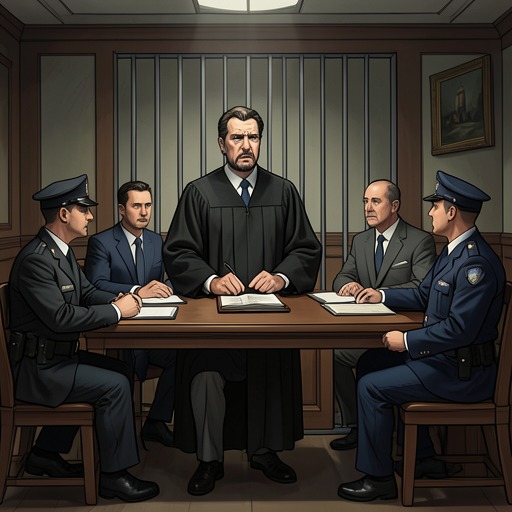
That distinction matters when reading Harry alongside the protagonist’s later courtroom fantasy. In that imagined scene, the protagonist pictures Fred leaving the witness stand and being attacked; the fantasy concerns Fred, not an actual confrontation involving Harry. It offers no evidence that Harry is struck, tried, or made to answer for his actions. Harry’s significance lies in the contrast between the authority he exercises in the episode and the protagonist’s imagined retaliation: the narrative depicts abuse and rage, but does not convert the latter into a real consequence for the officer.