Letter to the Editor
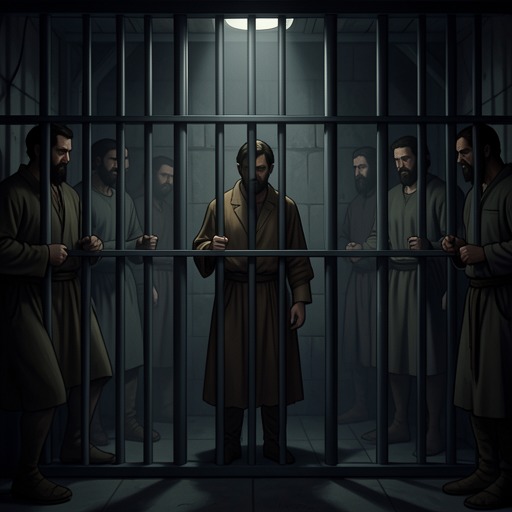
The RoomThe Letter to the Editor is Unnamed protagonist’s attempt to turn imprisonment into a public accusation: it presents routine legal powers as instruments of police harassment and warns that unchecked authority may grow into a Police state. Written secretly on toilet tissue and sent out by an unnamed helper, the letter joins a political argument to the circumstances of its own making. Its claims are forceful, but the surrounding scene also shows Unnamed protagonist shaping how readers—and the lawyers who hear about the letter—will see him: as a persecuted witness who cannot be silenced.
Purpose and Political Argument
The letter begins as a formal appeal to an editor and publisher, but its opening repeatedly revises itself. Unnamed protagonist first frames publication as a duty, then pauses, restarts, and intensifies the charge, settling on the idea that the situation is flagrant and demands the public’s attention and conscience. These visible corrections make the document feel like an argument being assembled in real time rather than a polished statement delivered from a secure position. They also show the writer testing how forcefully to name the condition he believes he is exposing.
At the center of the letter is the claim that people are watched by the State through the police, while ordinary citizens cannot be expected to know every law still on the books. Unnamed protagonist argues that the sheer number and age of such laws make perfect compliance impossible; he offers sidewalk spitting as one example of a minor act that may technically be illegal. The point is not simply that particular statutes are absurd. In his account, dormant or trivial rules give police discretionary means to harass people, while the possibility of enforcement remains available even when the alleged offense seems negligible.
The letter makes that threat concrete through everyday examples. A person who parks a few inches from the curb or drops a cigarette butt might, it argues, encounter an officer acting from personal animosity. It then imagines a more sustained retaliation: even someone who proves a false arrest in court may be watched for another infraction, including under an obscure health law. Repeated jailings could cost that person work, and repeated legal fees could put a lawyer beyond reach. The sequence moves from petty conduct to lost employment and financial exhaustion, presenting pressure as cumulative: release from custody does not necessarily end the punishment.
Escalation and the Claim of Persecution
From those examples, the letter widens its accusation from individual misconduct to organized power. Unnamed protagonist contends that no individual can withstand the pressure of a police force backed by the State. He calls for the public to awaken before what he describes as a growing fascistic danger culminates in a nighttime assault on people’s homes. The image of axes at doors and uniformed men dragging residents from bed transforms the earlier curbside and sidewalk examples into a warning about the possible end point of unchecked coercion.
The writer then locates himself inside this argument, declaring himself a victim of the conspiracy he says exists. That statement gives the appeal personal urgency, but it does not independently establish the letter’s broad allegations. The document presents them through the imprisoned writer’s own voice: its account of surveillance, retaliation, and political danger is both an appeal to the public and a self-description by someone seeking to be believed. Its anonymous form protects the writer’s identity, while also leaving the reader with no signature by which to verify his claims.
Secret Composition and Material Form
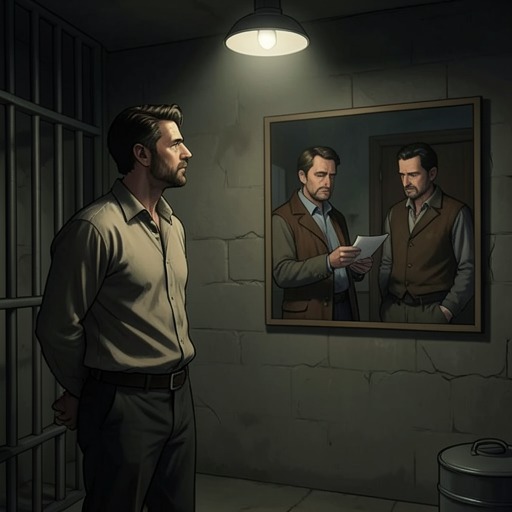
The letter’s physical production supplies a second, practical account of confinement. When asked about the unusual paper, Unnamed protagonist explains that he had neither writing paper nor money to buy it because his money had been taken. He believed that requesting paper would attract suspicion, so he used toilet tissue, which he thought would not be checked. A friend smuggled him a pencil; he wrote at night and sharpened it with his teeth. He even points to the blunt pencil as an explanation for the appearance of his handwriting.
The sheet’s fragility affects its journey as well as its creation. Unnamed protagonist asks whether the recipient had difficulty reading the letter; the editor, he reports, struggled with a few words where the paper had been folded, though the problem was not serious. This small physical interruption makes the passage from cell to editor visible: the appeal reaches beyond custody, but it arrives marked by the limited materials and concealment required to write it. The writer adds that sending it endangered both himself and the person who smuggled it out, which is why he says he dared not sign his name or identify where he was incarcerated.
Framing, Audience, and Self-Presentation
The narrative places the letter within a conversation involving Stacey Lowry and Donald Preston, so the document is also an object through which Unnamed protagonist presents himself to an audience close at hand. After rereading it, he nods with self-satisfaction over particular words and lines. He imagines that it will stir public feeling, anticipates an attempt to silence him, and insists that beatings or confinement will not make him yield. The bravado is not merely part of the letter’s public warning: the surrounding narration shows him rehearsing the role of a courageous dissenter after composing it.
That performance is carefully moderated. In the conversation, he wants Stacey Lowry and Donald Preston to perceive quiet courage rather than conceit; he smiles but restrains his expression so that they will not think him vain. His explanation of the improvised paper and pencil likewise emphasizes perseverance under adversity. The letter therefore has two linked audiences: the public it addresses through the editor, and the people present as its making and delivery are discussed. Its political rhetoric declares that coercive power cannot break its author, while its material history records how little privacy, paper, money, and ordinary writing equipment he had available. The contrast gives the appeal its urgency without resolving whether its sweeping account of conspiracy will persuade its readers.