
From Rivalry to Understanding
The Rules of WerewolfThis flow traces the changing tension between Hermione and Draco as school-era antagonism becomes adult flirtation and then affectionate partnership.
increasing Bearing strength in each event
 decreasing
Bearing strength in each eventdecreasingOld Verbal Habits
Old Verbal Habits
Familiar weapons
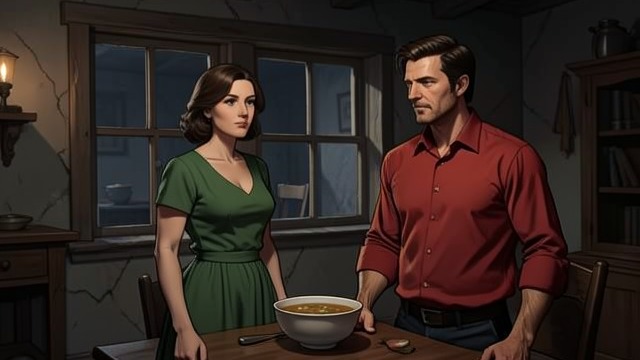
At the photo shoot, Hermione and Draco quickly return to sharp remarks about status, work, and their shared school history. Their insults are still recognizable as old habits, but the exchange now carries an undercurrent of fascination.
Draco provokes Hermione partly because he wants her attention. Hermione meets him on equal terms, refusing to play the intimidated student he remembers.
Conflict becomes chemistry
The argument does not resolve their past; it changes its emotional charge. Their ability to challenge one another becomes a source of attraction as well as friction.
An Ambiguous Pursuit
An Ambiguous Pursuit
A puzzle instead of a date
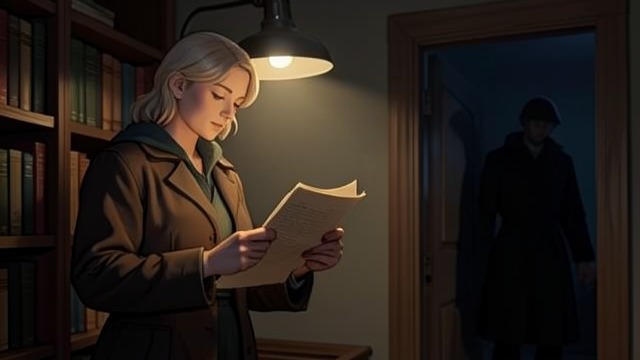
Draco wants another chance to speak with Hermione but cannot imagine asking her out directly. He sends a coded note that turns his pursuit into an intellectual challenge.
Hermione responds with a riddle of her own. Their exchange gives each of them a way to flirt while retaining the cover of wordplay if the other proves uninterested.
The cost of indirectness
The game suits their sharpness but leaves both interpreting hints. Their shared uncertainty becomes part of the tension that the birthday party will force into the open.
The Game’s Misread Signals
The Game’s Misread Signals
Private intimacy in public play
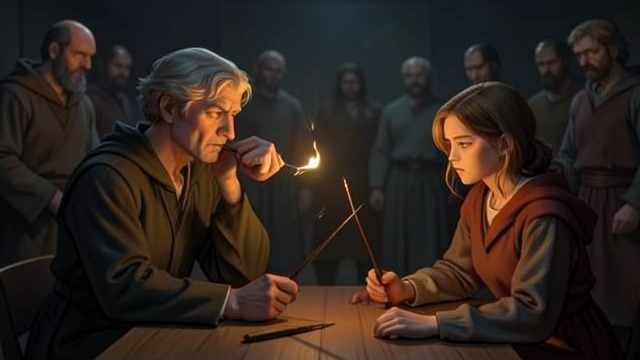
During the Werewolf game, Draco uses the darkness and a Notice Me Not charm to whisper to Hermione. He asks what she wants and whether she wants him to stop, while she tries to manage her response amid the group’s ongoing game.
The game’s rules create cover for a private exchange, but Hermione’s friends and the public setting make it difficult to know how much anyone can perceive. Her desire grows alongside her awareness that she is being observed.
A risky joke
After the game, Draco makes a teasing invitation about meeting Hermione in a broom closet. He intends to provoke her, but she experiences the remark as an embarrassing public taunt and walks away.
The Balcony Confrontation
The Balcony Confrontation
Questions instead of assumptions
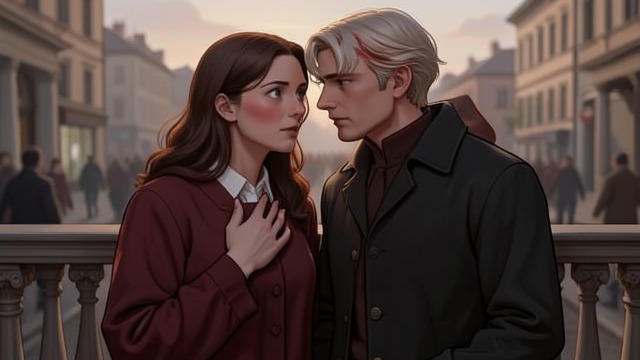
Draco follows Hermione and accepts her demand for answers. She asks whether he is a good person, whether his interest is purely physical, and whether he will stop being antagonistic.
He does not offer a simple promise of perfection. Instead, he answers her questions with his own, making room for her to state that she wants him to kiss her.
Desire and a boundary
The kiss resolves their uncertainty about mutual attraction but does not resolve the question of pace. Hermione soon stops the encounter because she wants more privacy and time, requiring both of them to recognize that desire is not automatic consent to every next step.
Repair Through Explanation
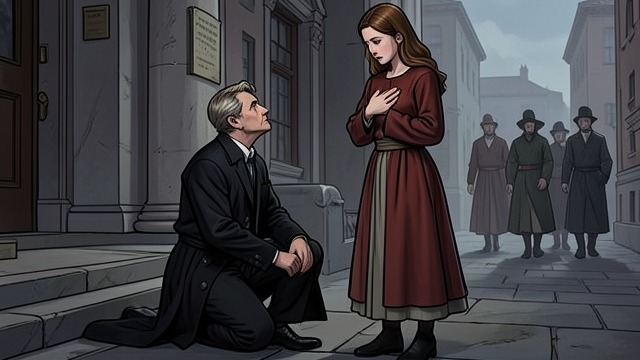
Repair Through Explanation
The fear of rejection
Draco worries that Hermione’s departure means he has ruined their progress. When she returns, he pauses their reunion long enough to explain that he wants more than sex and wants to take her to dinner.
Hermione explains that the balcony was the problem, not her desire for him. Her clarity allows Draco to respond to what she means instead of inventing a rejection from incomplete information.
A new way to disagree
Their relationship can still include teasing and strong desire, but the misunderstanding is resolved through direct conversation. The conflict shifts from adversarial performance toward trust and mutual decision-making.
At the Witch Weekly photoshoot
The week after the photoshoot
During the Werewolf game
Immediately after the game
Later that night at Draco’s flat
