
The Werewolf Game’s Double Play
The Rules of WerewolfThis flow traces the party game from harmless entertainment into a secret courtship device and then into an awkward public aftermath.
increasing Bearing strength in each event
 decreasing
Bearing strength in each eventdecreasingPansy Explains the Rules
Pansy Explains the Rules
A magical party game
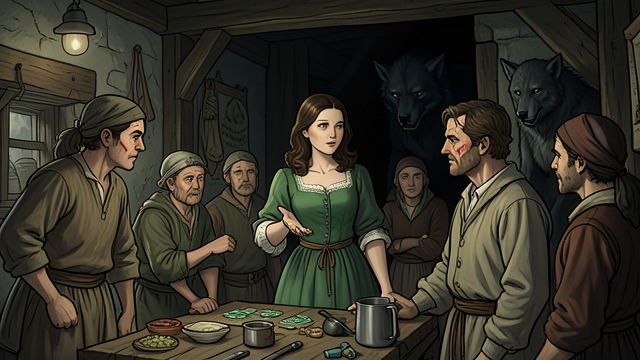
Pansy introduces Werewolf with villagers, a healer, and a werewolf whose identity the group must guess. She uses a jinx to close the players’ eyes during the full moon, preventing them from cheating by looking.
Hermione objects that the game risks presenting werewolves as inherently violent. Pansy insists that it is frivolous party entertainment, and the group begins despite Hermione’s reservations.
Rules as structure
The game gives the gathering a shared activity, but it also introduces concealment and uncertainty. Those same features will make it useful to Draco for a very different purpose.
The First Wrong Guess
The First Wrong Guess
A quick accusation
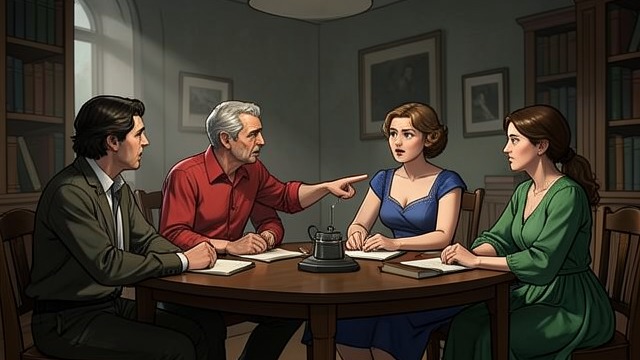
When Theodore is eliminated, Hermione, Ginny, and Neville all suspect Draco. The guess is wrong, and Pansy confirms that Draco is not the werewolf.
Draco’s mock protestation turns the deduction into a lively group exchange. Hermione enjoys being vindicated in her suspicion even as the failed vote extends the game.
The game continues
The incorrect accusation raises the players’ attention to one another without settling the mystery. It also gives Draco an opening to use the next round for private flirtation.
The Hidden Healer
The Hidden Healer
A protected choice
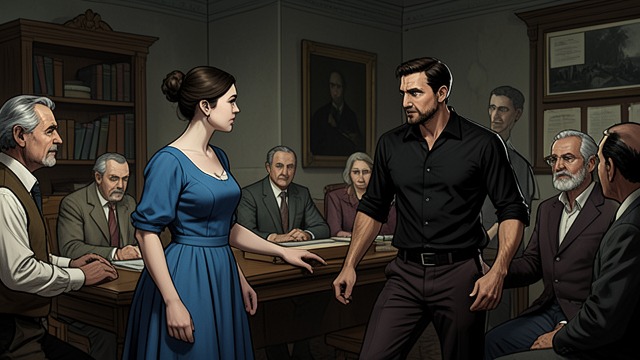
During the second full moon, Hermione hears the healer name Ginny as the villager to save. She considers whether Neville or Blaise might be protecting her friend, while the game conceals the speaker’s identity.
Blaise is eliminated as the next victim, and Ginny’s attention to him suggests that the game’s events have personal meaning beyond deduction. Hermione is increasingly occupied by Draco’s proximity and the secrets surrounding the round.
An altered game
The concealed roles create genuine uncertainty, but they also provide space for hidden social signals. The game’s mechanics begin to support several romantic readings at once.
A Private Game Within the Game
A Private Game Within the Game
Draco changes the stakes
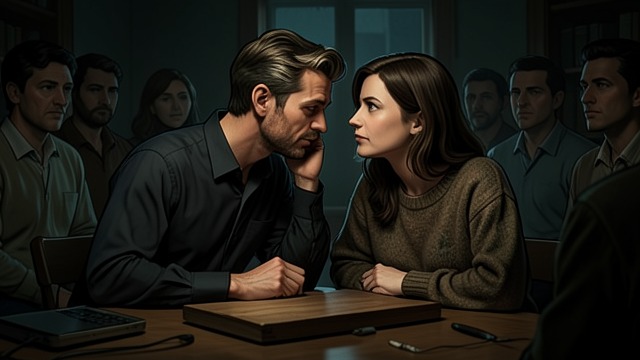
Draco uses the darkness, a concealment charm, and the group’s closed eyes to whisper to Hermione. He moves from the official task of identifying the werewolf to asking what Hermione herself wants.
Hermione reacts strongly but must keep responding to the surrounding game. The scene makes the mismatch between public rules and private desire central to the evening.
The secret distorts the result
Pansy and Ginny later reveal that they helped extend the rounds after recognizing Draco’s strategy. Their intervention prolongs the flirtation but also means the game was not being played as straightforwardly as Hermione assumed.
The Game’s Aftermath
The Game’s Aftermath
A public ending
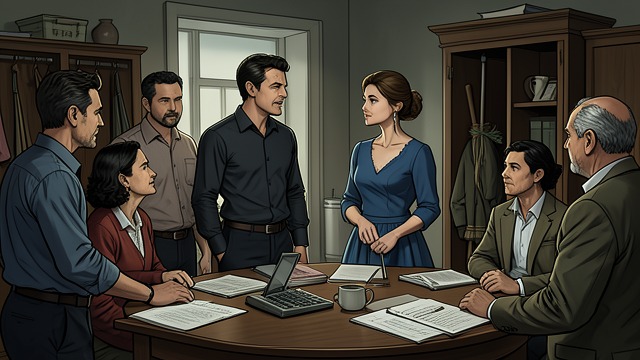
When Draco calls Ginny the werewolf, the game ends with the group’s attention on its remaining players. He then jokes about taking Hermione to a broom closet, turning their private tension into a public punchline.
Hermione leaves hurt and embarrassed. Draco’s successful game strategy cannot prevent him from mishandling the transition back to ordinary social behavior.
A remembered turning point
The game becomes the setting for the first decisive movement in Hermione and Draco’s relationship, but not because its rules determine their choices. Its lasting significance comes from the conversation and repair that follow.
After the first party conversations
The first full moon of the game
The second full moon of the game
During the later full moons
After the final full moon
