Department of Mysteries
The Rules of WerewolfThe Department of Mysteries is the Ministry workplace associated with Hermione Granger and Theodore Nott, a highly restricted institution defined in the evidence by secrecy, controlled access, specialized research, and soundproofed private offices. Although its internal operations are not disclosed, the department is decisive because it gives Hermione a professional identity separate from Harry Potter’s fame, provides the setting for her research into magical memory and coercion, and becomes the hidden meeting place where her relationship with Draco Malfoy crosses from flirtation into physical intimacy.
Identity and Institutional Secrecy
The department is introduced through Draco Malfoy’s pointed question about whether Hermione Granger works there. He knows that Theodore Nott is also attached to the department but complains that Nott is too discreet to reveal its secrets. Hermione answers that such silence may result from integrity, establishing confidentiality not as mere evasiveness but as a professional principle. The exchange presents the Department of Mysteries as an institution whose authority depends partly on what its employees refuse to disclose.
Access is correspondingly structured through barriers. Hermione reaches a locked door, whispers a cipher spell, and moves her wand in the required pattern before entering a large antechamber and proceeding to her private office. The sequence makes the department’s architecture express its institutional logic: passage is possible, but only for someone who knows the correct verbal and magical credentials. The antechamber and cleared wards separate public space from protected research, while the office becomes a further layer of privacy within the department itself.
The department’s secrecy also shapes how others perceive Hermione’s work. At the Witch Weekly photoshoot, Draco and Pansy Parkinson treat her presence as potentially mysterious because a Department of Mysteries assignment would not ordinarily seem like obvious magazine material. Hermione agrees to discuss it because the article will detail it anyway, converting guarded institutional knowledge into a public account of professional achievement. Her decision does not expose the department’s secrets; instead, it reveals the kind of work she is permitted to present without breaching its deeper confidentiality.
Hermione Granger’s Research and Authority
Hermione’s most important disclosed achievement is her reworking of the Trace. She explains that the original system had never sat right with her after everything that happened with Harry Potter, so she spent the last few years redesigning it. The revised system can distinguish between magic performed by an underage witch or wizard and magic merely performed in that young person’s presence. Its significance is practical and legal: it replaces an overly crude form of magical surveillance with a more discriminating method of assigning responsibility.
The reform has also passed beyond private experimentation. The Wizengamot recently approved it, giving Hermione’s research formal institutional legitimacy. Draco recognizes the achievement as revolutionary, while Hermione uses the moment to challenge the idea that she is merely riding Harry Potter’s coattails. The Department of Mysteries therefore functions as the professional context in which Hermione’s intelligence becomes public authority: her work is not only brilliant, but capable of changing how magical regulation operates.
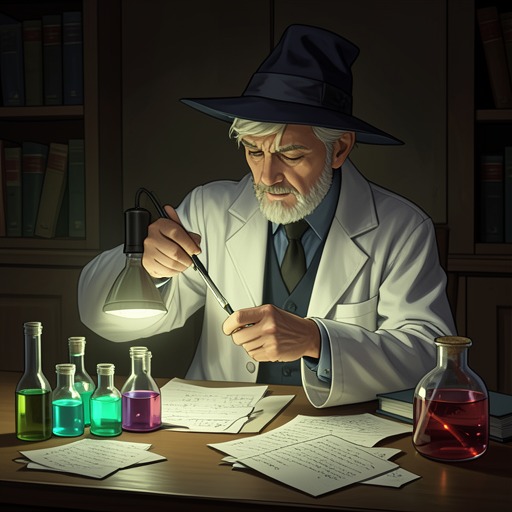
A second line of research concerns the Forget-Me Potion. In her office, Hermione examines frozen ingredients and a separate secondary pile, noting that Ashwinder eggs are becoming increasingly rare. To continue development, she must find a substitute. Her objective is ethically motivated: no witch or wizard should have to endure the embarrassment of behavior produced under the pressure of a powerful love potion, while Obliviate is too powerful to serve as a satisfactory solution. The research joins technical ingenuity to a concern for consent, memory, and the consequences of magical coercion.
This work reveals a different kind of departmental authority from the Trace reform. The Trace project has already reached the Wizengamot, whereas the Forget-Me Potion remains untested and private. Hermione hides the ingredients when interrupted because she cannot yet share unfinished research. The contrast presents the department as a place where institutional change begins in solitary, meticulous experimentation before it can become an approved public intervention.
The Private Office as a Threshold
Hermione’s office is not simply a workplace; it is the most important private threshold associated with the department. Its wards, locked access, and soundproofing protect research from intrusion, but those same protections create a space in which professional roles can be suspended. The office preserves secrecy while allowing a different kind of disclosure, one expressed through presence, scent, touch, and risk rather than through departmental information.
Draco enters by means of the Invisibility Cloak. Hermione immediately recognizes that he should not be there and asks whether it belongs to Harry Potter. Draco responds by treating his arrival as an anticipated intrusion, claiming that she has wanted him to find his way down there for months. The scene turns the department’s access controls into part of their courtship. A place designed to prevent unauthorized entry becomes the setting for deliberate trespass, and the cloak makes secrecy an instrument of intimacy rather than merely institutional protection.
The office also carries the sensory trace of their attraction. Hermione has noticed the mint associated with Draco and has investigated its source, discovering an expensive perfume bottled in Paris’s wizarding ateliers. Earlier, the Amortentia in her office repeatedly smelled of parchment, spearmint, and an unidentified third scent. The department thus records feelings that Hermione cannot entirely keep separate from her professional consciousness: a potion in a secure research environment becomes an involuntary index of desire, while Draco’s scent identifies the person crossing the wards.
The spatial boundary finally gives way through physical action. Draco places the vial back on Hermione’s desk, boxes her in with his hands, and says he would rather taste something else. He then lifts her from the chair and places her across the desk, beginning a sexual encounter in the soundproofed office. The desk, normally a surface for research and official work, becomes the point where institutional discipline and private desire collide. The setting does not erase Hermione’s professional identity; it makes the tension between that identity and her concealed relationship physically visible.
Relations, Rules, and Consequences
The department connects Hermione to Theodore Nott through shared employment, but the evidence emphasizes the limits of that connection: Nott knows its secrets yet will not divulge them. It connects her to Draco differently. Draco’s curiosity begins with her department and its mystery, but his interest quickly shifts from forbidden information to Hermione herself. He seeks her attention, watches for opportunities to speak with her, and later uses knowledge of her office as part of a clandestine approach.
The Department of Mysteries also stands in contrast to the informal rules governing the social world outside it. At Theodore Nott’s birthday gathering, Pansy Parkinson organizes a Werewolf game with roles, altered voices, restricted legilimency, enchanted slips of paper, and rules governing deaths and guesses. Hermione objects to the game’s implication that werewolves are inherently violent, showing her sensitivity to the ethical effects of classification and fear. That concern echoes her Trace reform: in both professional and social contexts, she resists systems that impose a simplistic identity on a person or group.
The department’s rules are stricter, quieter, and more consequential than the party’s game rules. A cipher, wards, secrecy, and soundproofing govern movement and speech, while the Werewolf game openly turns concealment into entertainment. Yet both settings make hidden knowledge central. The party asks participants to deduce an unseen werewolf; the department withholds institutional secrets; Hermione’s office conceals experimental work and an illicit relationship. Against that background, Draco and Hermione’s attraction develops through successive acts of reading, trespass, and testing boundaries.
Narrative Significance
As a setting, the Department of Mysteries gives the story a material form for Hermione Granger’s independence. Her invention of a more precise Trace and her investigation of a safer alternative to Obliviate show her acting as a researcher and institutional reformer rather than as an accessory to Harry Potter’s history. Approval by the Wizengamot confirms that her intellectual labor has consequences in the wider magical society.
At the same time, the department is deliberately less knowable than the public spaces around it. The narrative reveals its locked entrance, antechamber, wards, private office, protected research, and soundproofing, but not the department’s full contents or hierarchy. That controlled partial view preserves its aura of mystery while keeping the focus on what its secrecy does to the characters. It gives Hermione a guarded domain, gives Draco a forbidden destination, and turns professional privacy into the architecture of their concealed relationship.
The resulting irony is central to the department’s meaning. Hermione works inside an institution devoted to hidden knowledge and uses that position to make magical law more accurate and humane, yet she also hides an unfinished potion project and receives Draco through an unauthorized entrance. The Department of Mysteries therefore embodies both ethical responsibility and private transgression: a place where the discipline of secrecy protects important work, but where the same secrecy makes forbidden intimacy possible.