Harry Potter·Daphne Greengrass
The Rules of WerewolfHarry Potter/Daphne Greengrass denotes the tentative attraction developing between Harry Potter and Daphne Greengrass after the war. The relationship is not presented as a declared romance or completed courtship; its significance lies in a handful of charged social gestures that suggest Harry’s interest and Daphne’s receptiveness. In the wider narrative, their emerging intimacy forms part of a broader movement from old divisions toward mixed friendships and new romantic possibilities.
Emergence Within a Reconciled Social Circle
Harry Potter and Daphne Greengrass appear within a social world where former Gryffindors and Slytherins increasingly share parties, friendships, and private circles. At Theodore Nott’s birthday gathering, the game of Werewolf places everyone into a deliberately playful structure of hidden roles, suspicion, and temporary alliances. Although the game’s immediate focus falls elsewhere, its mixed company establishes the social conditions in which Harry and Daphne can meet outside the rigid categories associated with their school years.
The relationship also develops against the background of a gathering organized around Theodore Nott, where Neville Longbottom arrives with an aglaonema plant because his grandmother taught him never to attend a party empty-handed. That domestic, communal atmosphere matters to Harry and Daphne’s connection: the story surrounds their attraction with friends, gifts, banter, and overlapping couples rather than isolating it as a dramatic or forbidden affair. Their possibility grows inside an already functioning network.
Signs of Mutual Interest
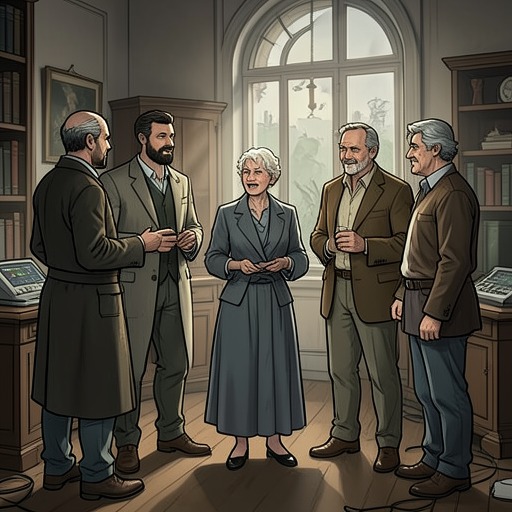
The clearest evidence of Harry and Daphne’s attraction appears later, when they stand with Theodore Nott and Astoria Greengrass in a small circle by a window. Harry reaches over to hold Daphne’s cocktail while she removes her outer sweater in the crowded pub. Daphne responds with a brilliant smile, and Harry blushes. The exchange is mundane in action but unmistakably intimate in presentation: he takes care of a small practical inconvenience, she rewards the gesture warmly, and his blush exposes an emotional response he cannot entirely conceal.
The scene is observed by Hermione Granger, who feels that she may be intruding on a budding intimate moment but is also exceedingly happy for her friend. This framing makes the relationship legible through the eyes of someone attentive to changes in her friends’ emotional lives. Harry’s behavior is not interpreted as ordinary politeness; the combination of his attentiveness, Daphne’s smile, and his embarrassment marks the moment as the beginning of something more personal.
Contrast With the Other Emerging Couples
Harry and Daphne’s understated interaction is placed beside several more visibly established pairings. Blaise Zabini has an arm securely around Ginny Weasley’s waist, while Theodore Nott appears lovesick beside Astoria Greengrass. Ron Weasley stands with Parvati Patil-Weasley and places a hand on his wife’s growing belly. Against these signs of settled romance, Harry and Daphne occupy an earlier and more delicate stage: their connection is still being read through glances, gestures, and blushes rather than through public declarations or domestic certainty.
This contrast gives the relationship a distinct narrative function. It is neither a major conflict nor a disruptive triangle. Instead, it extends the story’s pattern of post-war emotional reorganization, in which familiar characters form new bonds while older social boundaries lose their force. Harry’s ease within Theodore’s circle, and Daphne’s presence among the same friends, make their attraction seem socially possible before it becomes formally defined.
Narrative Significance and Current Status
Harry and Daphne’s relationship represents possibility rather than resolution. The available scene ends with Hermione recognizing the intimacy between them, not with Harry or Daphne naming it. Their status therefore remains newly romantic and suggestive: Harry’s blushing attentiveness and Daphne’s brilliant smile establish reciprocal warmth, but the narrative does not yet provide a confession, kiss, or explicit commitment.
That incompleteness is important to the story’s romantic-comedy design. While Hermione Granger and Draco Malfoy move through overt sexual tension, interruptions, negotiated pauses, and eventual partnership, Harry and Daphne are introduced through a gentler public image of care and embarrassment. Their emerging bond broadens the ending’s social horizon. The story does not conclude with one couple’s happiness alone; it presents a circle in which multiple friendships and romances are taking shape, with Harry and Daphne positioned at the beginning of their own.
Place in the Ending Ensemble
By the time Hermione Granger and Draco Malfoy leave the Ministry hand in hand, their relationship has become an open part of their shared life. They travel together to Diagon Alley carrying the small green clutch Draco gave Hermione, while their friends gather for another celebration. Within that larger movement toward communal continuity, Harry and Daphne’s developing connection helps show how the social landscape has changed: former divisions have not merely been set aside in theory but have been replaced by ordinary companionship, attraction, and mutual attention.
Harry’s blush beside Daphne’s smile is consequently a small but pointed image of renewal. It lacks the spectacle of a declaration, yet it carries the promise of one. The relationship’s decisive contribution is to make the future of the group feel larger than the central romance, suggesting that reconciliation and emotional growth continue beyond the couples whose stories have already reached fulfillment.