Harry Potter·Ginny Weasley
The Rules of WerewolfHarry Potter/Ginny Weasley is defined by the relationship that remains after their romantic partnership has ended: Harry Potter and Ginny Weasley are no longer together, but they continue to belong to the same trusted circle and treat one another as friends. The story uses that transition to show that separation need not erase affection or social belonging. Their continued connection also helps make possible the larger post-war movement from old romantic pairings toward new, less predictable forms of intimacy.
From Romance to Friendship
The clearest statement of the changed relationship comes when Ron Weasley insists that Ginny Weasley has moved on. His remark is direct and slightly uncomfortable, but it establishes that the breakup is not being treated as an unresolved crisis. Ginny Weasley confirms this position herself, rejecting the idea that her choices should still be organized around Harry Potter. She describes Harry Potter and herself as over and argues that she should be free to have fun, making emotional independence an explicit part of her present identity.
The relationship therefore retains familiarity without retaining romantic obligation. Harry Potter and Ginny Weasley remain close enough to share friends and attend the same gatherings, yet Ginny Weasley is not presented as waiting for reconciliation. Her willingness to speak plainly about the end of the relationship gives the separation a settled quality, while her continued presence in Harry Potter's social world prevents the past from being reduced to hostility or estrangement.
A Social Connection After the Breakup
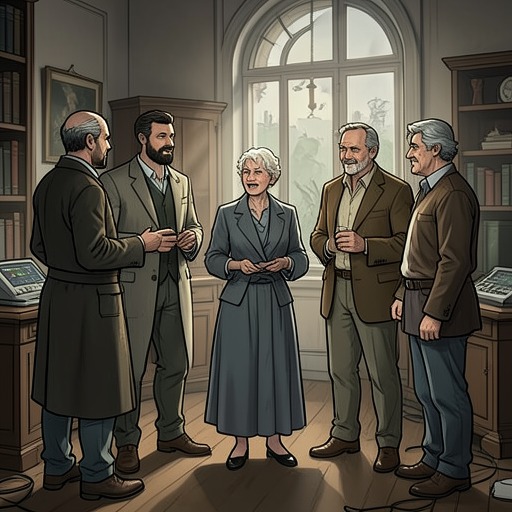
Ginny Weasley remains part of the group that Hermione Granger persuades to attend Theodore Nott's birthday celebration at Nott Manor. Hermione Granger frames the gathering as a chance for everyone to go out together again, and Harry Potter accepts the invitation alongside Ginny Weasley, Neville Longbottom, Ron Weasley, and the others. The decision places Harry Potter and Ginny Weasley in a shared social environment without making their former romance the event's central issue.
That setting matters because the party brings together people whose earlier loyalties and conflicts once seemed to divide them. Harry Potter arrives with the Gryffindor-linked group, while the guests include Theodore Nott, Pansy Parkinson, Daphne Greengrass, Blaise Zabini, and Draco Malfoy. Ginny Weasley's continued friendship with Harry Potter helps normalize this expanded network: she can attend an event connected to his friends while also exploring her own interest in Blaise Zabini. The former couple's ability to occupy the same room as friends supports the story's broader image of post-war social repair.
Ginny Weasley's New Direction
Ginny Weasley's conversation with Hermione Granger makes the change especially visible. She explains that Blaise Zabini and Daphne Greengrass, who work in the Magical Games and Sports Department, have been part of her world for years through her matches. She describes Blaise Zabini as funny because he does not take himself too seriously, then says that she wants fun. Hermione Granger interprets this as a movement from a rebound period toward wanting someone serious without wanting excessive seriousness.
Ginny Weasley answers that interpretation by telling Hermione Granger that Harry Potter and she are over and that she should be allowed to enjoy herself. The exchange is teasing rather than bitter. Hermione Granger's questioning acknowledges the romantic implications of Ginny Weasley's interest in Blaise Zabini, while Ginny Weasley's response establishes that her new desire is not an act of betrayal toward Harry Potter. Her future is open precisely because the old relationship has been accepted as finished.
Contrast with the New Romances
The Harry Potter/Ginny Weasley relationship functions as a contrast to the new attraction developing between Hermione Granger and Draco Malfoy. Hermione Granger admits that she and Draco Malfoy have exchanged notes at work and that she cannot stop thinking about the correspondence. At the same time, Harry Potter remains an attentive friend rather than a jealous former partner, and Ginny Weasley can discuss Blaise Zabini without concealing the fact that she has moved on.
This contrast allows the story to distinguish former intimacy from renewed desire. Harry Potter and Ginny Weasley represent a relationship that has changed category but not disappeared; Hermione Granger and Draco Malfoy represent an antagonistic connection becoming erotic and romantic; Ginny Weasley and Blaise Zabini represent a new possibility emerging within the same social circle. The narrative's romantic-comedy structure depends on these distinctions. The humor and tension come from flirtation, teasing, and unexpected pairings, not from making the former couple's breakup into a permanent feud.
Continuing Place in the Group
Harry Potter and Ginny Weasley remain connected through the group's ordinary movements and shared friendships. Harry Potter is present when the party guests gather, and he later enters the balcony area while Hermione Granger and Draco Malfoy are trying to conceal the intensity of their encounter. His interruption is framed through his familiar concern for Hermione Granger, not through suspicion directed at Ginny Weasley or possessiveness about their former relationship.
By the time Hermione Granger and Draco Malfoy's relationship has taken off after Theodore Nott's party, the group has become visibly mixed. At Nox, Draco Malfoy holds the door for Hermione Granger while scanning the crowded bar for their friends, and Ginny Weasley is seen with Blaise Zabini's arm around her waist. The image confirms the new arrangement without requiring a formal reconciliation scene: Ginny Weasley has entered another relationship, Harry Potter remains part of the same community, and the former couple's friendship survives as one strand in a reorganized social network.
Narrative Significance
Harry Potter/Ginny Weasley embodies the story's low-conflict approach to emotional change. The breakup is acknowledged, but it does not become a spectacle of blame, rivalry, or social exclusion. Ginny Weasley states her independence, Harry Potter continues to treat her as a friend, and both remain integrated into a circle that increasingly crosses old Gryffindor and Slytherin boundaries.
The relationship also gives the story a measured account of moving on. Ginny Weasley's interest in Blaise Zabini does not cancel her history with Harry Potter, while Harry Potter's continued friendship does not imply that the romance is secretly being restored. Their bond matters because it demonstrates that an ended relationship can be preserved in altered form, allowing the characters to carry shared history forward while making room for different futures.