Hermione Granger·Ginny Weasley
The Rules of WerewolfHermione Granger/Ginny Weasley is one of the story’s most intimate and functional friendships: Ginny Weasley gives Hermione Granger a space where embarrassment can become comedy, desire can be admitted without ceremony, and hesitation can be answered with practical encouragement. Their bond does not merely surround Hermione’s romance with Draco Malfoy; it helps bring that romance into the open, converting private confusion into choices Hermione can make for herself.
A Friendship Built on Candor
Ginny arrives at Hermione’s bedroom with energetic familiarity, diving onto the bed while Hermione sorts books into piles after four days of nervous cleaning. Her first concern is not Hermione’s family history but what the two of them are walking into at Theodore Nott’s birthday celebration and, more importantly, what they will wear. The question establishes Ginny as both confidante and catalyst: she recognizes that Hermione’s anxiety is attached to the party and gives it a concrete form that can be discussed.
Their conversation about clothing is playful but also revealing. Hermione considers a camel suede skirt with a black top, while Ginny approves the combination and imagines Hermione wearing her hair down in a relaxed style. Ginny chooses a jumpsuit with a plunging neckline after Hermione suggests it. Her enthusiasm confirms that Hermione’s growing interest in fashion is visible to her friends, and Ginny treats that change as a welcome development rather than something requiring explanation. The exchange makes clothing part of their shared language, a means of preparing for social risk while allowing Hermione to experiment with how she wishes to be seen.
Ginny also gives Hermione a blunt account of the social landscape. She reassures her that Blaise Zabini and Daphne Greengrass, both associated with the Magical Games and Sports Department, are not as forbidding as Hermione may assume. Ginny describes Blaise as someone who does not take himself too seriously and says that she wants fun after her relationship with Harry Potter has ended. Hermione answers with teasing analysis of Ginny’s rebound, while Ginny rejects the judgment and insists on her right to enjoy herself. Their joking disagreement shows a friendship secure enough to accommodate frankness without turning it into conflict.
Preparing Hermione for the Party
Ginny helps transform the party from an intimidating encounter with Slytherins into a shared social undertaking. She has already spoken with Neville Longbottom and Ron Weasley, confirming that they will attend, and assumes that Hermione has spoken with Harry Potter. Hermione remains incredulous that the whole group has agreed to go to Theodore Nott’s birthday celebration at Nott Manor, but Ginny’s familiarity with several Slytherins supplies a bridge between the two circles.
That bridge matters because the gathering is not presented as a solitary romantic mission. The invitation itself comes from Draco Malfoy, who asks Hermione to bring her Gryffindor friends; Ginny’s attendance therefore places Hermione’s private tension inside a larger network of friendships and former divisions. Ginny’s willingness to enter that setting, choose a daring outfit, and treat the Slytherins as potentially enjoyable company helps make the crossing between social groups feel ordinary rather than dangerous.
Ginny is particularly alert to the way Hermione speaks about men. When Hermione insists that she has no type and that Theodore Nott is merely charming, Ginny pushes the subject toward Draco. Hermione admits that she has been thinking about someone who could wear a Quidditch kit, and Ginny’s repeated elbowing turns the implication into an affectionate interrogation. Ginny does not need Hermione to name the attraction before recognizing it; she reads the blush, the evasions, and the sudden intensity of Hermione’s attention.
The Confession About Draco Malfoy
The most important disclosure between them occurs when Hermione admits that she and Draco have been exchanging notes at work. She calls the correspondence harmless, but immediately adds that she cannot stop thinking about it. Ginny responds with characteristic exaggeration, declaring that Hermione is already deeply involved, while Hermione protests that the situation is not certain. The humor protects the confession from becoming solemn, but it does not diminish its importance: Ginny is the first person in this exchange to whom Hermione states the attraction plainly.
Ginny’s response is not passive reassurance. She promises to help Hermione and says that Draco will not know what hits him the following night. The promise turns friendship into intervention. Hermione’s feelings are no longer an isolated interior problem; Ginny treats them as something the two women can strategize around together, with teasing, clothing, timing, and social opportunity all serving the same purpose.
This support also reveals Ginny’s confidence in Hermione’s judgment. At the party, Ginny and Pansy Parkinson secretly extend the rounds of Werewolf after realizing that Draco is using the game to move closer to Hermione. Their intervention gives Draco more time to whisper to Hermione, test the boundaries of their flirtation, and create a private intensity inside the public game. The plan is mischievous, but Ginny does not regard Hermione as an object being maneuvered without agency. She later tells Draco that Hermione runs from her feelings, that she knows Hermione is interested, and that she trusts Hermione’s judgment.
From Teasing to Direct Intervention
Ginny’s role becomes decisive after the Werewolf game. Draco approaches her and Pansy, suspecting that they have abused the special legilimency privileges assigned for the game. Pansy explains that she and Ginny deliberately prolonged the evening once they understood what Draco was doing. Ginny then challenges Draco more directly, questioning what he is waiting for and urging him to go after Hermione.
Her intervention is carefully balanced. She still calls Draco a git and makes clear that she does not know him well enough to offer unconditional approval, yet she refuses to let suspicion erase what she has observed. Hermione’s reaction matters more to Ginny than Draco’s reputation alone. The friendship therefore functions as a protective filter: Ginny encourages the pursuit because she sees Hermione’s interest, but she does not abandon her skepticism toward the man pursuing her.
The advice is especially significant because Hermione has retreated after the charged encounter. Ginny understands that Hermione’s withdrawal is not simple rejection. She interprets it as a defensive response to feelings that have become difficult to manage, and she presses Draco to recognize the difference. In the romantic-comedy structure, Ginny turns a possible misunderstanding into forward motion, pushing the couple past the temporary rupture created by embarrassment and interrupted intimacy.
The Person Hermione Calls
After Draco and Hermione kiss on the balcony at Nott Manor, Hermione stops the encounter because it is moving too quickly for her. She wants the intimacy, but she needs it to proceed on her terms. Harry’s interruption then carries Hermione away from the moment before she can explain that distinction, leaving her afraid that Draco may believe she rejected him. Rather than remain alone with the uncertainty, Hermione reaches for Ginny.
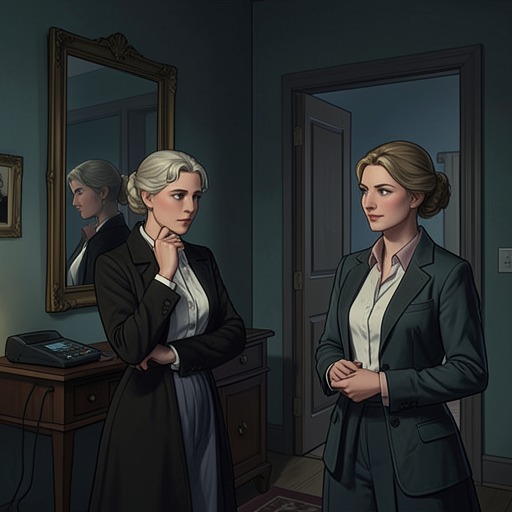
At home, Hermione searches for her purse, takes out the mobile phone she bought Ginny the previous Christmas, and calls her. The device is itself a small emblem of their closeness: Muggle technology has become valuable because it gives them another private channel for conversation. Hermione’s nervous pacing and fear that Draco is slipping away show that Ginny is not merely a party companion; she is the person Hermione instinctively seeks when romantic uncertainty becomes urgent.
Ginny initially answers curtly because Hermione has only just left, but she quickly understands the significance of the call. When Hermione confirms that the matter concerns Draco, Ginny laughs and calls the development brilliant. Her reaction does not force Hermione to justify her desire or defend the kiss. Instead, it receives the news as something long anticipated, almost as though Hermione’s private attraction has finally caught up with what Ginny already knew.
Ginny offers to return to Nott Manor, and Hermione accepts the possibility immediately, ending the call before waiting for a response. The offer converts emotional reassurance into practical rescue. Ginny is ready to re-enter the social scene so Hermione can find Draco and address what happened, while Hermione’s abrupt decision to return shows that the friendship has helped her move from panic toward action.
Narrative and Emotional Significance
Ginny’s friendship with Hermione provides the story with a social mechanism for intimacy. Hermione and Draco’s attraction begins in notes, glances, clothing, flirtation, and bodily reactions that neither easily names; Ginny gives those signals an audience capable of decoding them. She teases Hermione about Draco, assists the party’s romantic circumstances, and then speaks to Draco when Hermione’s own retreat threatens to halt the relationship.
The friendship also counters Hermione’s tendency to retreat into thought. Hermione is highly self-aware but can become trapped in analysis, while Ginny responds through movement: she dives onto the bed, helps select clothes, elbows Hermione when she evades the obvious, extends the party game, pushes Draco toward Hermione, and offers to return when Hermione needs help. Her support is therefore both emotional and kinetic. She does not simply tell Hermione that her feelings are valid; she helps create conditions in which Hermione can act on them without surrendering control.
Within the wider post-war social world, Ginny also operates as a bridge between former Gryffindor and Slytherin circles. She can speak about Blaise Zabini and Daphne Greengrass from experience, collaborate with Pansy, and still remain fiercely loyal to Hermione. Through that position, the friendship embodies the story’s movement away from inherited hostility and toward chosen connections. Ginny’s joking, meddling, and protectiveness make Hermione’s relationship with Draco legible not as an isolated transgression, but as one new bond developing within an expanding community of trust.