Ben Richards seizes control of the aircraft
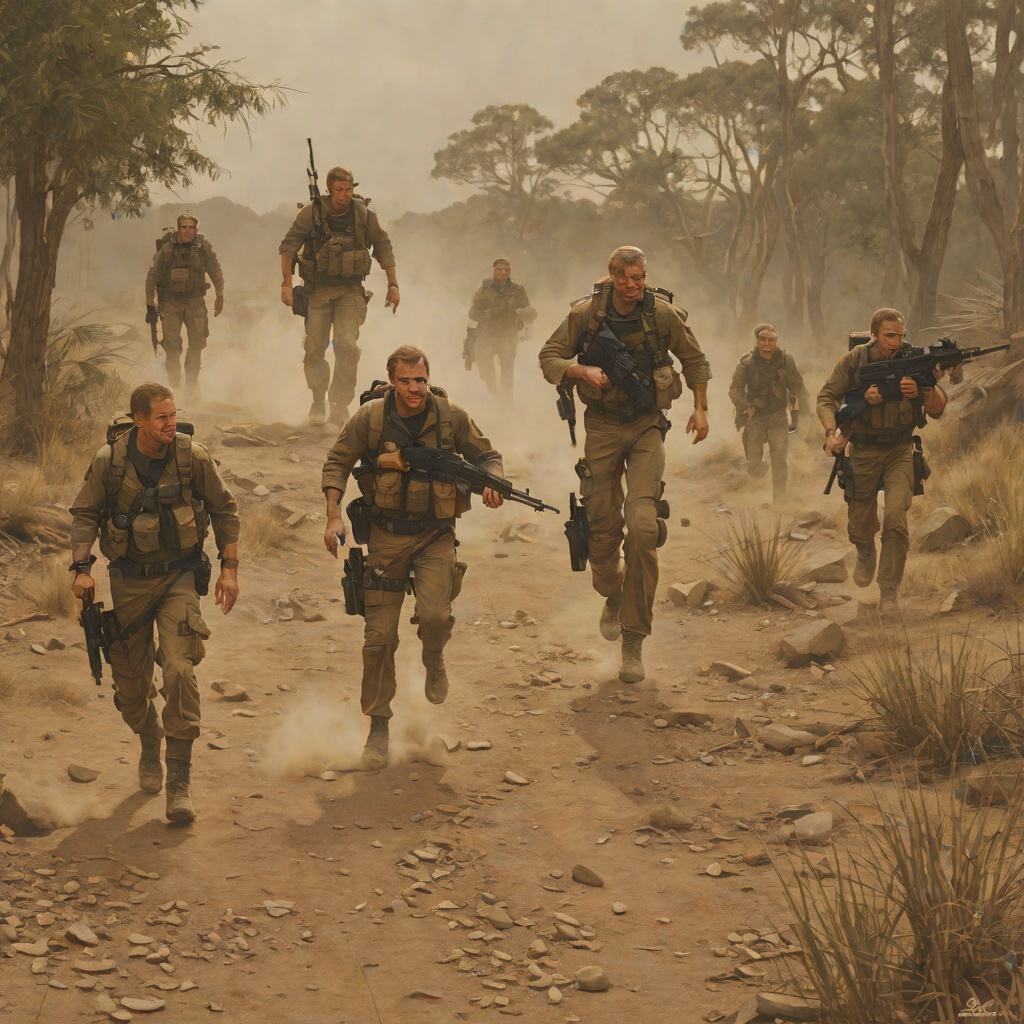
The Running ManBen Richards seizes control of the aircraft at the climax of his flight from the Games Authority. Wounded, exhausted, and surrounded by the institutions that have turned his family’s death and his own survival into television entertainment, he removes the crew one by one, takes the gun, answers the aircraft’s radio traffic, and discovers that Otto, the automatic pilot, is driving the bus. The act is both a hijacking and a decisive change in Richards’s position: he is no longer merely fleeing the system’s pursuit, but directing the aircraft toward the institution that created it.
Circumstances and Stakes
The takeover grows out of a society in which crisis has been made profitable and spectacle has replaced public judgment. Illness, pollution, poverty, war, and civil unrest appear as recurring background conditions, while Free-Vee converts fear into attention and attention into revenue. In Co-Op City, Sheila Richards watches her daughter Catherine Sarah Richards suffer a flu that has become a family emergency; Ben Richards, waiting to enter the Games, watches a big-money program with restless disgust because he knows that the same spectacle may soon consume him. The Games are presented as mass entertainment, but their structure is openly punitive. Dan Killian, the executive producer of The Running Man, tells Richards that the program is one of the Network’s surest methods for eliminating troublemakers and that, after six years, there have been no survivors.
The broadcast then supplies the public meaning that Richards must fight against. Bobby Thompson introduces him as a frightening figure from south of the Canal, displays a retouched portrait that makes him look like an urban predator, and offers New Dollar rewards for sightings and killings. Sheila is also falsified on screen: the image of Richards’s wife is airbrushed into a grotesque caricature of greed and sexual degradation. Thompson’s language turns a desperate participant into a monster, and later describes him as a wolf, a killer, and a prospective leader of disorder. The spectacle does not simply report a manhunt; it manufactures the categories of threat and innocence that make the hunt appear justified.
The Takeover on the Lockheed TriStar
Inside the Lockheed TriStar, Richards acts with the compressed brutality of someone who has abandoned every remaining expectation of institutional mercy. His wound opens again as he strikes Robert S. Donahue with a Silex coffee pot. The pot does not break, but it takes a large blot of Donahue’s blood, and Donahue collapses across the map table. Richards then searches the dead man’s blue flight jacket and finds the gun. Before releasing Donahue’s head, he raises it farther and examines the open mouth, where he sees a tiny glitter of mesh. The discovery confirms that Donahue’s body contains concealed equipment or surveillance technology, making the crew part of the same hidden apparatus that has pursued and represented him.
Richards carries the violence into the passage. When Friedman calls from across the hall and asks about Donahue, Richards shoots him just above the upper lip. The shot destroys teeth, blood, hair, and brain matter across the wall behind a three-dimensional advertising image. The setting’s collision of murder and commercial display is not incidental: even at the moment of takeover, the aircraft remains surrounded by the culture of images and consumption that has framed the chase.
Holloway attempts to shut the pilot-compartment door, but Richards shoots him in the belly. Holloway falls face-first after a shocked cry. Duninger, turned around in his chair with a slack, moonlike face, begs Richards not to shoot him. Richards answers with apparent kindness, offers him the gun’s final attention, and kills him. The sequence removes the human crew, but it does not leave Richards with full technical mastery. He limps to the controls, finds a maze of dials and switches, and wonders whether an important flight should have a constantly open communications link. His uncertainty makes the takeover precarious rather than triumphant.
Seizing Control Through Performance
Richards’s control is partly technological and partly theatrical. When the radio asks for an acknowledgment, he responds conversationally and reports that the aircraft’s Free-Vee is operating. He answers the routine check with the phrase “Five-by,” then listens as the unseen voice asks him to tell Duninger that he owes the speaker a beer. Richards does not reveal the killings. He adopts the language of ordinary flight operations, using the radio’s bureaucratic rhythm to conceal the transformation inside the aircraft.
That performance reverses the logic of The Running Man. The Network has used edited images, altered voices, monetary rewards, and repeated announcements to dictate what viewers believe Richards is doing. Earlier, a broadcast clip makes him appear to threaten police and mobilize an army of malcontents, while Thompson’s solemn presentation gives fabricated material the authority of official truth. On the aircraft, Richards now manipulates a communications channel in the same basic manner: he selects what the outside world will hear, suppresses the immediate facts, and buys enough time to act. His deception is narrower and more desperate than the Network’s propaganda, but it demonstrates that control of narrative and control of infrastructure are inseparable.
The automatic pilot, Otto, supplies the crucial mechanical advantage. Richards does not need to master every control in the cockpit because Otto is driving the aircraft. This detail changes the meaning of the seizure. The aircraft is not simply an object he has learned to fly; it is an automated vehicle whose existing systems allow a wounded fugitive to convert a killing into a strategic course of action. Infrastructure first enables the state and the Games to track, broadcast, and police bodies; at the climax, the same automation becomes the means by which Richards can redirect violence toward the center of that system.
From Fugitive to Attacker
The emotional pressure behind the takeover is inseparable from the murder of Sheila Richards and Catherine Sarah Richards. Dan Killian claims that the Network had nothing to do with their deaths and describes them as the victims of prowlers, perhaps drugged or frightened men who attacked after Sheila tried to protect her daughter. Richards briefly supposes that the story might be true because it sounds too much like a lie not to be the truth, and because he knows that accepting Killian’s job offer would first take him back to Co-Op City, where he could investigate. Yet the memory of Sheila and Cathy overwhelms the explanation. He rejects it violently and demands to know what really happened.
That withheld truth is the psychological hinge of the aircraft scene. The broadcast has repeatedly offered prefabricated stories: Richards is a wolf, his wife is a slattern, the police are vulnerable heroes, and the Network is an innocent distributor of entertainment. The aircraft takeover refuses the final official account. Richards’s violence cannot restore his family, but it rejects the Network’s right to determine the meaning of their deaths. The concealed mesh in Donahue’s mouth, the crew’s coordinated presence, and Killian’s evasive explanation reinforce the suspicion that the apparent accident is part of a larger system of surveillance and control.
The takeover also reverses the program’s promised structure. The Running Man advertises a contest in which the hunted contestant can never survive and the audience can participate by reporting or killing him. Richards’s seizure of the aircraft removes him from the ordinary playing field while preserving the program’s most important element: public spectacle. He turns the institution’s own vehicle into a weapon and makes the producers, announcers, and officials vulnerable to the same concentrated attention they have directed at him.
Consequence and Final Direction
The immediate consequence is the death of Donahue, Friedman, Holloway, and Duninger and the effective removal of the crew from the aircraft. Richards acquires a firearm, establishes a false appearance of normal communication, and remains physically capable of directing the flight despite his wound and limp. The radio continues to treat the aircraft as routine traffic, which intensifies the irony: the outside system hears calm acknowledgments while a private rebellion is already in motion.
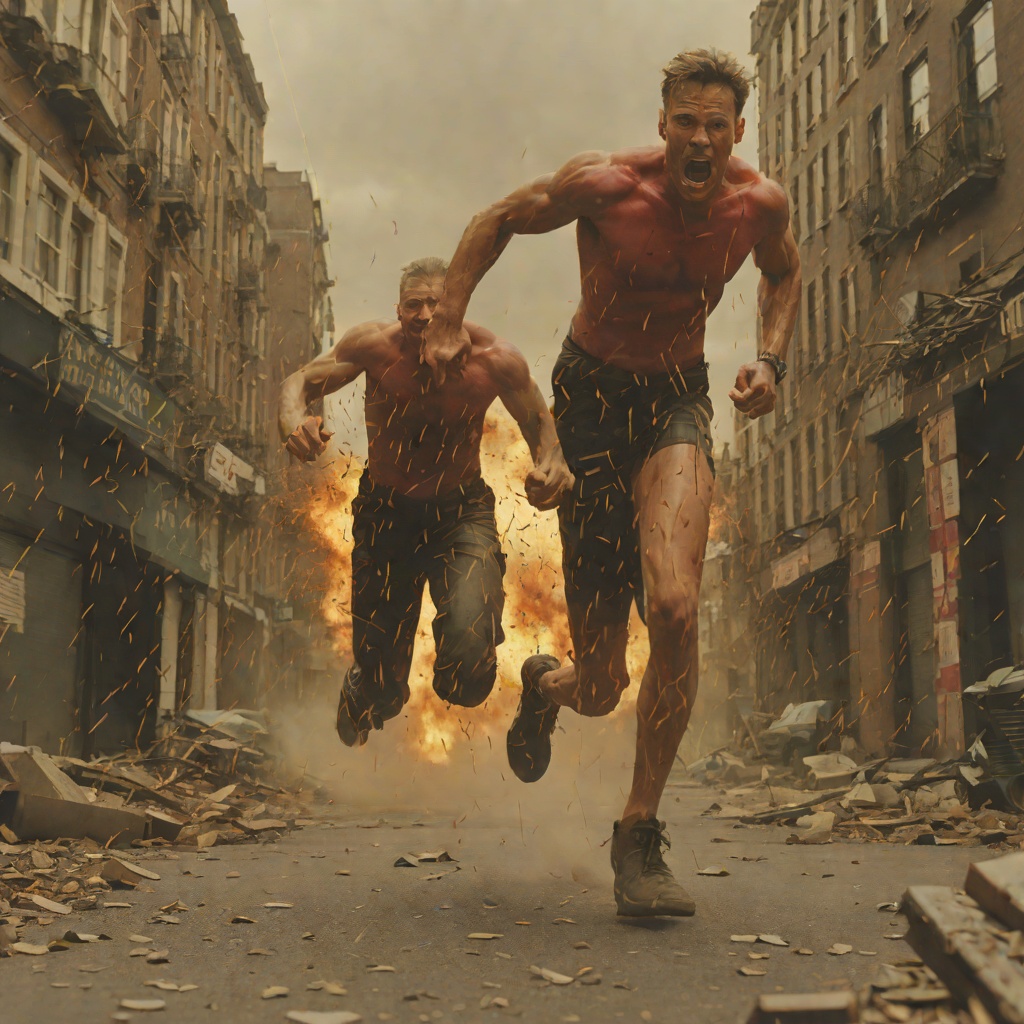
The final direction is not an escape into safety. After the radio exchange, Richards returns to finish his business. The aircraft is still carrying more than a quarter of its fuel and is traveling at slightly over five hundred miles per hour when it strikes the Games Building three-quarters of the way up. The impact is direct, the explosion lights the night like divine wrath, and fire falls as far as twenty blocks away. Thus the aircraft takeover culminates in an attack on the physical headquarters of the Games rather than in personal refuge. Richards’s seizure of control changes the hunted man’s route into a terminal act of retaliation, destroying the building that has made his life a broadcastable contest and collapsing the distinction between media spectacle, state power, and organized violence.