Boston
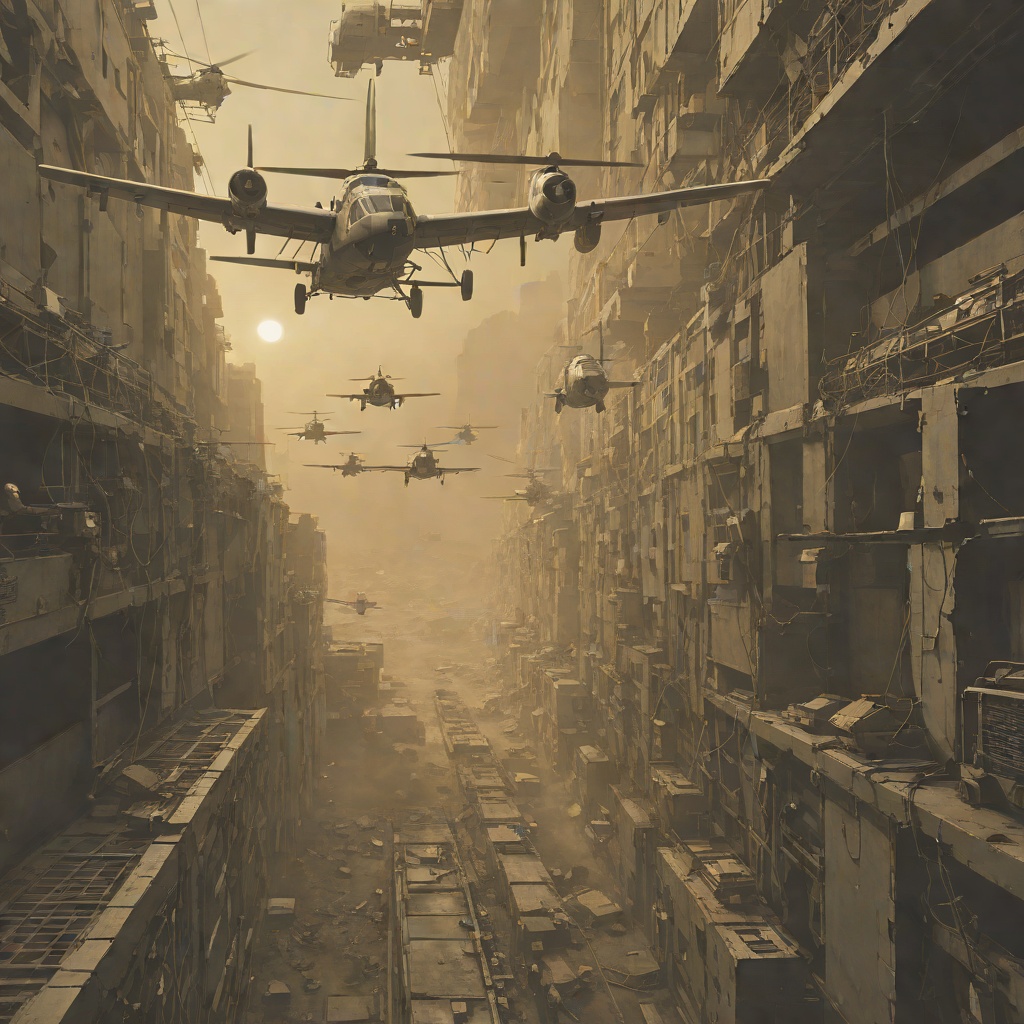
The Running ManBoston is the first destination Ben Richards chooses after The Running Man turns him into a nationally hunted figure, but it is more than a place of refuge. The city is presented as a vertically and economically divided system: Co-Op City lies south of the Canal in decay and unemployment, while the districts nearer the Network Games Building are patrolled, commercialized, and organized around the Games. Boston therefore converts movement into a political test. Every crossing exposes another layer of surveillance, and every public institution can become either a trap or a broadcast set.
Urban Division and the Canal
Boston first appears as the answer to an urgent strategic problem. After the televised confrontation with Bobby Thompson, Ben Richards wakes sweating, realizes that he does not yet have a gun, and reduces his immediate plan to a terse imperative: run fast. Boston is selected as the beginning of that flight, not as a promised sanctuary but as the next reachable city in an escape whose conditions are already controlled by the authorities.
The city’s social geography is established through Richards’s movement out of Co-Op City. South of the Canal, Co-Op City is a “radiating rat warren” of parking lots, deserted shops, Urban Centers, and paved playgrounds. A stripped 2013 Humber sits abandoned on decayed axles; rats cross cracked cement; cycle gangs exercise practical authority; and the police rarely venture into the district. Richards walks through sulphurous air and rain because his weekly twenty-dollar unemployment allotment in oldbucks has already been spent, leaving him unable to buy a pneumo-bus token. Poverty is not merely described as a condition there: it determines how he travels, how visible he is, and what kinds of danger he can avoid.
The same urban journey changes character after he crosses the Canal. The poorer district gives way to cleaner highrises and the increasingly imposing Network Games Building, then to expensive movie houses, ungrilled smoke shops, Rent-A-Pigs, and a city cop on every corner. The People’s Fountain Park offers a tightly guarded glimpse of managed prosperity: admission costs seventy-five cents, children play on astroturf behind chain-link fencing, and police stand on both sides of the gate. The Canal thus functions as a class boundary and a security boundary. On one side, public order has been abandoned to gangs; on the other, order is overproduced, commercial, and ready to move Richards along or arrest him for loitering.
Boston as the Games’ Territory
The Network Games Building dominates the approach. It rises one hundred stories, with its upper half buried in cloud and smog cover, and becomes more improbable as Richards nears it. The qualifying examination line stretches for more than a mile and nine blocks, forming an “eternal snake” watched by police with hands near gun butts or Move-alongs. The line’s apparent openness conceals a sorting mechanism: men from the margins are permitted to approach only because the Games can absorb them as contestants.
Richards understands the city’s narrowed vocabulary of purpose. Uptown, a man in baggy gray pants, a cheap bowl haircut, and sunken eyes has only one recognized function: the Games. Boston’s institutional landscape therefore does not offer neutral civic alternatives. The Canal, the Games Building, the examination line, and the police presence form a sequence in which unemployment is translated into entertainment and desperation into eligibility.
The city also becomes the first major setting in which Richards is separated from his own image. Backstage, a hidden-camera portrait presents him as Benjamin Richards, a brutal and primitive “angel of urban death,” the supposed boogeyman of uptown apartment dwellers. Bobby Thompson announces that verified sightings in Boston will earn one hundred New Dollars and that a sighting resulting in a kill will earn one thousand. The broadcast turns local knowledge into a bounty economy: the city’s residents are invited to look at one another through the Games’ frame and to convert recognition into cash.
The Boston Y.M.C.A. and the Escape
The Boston Y.M.C.A. stands on upper Huntington Avenue as a huge, black, boxy building marked by age. Its old-fashioned neon points toward the theater district, but the building is characterized as the skeleton of a murdered idea, a remnant of civic shelter whose historical promise has become ominous. Richards enters its lobby after traveling north by bus and encounters a dispute between the desk clerk and a small Black boy over a gum machine. Even this minor encounter places the building among the city’s worn institutions, where scarcity and humiliation surface before the larger violence begins.
The Y.M.C.A. becomes the first enclosed Boston space in which Richards attempts to disappear and from which he must escape. Dan Killian later speaks of five policemen dying in its basement, claiming that Richards set a clever and merciless trap. The Network’s account assigns Richards complete responsibility and supplies the city with a simple moral image: a wolf moving among ordinary people. The accusation is repeated through the television program, which asks where he is and urges viewers to look for him, turning the building into both crime scene and propaganda exhibit.
Richards rejects the official version, but the broadcast prevents him from correcting it. A manipulated clip makes him appear to urge crowds to storm libraries, demand cards, and investigate books about air pollution and water pollution; spliced audio then gives him threats to kill policemen and the Games Commission. Thompson’s split-screen presentation places Richards’s portrait beside the host’s grave face and defines him as a man who would mobilize malcontents to rape, burn, and overturn the streets. The Boston Y.M.C.A. is consequently remembered not through an uncontested record of what happened there, but through a media reconstruction that makes the city’s police deaths serve the Games’ narrative.
From Refuge to Pursuit
When Richards tells Dan Killian that he has to get out of Boston, Bradley Throckmorton responds by offering shelter with Bradley and Stacey. The decision shifts Boston from a temporary hiding place into the first stage of an organized escape. Bradley stays out arranging a car and another gang member to drive it to Manchester, while Richards remains inside. The city is no longer traversed alone on foot; it becomes a point from which a fragile network of assistance can be activated.
Yet Boston remains present even after the escape route is arranged. Bradley and Stacey watch The Running Man broadcast, and Bobby Thompson addresses the people of Boston directly, announcing the alleged deaths of the five policemen at the Y.M.C.A. The city’s population is treated as a single audience and a potential hunting force. Boston is at once the place Richards must leave and the audience before which his fabricated identity is continuously refreshed.
Dan Killian’s later assurance that the Network had nothing to do with the deaths of Sheila Richards and Catherine Sarah Richards is also tied to Boston. Killian knows that, if Richards accepts the job offer, his first stop will be Co-Op City, where even an hour on the streets would reveal the truth. This claim makes Boston the geographic hinge between official explanation and lived evidence. The city contains both the broadcast lie and the neighborhood capable of disproving it.
Narrative Significance
Boston’s importance lies in how its spaces produce unequal possibilities. Co-Op City offers obscurity without safety, because poverty removes access to transport and formal protection while cycle gangs dominate the streets. The districts around the Games Building offer infrastructure and visibility, but that visibility is precisely what allows police and television to classify, move, and monetize Richards. The Boston Y.M.C.A. occupies the darkest middle ground: an old public building transformed into a sealed site of violence and then repurposed as evidence for a national manhunt.
The city also gives the novel a compact model of the wider social order. Crossing the Canal does not mean leaving deprivation behind; it means entering the polished zone that depends on deprivation as spectacle. Free-Vee cables are safely buried beneath the streets, and the dream machine operates around the clock beyond the Canal, but only employed people possess the New Dollars needed to access it. Boston’s media culture therefore rests on the same division as its streets: those excluded from prosperity become the material through which prosperity entertains and reassures itself.
By the time Richards leaves Boston with Bradley Throckmorton’s help, the city has completed its first transformation of him. He entered as an unemployed man seeking a starting point and emerged in the public record as a supposed killer, a televised wolf, and a reward-bearing target. Boston is decisive because it joins physical flight to ideological capture: Richards can escape its buildings, roads, and police lines, but the Boston broadcast travels with him.