Boston Y.M.C.A.
The Running ManBoston Y.M.C.A. is a vast, deteriorating lodging house on upper Huntington Avenue, and its importance lies in the reversal it undergoes: it first appears to Ben Richards as a temporary refuge in a hostile city, then becomes the setting for a spectacular escape and the official story used to brand him a killer. The building’s worn architecture, desperate occupants, and vulnerable infrastructure embody the social world from which Richards is trying to escape, while its televised aftermath shows how completely the Games can convert a chaotic event into a fixed public narrative.
Setting and Physical Condition
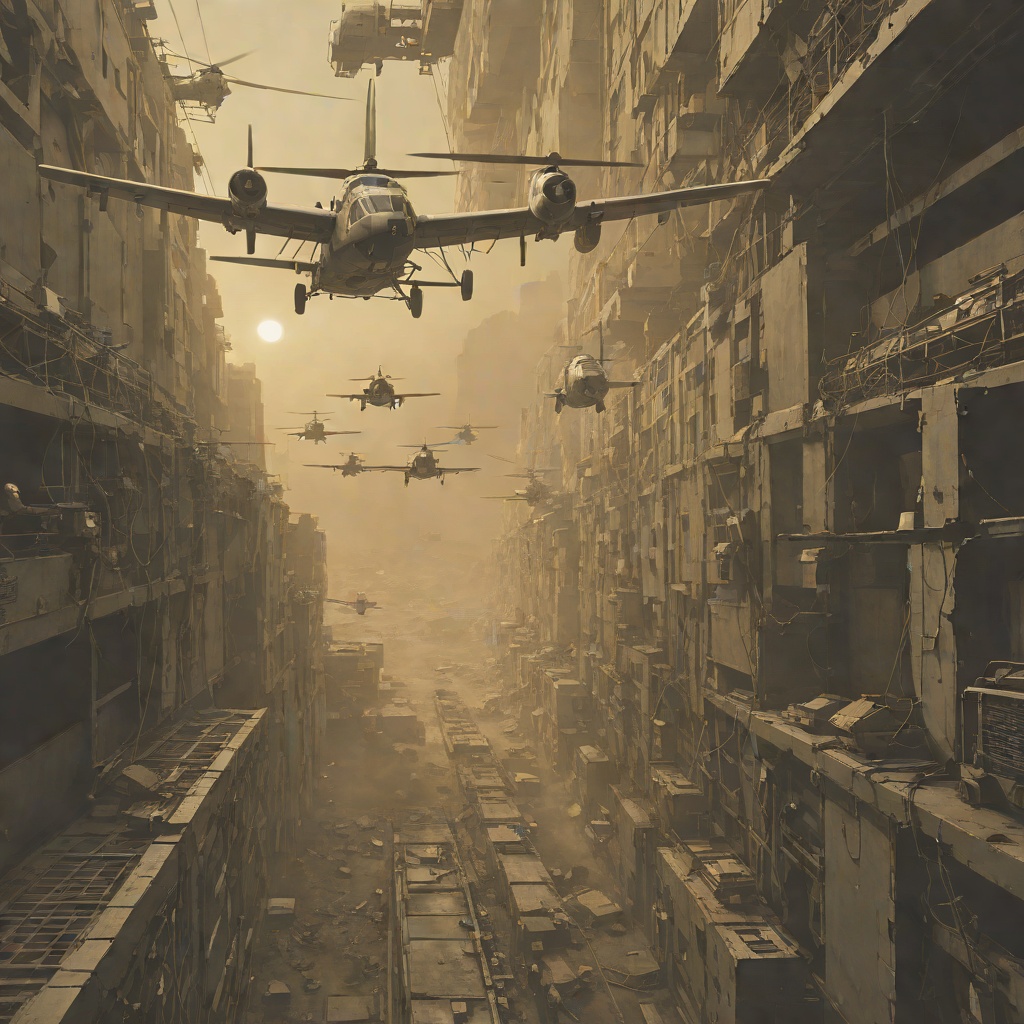
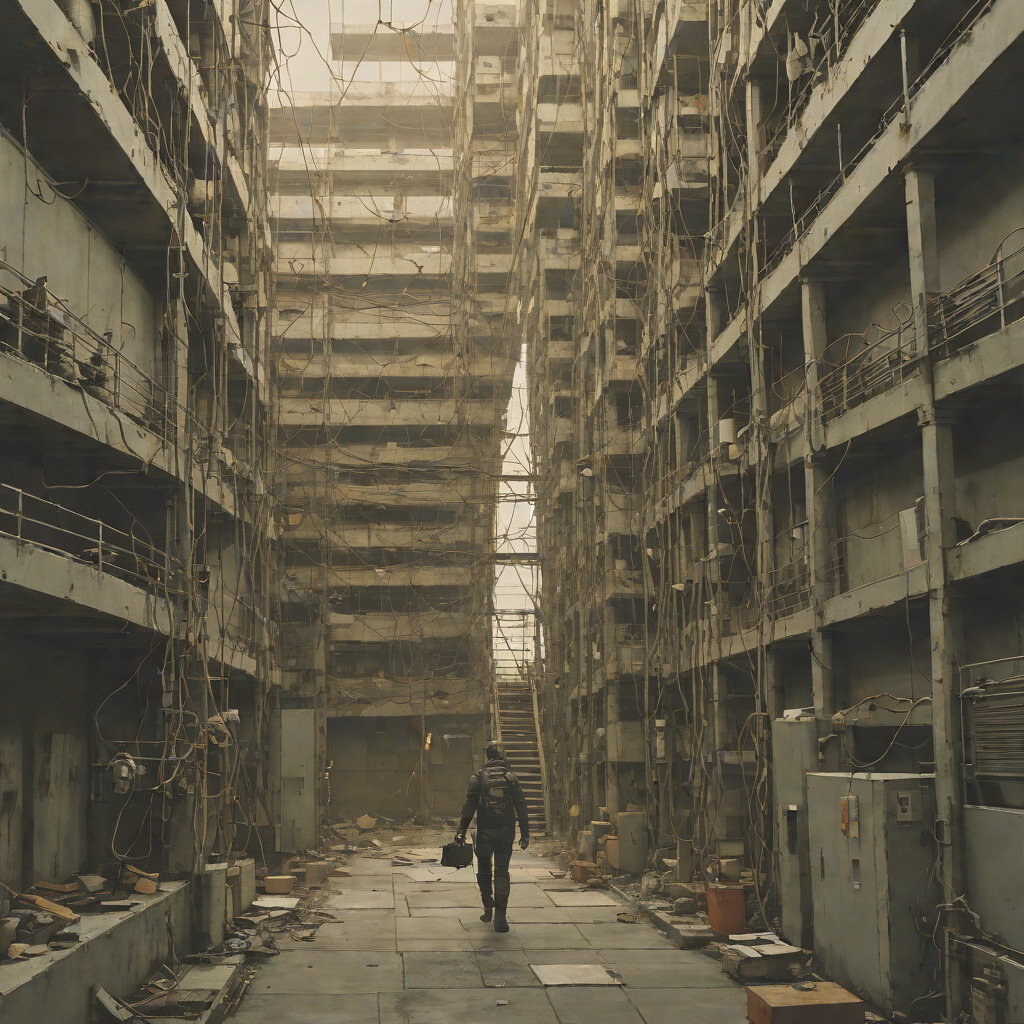
Boston Y.M.C.A. stands in an area that had once been among Boston’s better districts during the previous century. By the time Richards reaches it, the building is huge, blackened by age, old-fashioned, and boxlike. Its neon sign still winks toward the theater district, but the effect is not welcoming. The structure resembles the remnant of a dead civic ideal, a guilty reminder of an earlier city and an earlier promise of public shelter.
The building’s exterior contrasts sharply with the decayed urban landscape Richards has crossed. South of the Canal, Co-Op City is a radiating maze of parking lots, deserted shops, Urban Centers, and paved playgrounds where cycle gangs have replaced effective law enforcement. The streets are haunted by stripped vehicles, rats, garbage, graffiti, air pollution, and silence; Free-Vee cables remain protected beneath them because even the city’s poorest residents still depend on the dream machine. Crossing the Canal brings Richards into a more heavily policed and commercially controlled district, where the towering Network Games Building dominates the skyline and the police treat a poor-looking man as someone whose proper destination is the Games. Boston Y.M.C.A. therefore sits between two forms of urban control: the neglected southern city and the surveilled, commodified north.
Interior as Refuge and Trap
Richards enters the lobby at night, where a desk clerk is arguing with a small boy in an oversized killball jersey about a gum machine. The absurd dispute provides a brief, shabby social threshold before Richards moves into the building’s deeper atmosphere. The corridor is narrow and nearly claustrophobic. Its carpet has worn down to random strings, its industrial-gray doors bear marks of kicks and attempted break-ins, and notices repeatedly prohibit smoking. At the center is a communal bathroom whose urine stench Richards instinctively associates with despair.
The corridor’s sounds turn the building into a container of unobserved desperation. People shift behind the gray doors like caged animals; someone repeats the Hail Mary in a drunken voice, strange noises emerge from another room, and fragments of loneliness, sobbing, laughter, drunken argument, and silence overlap. A man with a sunken chest passes in gray pajama bottoms, paper slippers, soap, and towel. Nothing about the place promises safety in a dignified sense. It offers only temporary concealment among people whose suffering has been made private and invisible.
Richards’s room is equally bare. He locks the door and secures a police bar on the inside, then finds an almost-white bed, an Army surplus blanket, a bureau missing its second drawer, a picture of Jesus, and a steel rod with two coat hangers. The window looks out on blackness. At 10:15, lying on the bed, he recognizes how miserable, unknown, and vulnerable he is. The surrounding universe seems to him like an enormous, indifferent jalopy rushing toward a bottomless chasm, and he cries without recording the moment on tape. The room is nominally private, but its poverty and isolation make privacy feel like exposure.
The Escape Through the Building
The apparent refuge becomes a tactical problem when Richards begins his escape. He reaches the elevator and uses a toothbrush wire to bypass its controls, simultaneously pushing the basement button. The improvised sabotage produces a brief electronic curse, a tingling shock, and a tendril of blue smoke before the elevator finally descends. The car hesitates at the lower level, as though threatening to stop, then opens onto a huge, dim basement where water drips and a disturbed rat scurries. For the moment, the basement belongs to Richards; it is also the last concealed space available to him.
The subterranean machinery gives the building a second, more dangerous architecture. Huge rusted heating pipes, covered in cobwebs, crawl across the ceiling. When the furnace suddenly starts, Richards nearly screams, and the physical jolt of fear becomes almost incapacitating. He backs into an unknown pipe and makes slow progress through it for roughly fifty yards. The route is not an orderly passage but a blind retreat through infrastructure, with Richards moving molelike through a space never designed for human escape.
The escape is made more perilous when the oil tank in the basement explodes. The blast produces sympathetic vibrations in the pipes, nearly ruptures Richards’s eardrums, and floods the passage with a yellow-white flash that fades into a rosy glow. Thermal air strikes his face, and the pipe absorbs the heat like a pan handle over a gas ring. The videotape camera in his jacket swings as he tries to move faster; sweat mixes with black ordure already smeared across his face, and the reflected fire makes him resemble a figure painted for war. The Boston Y.M.C.A. thus changes from a lodging house into a furnace, its own neglected infrastructure becoming the mechanism through which Richards survives.
Propaganda and Aftermath
The consequences of the escape extend beyond the building itself. On The Running Man broadcast, Bobby Thompson presents Richards as a wolf moving among ordinary citizens and displays a manipulated portrait of him in his gray workshirt. The image has been retouched to deepen his eyes, lower his forehead, shadow his cheeks, and give his mouth a cruel expression. The Boston Y.M.C.A. is then recast as the scene of an intentional atrocity: Thompson claims that five policemen died there after Richards set a clever and merciless trap.
The broadcast supplies a carefully staged moral frame. Thompson shows fresh-faced police officers from an academy graduation exercise and accompanies them with Taps, turning the dead into vulnerable symbols and Richards into the enemy responsible for their deaths. The claim is repeated through language of wolves, killing, and social contagion; Richards is described as someone who might mobilize malcontents to rape, burn, and overturn the streets. The building’s actual sensory disorder, improvised escape, and basement explosion disappear beneath a simple story of calculated murder.
Later, Dan Killian assures Richards that the Network had nothing to do with the deaths and calls them a horrible accident. Richards finds the explanation almost believable precisely because it sounds too much like a lie not to contain some truth, but he also understands that accepting the Games’ offer would send him first to Co-Op City, where one hour on the streets could reveal what had really happened. The Boston Y.M.C.A. therefore remains unresolved as a public fact: its destruction is simultaneously a physical catastrophe, an alleged police massacre, and a contested piece of evidence in the struggle between Richards’s experience and the Network’s account.
Narrative Significance
Boston Y.M.C.A. concentrates the novel’s spatial and political contrasts. It is old but still functioning, public but isolating, populated yet emotionally vacant, and protected by a lock and police bar that cannot provide genuine security. Its upper floors contain the visible misery of lodgers, while its basement contains the hidden systems that sustain the building and nearly kill the man using them as an escape route. The movement downward is therefore both literal and social: Richards passes beneath the respectable city into the abandoned machinery of a society that has left its poor to survive among rats, fumes, broken fixtures, and improvised barriers.
The building also demonstrates how institutional power produces space and then produces meaning from what happens inside it. Richards experiences Boston Y.M.C.A. as a temporary shelter and a hazardous maze; the Network presents it to millions as proof that he is a murderous public threat. The gap between those versions is the location’s decisive narrative function. Boston Y.M.C.A. is not merely where Richards hides. It is where a decaying social infrastructure, an improvised act of survival, and a state-controlled spectacle are fused into the official origin of his public identity as the hunted Running Man.