Brant Hotel
The Running ManBrant Hotel is the modest East Side refuge where Ben Richards briefly disappears after the nationally televised hunt begins. Although the hotel is less than a mile from Manhattan’s blighted inner city, it stands within an area beginning a new cycle of chic, making it both near to deprivation and separated from it by changing urban boundaries. For Richards, the hotel provides temporary concealment rather than safety: he registers under a false name, pays to hold a room for two days, records himself for the Games, and wakes to discover that the hunt has already been underway for hours.
Setting and Urban Position
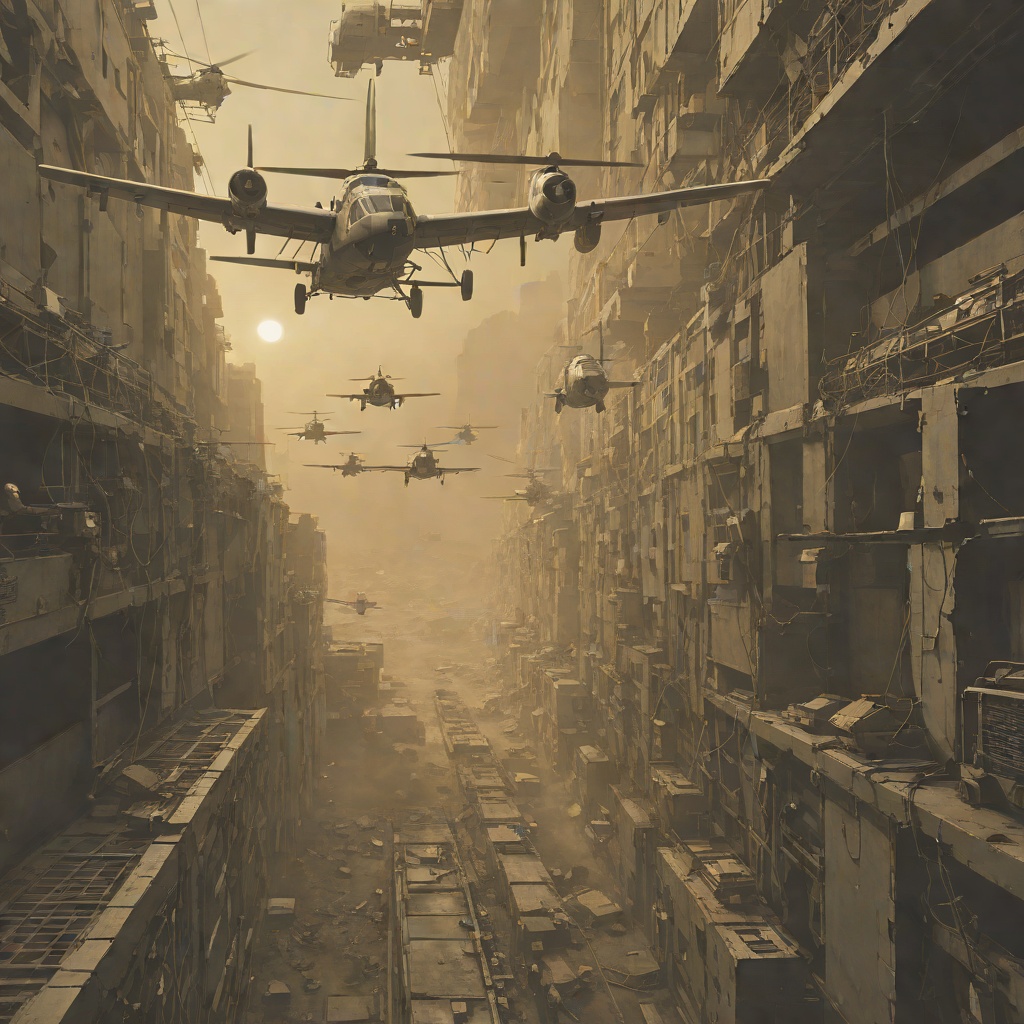
Brant Hotel is described as a “so-so establishment on the East Side,” neither luxurious nor openly desperate. Its location gives it a strategic ambiguity. The district is gradually becoming fashionable, yet the hotel lies less than a mile from Manhattan’s largest blighted inner city. That proximity places the building within a city divided by class, visibility, and access, while also making it plausible as a temporary refuge for a fugitive moving through New York City.
The hotel’s surroundings contrast sharply with the spaces Richards has crossed earlier. South of the Canal, Co-Op City is marked by stripped vehicles, rats, deserted shops, cycle gangs, unemployment, and the absence of effective ordinary policing. Across the Canal, the Games Building rises into clean, expensive uptown space where police watch loiterers and the presumed purpose of a poor man is participation in the Games. Brant Hotel occupies an intermediate zone: it is not the ruined landscape of Co-Op City, but neither is it presented as secure or privileged. Its social usefulness comes precisely from that in-between status.
Richards’s Arrival and Concealment
Richards reaches the hotel after disappearing into New York City in a cab at 3:20 in the morning. He has deliberately avoided checking into a hotel during the small morning hours, spending the intervening five and a half hours in an all-night perverto show before arriving at the Brant at 9:00. The waiting period leaves him exhausted and unable to sleep securely; twice he dozes off only to be jolted awake by unwanted contact. His eventual check-in therefore marks a practical retreat from the exposed city, but not a restoration of calm.
At the desk, Richards is using the identity John G. Springer. When the clerk asks how long he will stay, Richards answers with cautious, artificial meekness that his duration depends on his clients. The disguise is not merely a name on a registration card. It requires him to perform an ordinary social role convincingly while knowing that the Games Authority may be tracing every administrative detail around him. He pays sixty New Dollars to reserve the room for two days, an expensive but necessary purchase of time.
The room itself offers a somber view of the squalid East River. It is clean but sterile, with a connecting bathroom whose toilet makes constant ominous noises that Richards cannot stop even by wiggling the ball in the tank. The detail makes the room’s apparent order feel mechanically unreliable. Cleanliness does not produce comfort, and privacy is accompanied by sounds that remind Richards that the building is made of shared walls, plumbing, and other people’s unseen presence.
Surveillance and the Performance of Safety
After breakfast, Richards examines the videotape camera supplied for the hunt. The device has a ten-minute recording limit and automatically ejects its cartridge when the bell sounds. He sets it on the bureau beside the Gideon Bible, aims it at the bed, and judges that the blank wall and indistinct background should not reveal his location. He leaves the shower running as an additional precaution against identification through ambient sound.
The arrangement converts the hotel room into a miniature broadcast studio. Richards is hiding from the public while simultaneously producing the images required to keep himself visible to the Games audience. He lies down and attempts to think of nothing; when the tape clip ejects ten minutes later, he has fallen asleep. The camera thus records not a heroic performance but an exhausted body surrendering briefly to unconsciousness, while the Gideon Bible beside it introduces a charged contrast between religious moral language and the commercial machinery of televised pursuit.
When Richards wakes just after 4 P.M., he realizes that the hunt has been active for three hours, allowing for the time difference. The room’s stillness has not paused the action outside it. He loads another tape, removes the Gideon Bible, and reads the Ten Commandments repeatedly for ten minutes with a pillow slip over his head. The ritual is at once protective, absurd, and revealing: the room permits a private attempt at moral and psychological control, but the camera, the timer, and the broadcast system continue to define his existence from beyond the walls.
The Hotel within the Games’ Media Logic
The Brant Hotel becomes meaningful through the contrast between Richards’s hidden physical presence and his manufactured public image. On the television program, Bobby Thompson introduces Richards as a dangerous man from south of the Canal, presenting a retouched portrait that deepens his eyes, lowers his forehead, darkens his cheeks, and gives his mouth a jeering expression. The image turns a tired fugitive into an urban monster, an uptown viewer’s boogeyman. The hotel room contains the real body behind that construction, but the camera makes the room another instrument through which the Network can organize his visibility.
The broadcast also falsifies the people surrounding Richards. Thompson’s program displays an airbrushed image of Sheila Richards, transforming her face into a caricature of greed and sexual degradation, while Richards protests that the picture is a cheap fake. Later, Thompson describes him as a wolf who walks among ordinary people and attributes the deaths of five policemen at the Boston Y.M.C.A. to his supposed deliberate trap. The hotel is therefore not simply a hiding place from the broadcast; it is the enclosed location in which Richards watches the broadcast’s lies being assembled around him.
The televised framing escalates from contestant to killer and from fugitive to national enemy. Thompson claims that Richards would mobilize malcontents to rape, burn, and overturn the streets, presenting violence as an essential quality of his character rather than as a disputed official account. From the Brant, Richards’s private knowledge and the public narrative occupy the same temporal space but cannot meet on equal terms. The room gives him a point from which to observe the spectacle, not a platform from which to correct it.
Narrative Significance
Brant Hotel represents a temporary shelter produced by urban anonymity, yet its anonymity is conditional. Richards can enter under the name John G. Springer, pay for two days, eat breakfast in a sterile room, and sleep behind a closed door, but the hotel’s records, camera, and postal arrangements remain potential channels of exposure. Even the envelopes in the desk drawer carry the hotel’s name and address, forcing him to consider whether ordinary correspondence might reveal his location to Evan McCone and the Games Authority.
The building consequently stands between two forms of infrastructure. On one side is the physical city of rooms, elevators, plumbing, taxis, streets, and postal services; on the other is the electronic city of cameras, monitors, edited clips, rewards, and national broadcasts. Richards’s refuge is secure only while those systems fail to connect him to the hunters. Its decisive narrative function is to expose the fragility of privacy in the Games: the fugitive may disappear from the street, but the room itself becomes a stage, a data point, and a potential image in the continuing manhunt.