Censorship
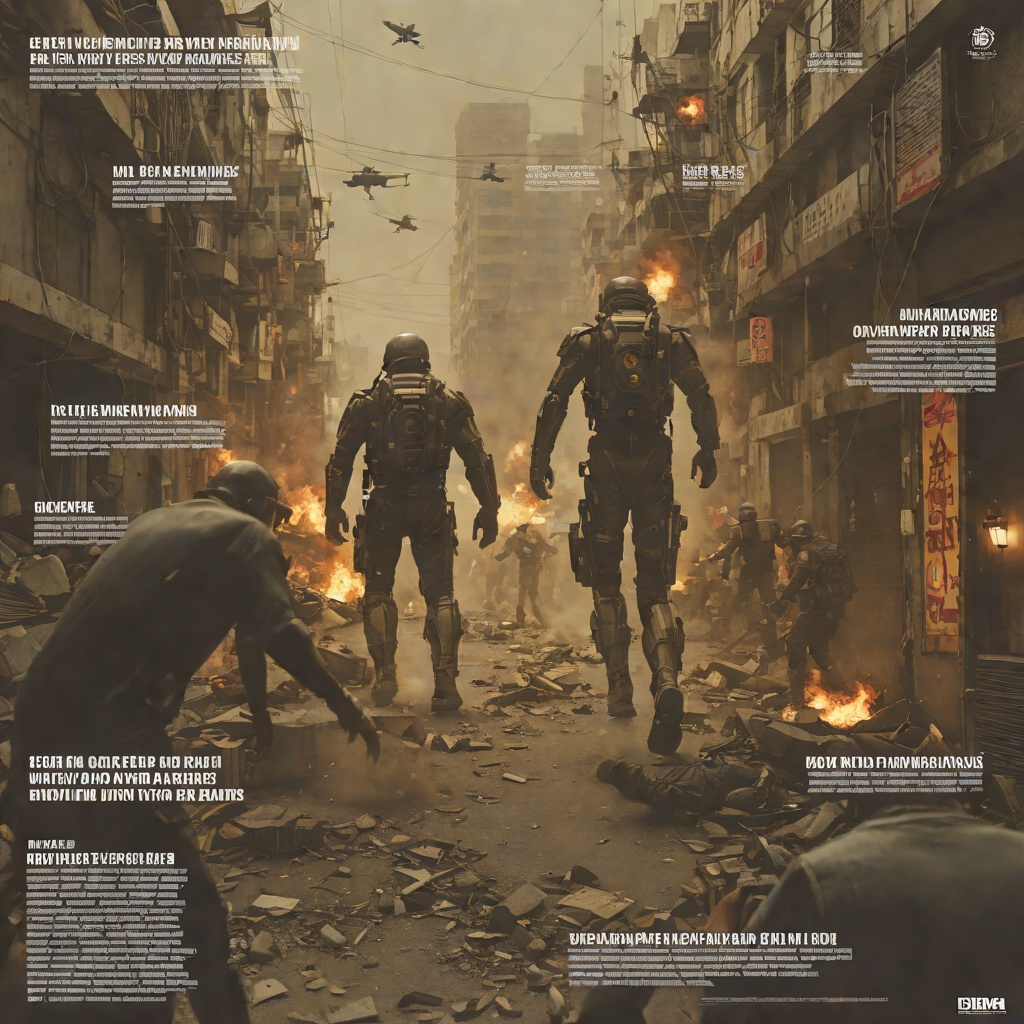
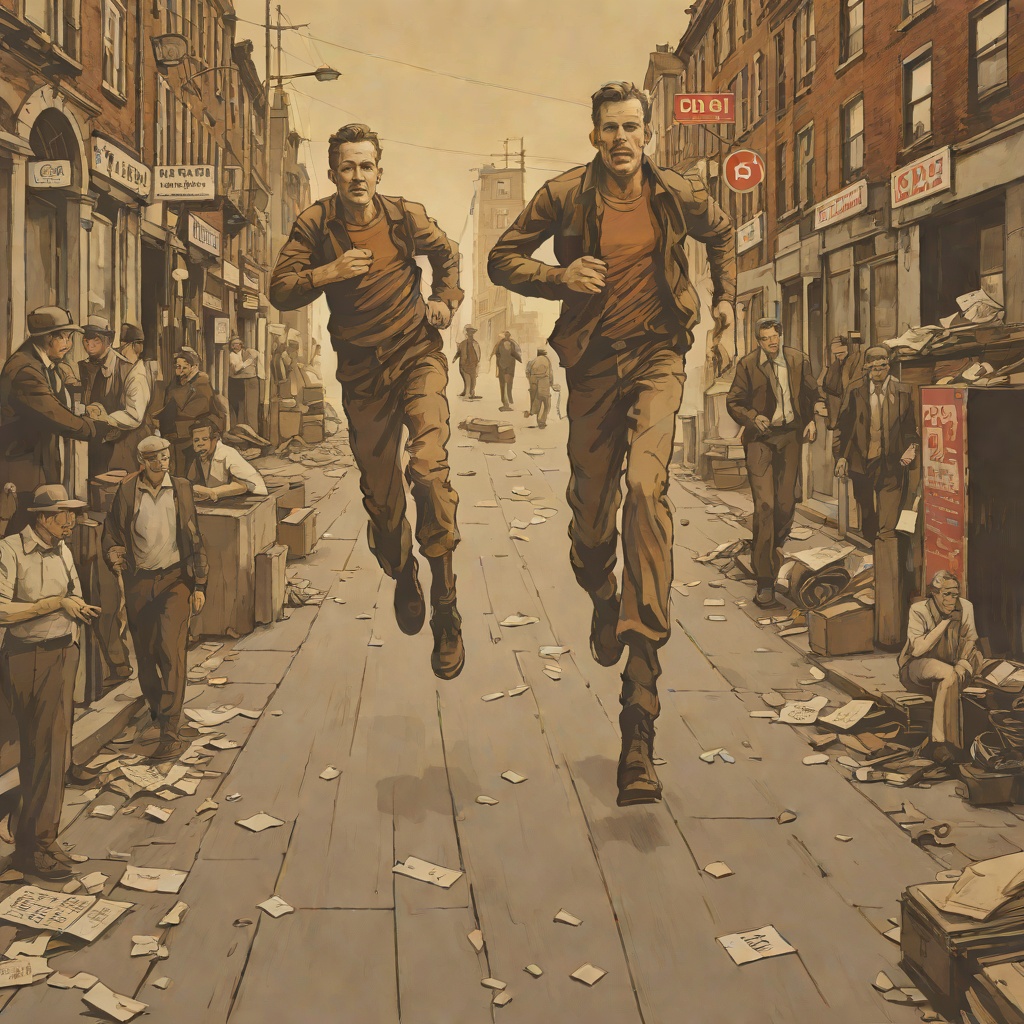
The Running ManCensorship is a system of selective visibility in which the Network and its institutions determine what the public may see, hear, believe, and fear. Its decisive power lies not only in suppressing information but in replacing unwanted accounts with manufactured images: Ben Richards’s pollution message is muted, his appearance is retouched into a threatening caricature, and his wife is transformed into a grotesque symbol of greed. The result is a political order that does not merely silence opposition; it supplies an alternate reality and then mobilizes the audience to defend it.
Mechanisms of Control
Censorship operates through several connected mechanisms. The most direct is technological interference. When Ben Richards records an appeal to unemployed people, residents of the Developments and ghettos, cycle gangs, and young people repeatedly arrested for crimes they did not commit, he tries to describe a conspiracy and connect environmental harm with political repression. During the televised broadcast, however, the audio degenerates into squeaks, pops, and gargles while his mouth continues moving. The interruption is presented as a technical failure, but its timing removes the substance of his testimony while preserving the visual impression of a dangerous man speaking. The program then supplies the interpretation that the audience is expected to accept: Richards is a murderer whose radical ravings need not be heard.
The censorship becomes more elaborate when the producers use the audience itself as a suppressive instrument. Richards continues trying to communicate his pollution message, apparently hoping that lip-readers will understand even when sound is denied him. In response, the program encourages a rising storm of jeers, screams, obscenities, and abuse. The crowd's noise is not spontaneous background atmosphere; it is a replacement soundtrack, converting collective attention into an acoustic barrier. The repeated spectacle makes dissent physically present but publicly inaudible, demonstrating how censorship can work through participation as well as through machinery.
The Manufacture of an Enemy
The Running Man turns censorship into image management. Before the first contest segment, a hidden-camera portrait of Richards is retouched so that his eyes seem deeper, his forehead lower, and his cheeks more heavily shadowed. His mouth receives a curled, jeering expression. The resulting figure is described as an angel of urban death: brutal, unintelligent, and primitively cunning, an imagined threat to comfortable apartment dwellers. The image does not document Richards; it classifies him. It makes a social fear visible and gives that fear a human face.
The same treatment is applied to Sheila Richards. Her ordinary, not conventionally handsome face is altered into that of a vapid, sexually displayed slattern, with pouting lips, glittering eyes, and a suggestion of avarice. This image prepares the audience to regard the family not as people endangered by the system but as evidence of the contestant's depravity. When Bobby Thompson asks Richards how long he expects to hold out, the contempt in the performance becomes part of the censorship apparatus: the question presupposes guilt, while the format prevents any answer from escaping the frame. Richards tries to tell viewers that the woman shown is not his wife and that the picture is a fake, but the crowd drowns him out.
The program's later introduction makes the framing explicit. Bobby Thompson presents Richards as one of the wolves walking among ordinary people, and a close-up of his face is followed by the disguised image of John Griffen Springer. The broadcast then blames him for the deaths of five policemen at the Boston Y.M.C.A., describes him as a merciless trap-setter, and asks where he is now. By placing the words of accusation beside enlarged photographs and dramatic presentation, the Network makes interpretation arrive before evidence. A split-screen later pairs Thompson's face with a still of Richards while Thompson calls him a man who would mobilize malcontents to rape, burn, and overturn the streets. The alternatives are removed: the public is shown an enemy, not a contested account.
Surveillance, Classification, and Social Exclusion
Censorship extends beyond broadcasting into the ordinary management of bodies and identities. At the hospital, Richards is processed by number and escorted by police; when the elevator doors open, a bulletproof viewing aperture is empty, yet the surrounding arrangements still make him an observed and controlled person. His body has been examined, violated, numbered, dressed, and moved through an institution whose procedures reduce individuality to administrative handling. Such classification makes coercion appear routine rather than political.
On the run, Richards attempts to reverse this logic by managing his own visibility. A pawnbroker sells him gray hair, spectacles, mouth wadding, plastic buck teeth, and a suggested limp, along with wallet cards identifying him as John Griffen Springer, a forty-three-year-old widower from Harding. The disguise is more than concealment: it is an improvised struggle over which signs will be read as authentic. He changes age, occupation, marital status, and manner of movement because the social system reads appearance as a passport. Censorship and surveillance therefore meet in the same interactional order. The state and the Network decide which identity is legible, while Richards survives by producing a competing one.
Racial exclusion reveals the wider social environment that makes this control possible. At a hotel, a child who believes a nickel has been withheld is met with racist abuse, and the clerk openly says that Black people should be kept in cages. He treats the boy's possible grievance as proof of criminality and imagines any act of fairness as an invasion by a threatening group. The exchange shows censorship in a broader sense: a person's account is rejected before it can be heard, and prejudice supplies the official explanation. The clerk's casual language also exposes how public authority can be reproduced by ordinary gatekeepers, not only by visible agents of the Network.
Authority, Fear, and the Suppression of Countertruth
The Network's power depends on making itself seem larger than any individual censor. Richards thinks of Bradley Throckmorton as a throwback and perhaps a danger, a small particle around which large clouds of threat condense. That image places dissent within a system that calculates, categorizes, and reacts ruthlessly to deviation. Bradley's sheltering of Richards and his circulation of pollution information create a counter-public, but the system answers by treating alternative knowledge as dangerous material rather than as an argument.
The figure of Evan McCone concentrates this atmosphere of institutional fear. When he identifies himself as Chief Hunter, his name is already supposed to frighten Richards. Richards imagines him as the steel inside the Network's protective glove, a boogeyman released to punish disobedience. McCone's demand that Richards release a woman and surrender rests on an asserted certainty that he is lying and that someone without the required rating could not possess Dynacore. The accusation is not investigated in the moment; it is announced as settled knowledge. Censorship here operates through intimidation and epistemic closure, making the authority's version seem inevitable because the authority controls the terms of proof.
The broadcast also converts official violence into moral theater. Young policemen appear in graduation photographs, fresh and vulnerable, while a trumpet begins to play Taps. The dead are individualized as innocent faces, whereas Richards is reduced to a fixed criminal image. This contrast prevents the audience from asking how the confrontation was arranged or what the Network has concealed. The emotional ceremony does the work of argument: grief is directed toward the state's victims, and suspicion toward the man denied the means to answer.
Consequences and Narrative Significance
The central consequence of censorship is the destruction of a shared field of reality. Richards knows that the televised portrait of Sheila is false, that his own image has been altered, and that his recorded speech has been sabotaged. The audience nevertheless receives the falsification as an apparently complete account. The Network's success lies in coordinating image, sound, editing, crowd response, and official accusation so that every channel confirms the others.
Yet suppression also changes Richards. At first he is primarily a man fighting to save his family and survive long enough to return to them. After Bradley Throckmorton's intervention and the presence of the little girl, he begins to understand the danger as collective: people are choking on their own respiration, including his family. His pollution message becomes persistent and almost frenzied because censorship has made communication itself an act of resistance. The more the program tries to drown him out, the more clearly the struggle concerns who may define public knowledge.
The final irony is that the Network's spectacle reveals its own method. Its repeated insistence that Richards is a liar, a killer, and a threat requires increasingly visible manipulation: doctored photographs, missing audio, staged emotional cues, and crowds trained to answer before hearing. The censorship system therefore produces not silence but a war over mediation. Richards's counter-images do not guarantee that the truth will prevail, but they expose the machinery by which truth is denied. In that sense, censorship is both the Network's instrument of domination and the narrative's clearest evidence that its authority depends on controlling the frame rather than surviving an open encounter with testimony.