Evan McCone
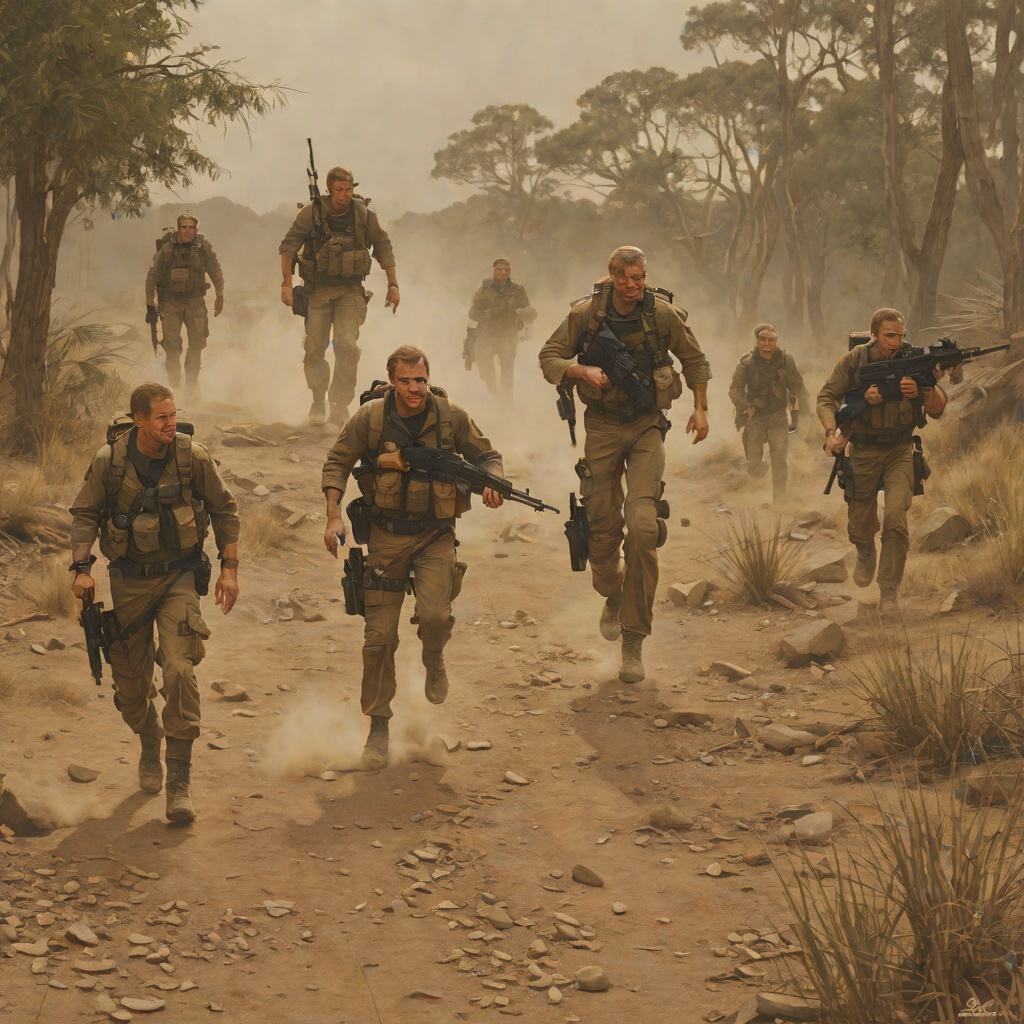
The Running ManEvan McCone is the Games’ Chief Hunter, the figure whose name is designed to make Ben Richards afraid before the two men ever meet. He is not merely a pursuer dispatched to find a contestant: he personifies the Network’s capacity to convert surveillance, public entertainment, legal authority, and killing into one organized spectacle. His decisive significance lies in the contrast between his polished formalities and the lethal machinery behind them.## Identity and Introduction McCone is introduced first as the undefeated opponent waiting beyond the ordinary rules of escape. Dan Killian tells Ben Richards that the program has no survivors and that Evan McCone and the Hunters remain to be reckoned with. Richards calls them a neo-group, but Killian answers that McCone never loses. The statement establishes McCone less as an individual policeman than as the Games’ institutional guarantee: the contestant may improvise, hide, and exploit gaps in the system, yet the system possesses a hunter whose record appears final.
His public identity is reinforced through the broadcast that follows Richards’s appearance. Bobby Thompson presents the contestant as a dangerous wolf who walks among ordinary people, while altered photographs and fabricated or manipulated recordings turn Richards into an urban monster. McCone does not need to appear in these broadcasts to govern their effect. The program’s language prepares viewers to understand pursuit as civic duty and Richards’s destruction as a public service. The same machinery that offers money for sightings and kills creates McCone as the inevitable answer to the threat it has manufactured.
When McCone finally presents himself at Voigt Airfield, he steps from behind unmarked cars wearing dark slacks, a white shirt rolled to the elbows, and small spectacles that catch the dying light. He carries a bullhorn larger than Richards’s and identifies himself as Evan McCone. The plainness of the appearance is part of its force. He does not arrive in a visibly ceremonial uniform; he emerges from an unmarked official landscape as though authority itself had acquired a human voice.## Methods and Authority McCone’s power rests on more than physical pursuit. The Games have already defined the contestant through a strict operating system: Richards is given a twelve-hour head start, earns one hundred New Dollars for every hour free, must send two tape clips per day, and can receive additional payment for killing Hunters or representatives of the law. Viewers receive rewards for verified sightings, and a sighting leading to a kill pays a thousand New Dollars. Independent cameramen are paid by the foot. McCone operates inside this structure, but his importance is that he understands how its separate mechanisms reinforce one another. Survival becomes a measurable performance, observation becomes a paid act, and violence becomes both enforcement and content.
The tape machine and its sixty compact clips make Richards’s voice part of the same apparatus hunting him. The equipment fits into a coat pocket, and cartridges can be dropped into any mailslot for express delivery and nightly editing. Failure to deposit two clips per day constitutes legal default of payment. The rule appears procedural, yet it forces the fugitive to produce the media through which the public will consume his pursuit. McCone’s eventual confrontation therefore occurs after the Network has already narrowed Richards’s options through broadcast schedules, contractual penalties, and a population invited to watch for money.
At the airfield McCone applies psychological pressure with the same precision. He tells Richards that the woman has broken and that sodium pentothal was used on her, then draws a small automatic and offers to kill him where no one can film it. The offer of relative privacy is presented as an ultimate compliment, a grotesque inversion of the Games’ normal hunger for spectacle. Even at the point of execution, McCone defines the terms of the encounter: public attention can be withheld as a reward, while death remains an administrative conclusion.## Record as Hunter McCone’s conversation with Richards reveals an encyclopedic knowledge of the chase. He knows that Richards has surpassed the standing Running Man record of eight days and five hours, doing so roughly two hours before their meeting. He recalls Richards’s escape from the Boston Y.M.C.A. and notes that the broadcast’s Nielsen rating rose twelve points afterward. The record converts endurance into a statistic, while the rating converts suffering into audience value. McCone can therefore praise Richards’s achievement without recognizing his humanity; he reads the escape simultaneously as athletic performance, criminal evidence, and successful programming.
He also recounts the Portland interlude and the death of Elton Parrakis. McCone says that the Games nearly captured Richards there, but that Parrakis died believing Richards had jumped ship in Auburn. The account is delivered as an appraisal of a failed tactical episode, with Parrakis reduced to a frightened informant whose mistaken certainty helped misdirect the pursuit. McCone’s knowledge makes the entire route feel retrospectively enclosed. Places that seemed to offer Richards temporary freedom have been absorbed into the Hunter’s record, and every error made by an ally or witness becomes another entry in the system’s memory.
His formal language is itself a weapon. McCone says that he has a sworn bill from the Games Federation, an accredited arm of the Network Communications Commission, demanding Richards’s apprehension and execution, and asks whether Richards will honor it. When Richards answers with contempt, McCone sounds pleased that the formalities have been completed. He calls Richards an unusually informal contestant and attributes his survival partly to that informality. The exchange makes bureaucracy resemble a duel: McCone does not need to persuade Richards that the order is just; he only needs to demonstrate that the paperwork, institutions, and weapon are already aligned.## Conflict with Ben Richards The confrontation at Voigt Airfield brings McCone’s symbolic role into direct contact with Richards’s improvisational resistance. Richards has announced that he is carrying twelve pounds of Black Irish explosive, enough, by his claim, to destroy everything within a third of a mile and possibly ignite the jetport fuel tanks. He says an Imploder ring is pulled to half-cock, making one jolt potentially catastrophic. The threat sends the crowd fleeing across roads and fields, over gates, and across the cyclone fence; the police show no disbelief. McCone enters this panic not as a distant commander but as the representative capable of challenging Richards’s claim face to face.
Richards experiences genuine fear when McCone identifies himself. McCone is imagined as a direct descendant of J. Edgar Hoover and Heinrich Himmler, the personification of the steel inside the Network’s cathode glove, a boogeyman released from the closet to frighten disobedient children. This image matters because McCone’s power has been implanted before his physical arrival. The broadcast, the Hunters’ reputation, and the Network’s official force have transformed his name into a psychological instrument. Richards’s fear does not make McCone invincible, but it shows that the chase has entered the fugitive’s inner life.
McCone’s final tactic depends on an alleged betrayal inside Richards’s last refuge. He says that the woman has broken under sodium pentothal and insists that the game is over. Richards responds by stepping out, accepting the encounter across the blank service-area cement. McCone’s confidence is based on the belief that isolation and compromised testimony have stripped Richards of alternatives. Yet the scene also exposes the limits of his method: he treats every human bond as a pressure point and every personal crisis as another move in a contest whose outcome can be announced in advance.## Narrative Role and Significance McCone functions as the human face of a system that otherwise appears through broadcasts, contracts, police cordons, cameras, and reward schedules. Bobby Thompson supplies the public story, while the Games supply its rules; McCone supplies the embodied certainty that the story will be enforced. His calm acknowledgment of records, ratings, paperwork, and chemical interrogation joins the entertainment economy to state violence without requiring a change of tone. The same voice that can salute an inventive opponent can announce that execution is due.
The narrative repeatedly places McCone against images of false representation. Richards’s face is retouched into a primitive, threatening boogeyman; his wife Sheila Richards is transformed by airbrush into a greedy caricature; edited clips make him appear to threaten murder and mass disorder. McCone belongs to the force that gives these images practical consequences. He does not simply hunt a man who has been misrepresented; he arrives after representation has made the hunt seem necessary. His authority is therefore partly visual and rhetorical, even when he is standing in an empty service area with a pistol.
That combination makes McCone more than a conventional villain. He is the disciplined endpoint of the Games’ logic, where pursuit is entertainment, surveillance is participation, contractual obedience is treated as freedom, and death can be priced, scheduled, narrated, and privately administered. His apparent courtesy does not soften the violence. It makes the violence more complete by showing how thoroughly it has been normalized. In McCone, the Network’s machinery acquires a voice that can admire resistance while preparing to erase the resister.