Free-Vee
The Running ManFree-Vee is the dominant television system of 2025: a compulsory household presence, a machinery of mass entertainment, and the communications network through which the state and the Network organize attention. Its importance lies in the contradiction at its center. It appears to offer something free—dreams, contests, news, and access to public spectacle—while making spectatorship the price of social membership and turning human desperation into measurable commercial value.
Definition and Material Presence
Free-Vee is installed in every Development apartment by law, although residents are legally permitted to switch the set off. That limited permission gives the appearance of choice, but its practical authority comes from ubiquity. In the Richards household, the set is bolted above the sink in a peeling wall, making it part of the apartment’s built environment rather than a detachable luxury. Its cables are buried safely under the streets, so even the devastated districts remain physically connected to the system.
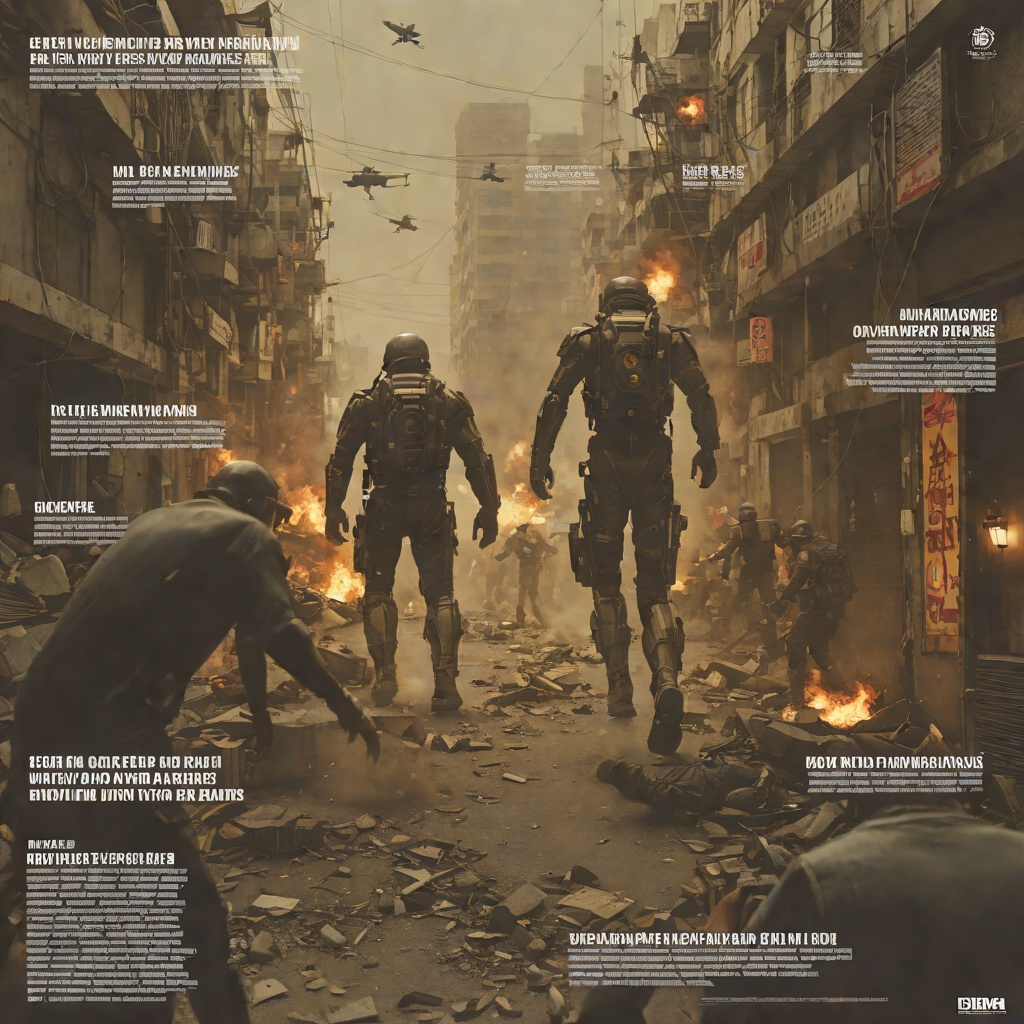
The network’s material reach contrasts sharply with the conditions of the people who depend on it. In Co-Op City, the streets are marked by unemployment, garbage, rats, broken lights, and buildings whose residents have no New Dollars, yet the Free-Vee cables remain protected. The system is described as the substance of dreams and the bread of life, available without direct payment even when food, transport, medicine, and employment are scarce. This arrangement makes Free-Vee an infrastructure of unequal access: the poor can receive its images, but they cannot share equally in the currency, security, or opportunities represented on the screen.
Household Distraction and Social Discipline
Sheila Richards ordinarily dislikes Free-Vee and the family does not usually watch it. That changes when Catherine Sarah Richards becomes ill. Ben Richards begins staring at the screen for weeks, concentrating on big-money giveaways while his daughter’s condition produces mounting medical desperation. The set therefore becomes more than background noise: it is the visible promise of rescue at the precise moment when ordinary institutions cannot provide a real doctor or modern equipment.
The contrast between the screen and the apartment is deliberately brutal. Behind the compulsive shrieking of a half-time announcer, Catherine Sarah Richards continues wailing with a flu-hoarsened voice. The television’s promise of sudden wealth occupies the same room as the child’s illness, converting an intimate family crisis into an audience for chance. Ben Richards turns toward it even while preparing to leave, and Sheila Richards recognizes that his fixation is frightening because it suggests that the family’s survival has been pushed into the logic of a televised jackpot.
Free-Vee also disciplines the domestic neighborhood through repetition and normalization. Mrs. Jenner’s set blares while a contestant on Treadmill to Bucks misses a Bonus Question and suffers a heart attack; the audience applauds as he is carried away on a rubber stretcher. The spectacle makes physical collapse part of ordinary programming. The audience’s applause and the announcer’s excitement do not merely report suffering; they establish a social rhythm in which danger is consumable, failure is entertaining, and even deathlike bodily crisis can be absorbed into the next game.
The Network’s Spectacle of Ben Richards
The Free-Vee system is the distribution mechanism for The Running Man, the program that Dan Killian presents as the biggest thing going on Free-Vee. Its rules give the broadcast a financial structure: a contestant or surviving family receives one hundred New Dollars for every hour of freedom, receives forty-eight hundred dollars in running money on the assumption of lasting forty-eight hours, and can win one billion New Dollars by surviving thirty days. The program thus translates freedom, pursuit, and bodily risk into a schedule of payments.
The show’s apparent participation is carefully managed. Ben Richards is promised a live appearance, followed by programs assembled from tapes, films, and live tricasts whenever possible. He must deposit two tape clips per day, and the cartridges are delivered through the mail for editing and broadcast that same night. A small tape machine, about the size of a box of popcorn and weighing six pounds, comes with sixty clips; the equipment fits into a coat pocket without a bulge. The compact device makes the enormous apparatus of surveillance portable, while the submission rule converts Richards’s continued existence into compulsory labor for the program.
Before his appearance, Free-Vee manufactures an image of Richards through a hidden-camera portrait. The broadcast retouches his face, deepening his eyes, lowering his forehead, shadowing his cheeks, and giving his mouth a jeering expression. The result is not a neutral identification but a designed character: an urban death angel and uptown apartment dwellers’ boogeyman. Bobby Thompson then announces that a verified sighting will earn one hundred New Dollars and a sighting resulting in a kill will earn one thousand. Free-Vee consequently makes the hunted body simultaneously a person, a threat-image, a prize, and a target.
This process exposes the relationship between media visibility and coercion. Richards’s face must be made recognizable enough for strangers to report him, but it is altered enough to make him seem less human and more naturally dangerous. The broadcast does not simply show a fugitive; it supplies the interpretive frame through which every later sighting can be understood. Its editing and narration distribute suspicion before the public encounters the man himself.
Surveillance, Counteruse, and Infrastructure
Free-Vee’s reach extends beyond domestic screens into the technical systems surrounding the hunt. At an airport, after Richards buys a ticket to New York and passes a routine identity check, the camera apparatus and the broader communications environment remain part of the world through which he moves. Later, when Amelia Williams speaks at the checkpoint, cameras record the exchange and send it on a live feed intended for broadcast across North America and much of the world within minutes. The same publicity that threatens to expose a captive or fugitive can become a pressure point: Richards recognizes that a public transmission may make it harder for authorities to disappear the scene without scrutiny.
The system’s infrastructure is not limited to viewing. In the hotel, Richards examines the videotape camera supplied for the contest and follows its printed instructions: insert the cartridge, set the crosshairs, activate sound and video, and wait for the bell to eject the cartridge after ten minutes. The device allows the program to make surveillance appear reciprocal, as though Richards has been granted a camera and therefore a voice. In practice, the recording time, cartridge supply, delivery mechanism, and editing process define what can be said and when it can be seen.
The contrast between Free-Vee and other infrastructures clarifies its function. A janitor’s elevator card is an access-control device, while automatic pilots, airport security, spotlights, and live cameras coordinate movement and observation. Free-Vee gives these systems a narrative surface: transport becomes pursuit footage, a checkpoint becomes a public drama, and a threatened explosion becomes a spectacle illuminated for spectators. At the road confrontation, portable spotlights are requisitioned and focused on the little car, bathing the shattered windshield in a theatrical glow as onlookers creep back toward the danger. The technology of illumination does not merely help people see; it stages risk for consumption.
Political Meaning and Narrative Role
Free-Vee is both the principal instrument of social pacification and the medium through which its own violence becomes visible. Ben Richards’s anger toward the system is sharpened by its selective abundance: it can deliver contests, news, cameras, and live broadcasts everywhere, yet the family cannot secure adequate medical care for Catherine Sarah Richards. The system’s promise of universal access conceals the fact that the crucial goods remain distributed by class.
A pollution-conscious young man explains to Richards that library books contain information about impurity counts, smog levels, and nose filters, while the Free-Vee turns public attention toward more attractive images. He compares its operation to a magician distracting an audience with one display while concealing another. His accusation is not that the system lacks information, but that it controls the conditions under which information becomes socially visible. He believes ten minutes of uninterrupted talk on Free-Vee could expose the truth about pollution and show that nose filters could be available if the Network wanted them distributed. The network therefore appears capable of informing the public while using spectacle to prevent information from becoming collective action.
That tension gives Free-Vee its strongest narrative significance. It is not simply a television set or an abstract symbol of propaganda. It is a physical network embedded in poor housing, a programming economy that prices survival by the hour, an editing apparatus that manufactures villains, and a live communications channel that can unexpectedly preserve evidence of official violence. Its power comes from combining comfort with exposure: it offers distraction to those who have little else, watches those who enter its games, and makes resistance valuable only when resistance can be formatted, transmitted, and sold as the next broadcast.