Harding
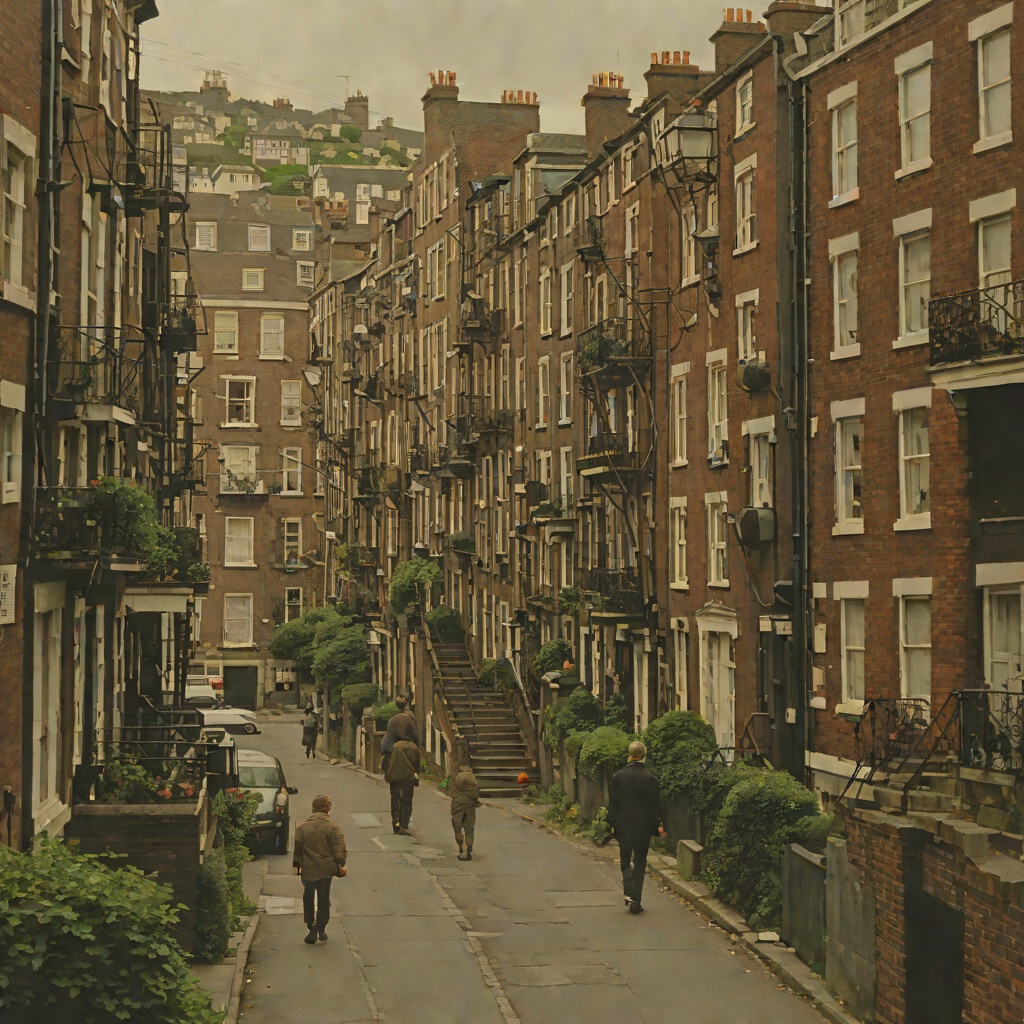
The Running ManHarding is the city that frames Ben Richards’s entire trajectory: it is named in the official record as his birthplace and reappears at the climax as the landscape beyond the cockpit windows. The city therefore functions not merely as a point on a map but as the fixed origin and terminal horizon of a life shaped by unemployment, poverty, family obligation, and resistance to institutional power.
Identity and Background
Harding is identified in Dan Killian’s dossier as Ben Richards’s city of birth. The administrative description places Richards’s early life inside a system that measures people through records: age, birthplace, schooling, disciplinary history, marriage, and political noncompliance. Harding is thus attached to the state’s first formal account of Richards, but the dossier’s cold precision also contrasts with the fuller human history that official language leaves outside its categories.
The city’s significance is sharpened by Richards’s circumstances before he enters The Running Man. He has been unable to secure stable work, has taken miserable day and half-day jobs, and eventually finds even those opportunities disappearing. His family’s poverty makes medical care for Catherine Sarah Richards urgent: Sheila Richards fears dependence on government assistance, while Richards insists that their daughter needs a real doctor and modern equipment rather than an improvised neighborhood midwife. Harding is consequently associated with material deprivation that turns ordinary necessities such as healthcare, food, and money into coercive pressures.
A City Shaped by Scarcity and Control
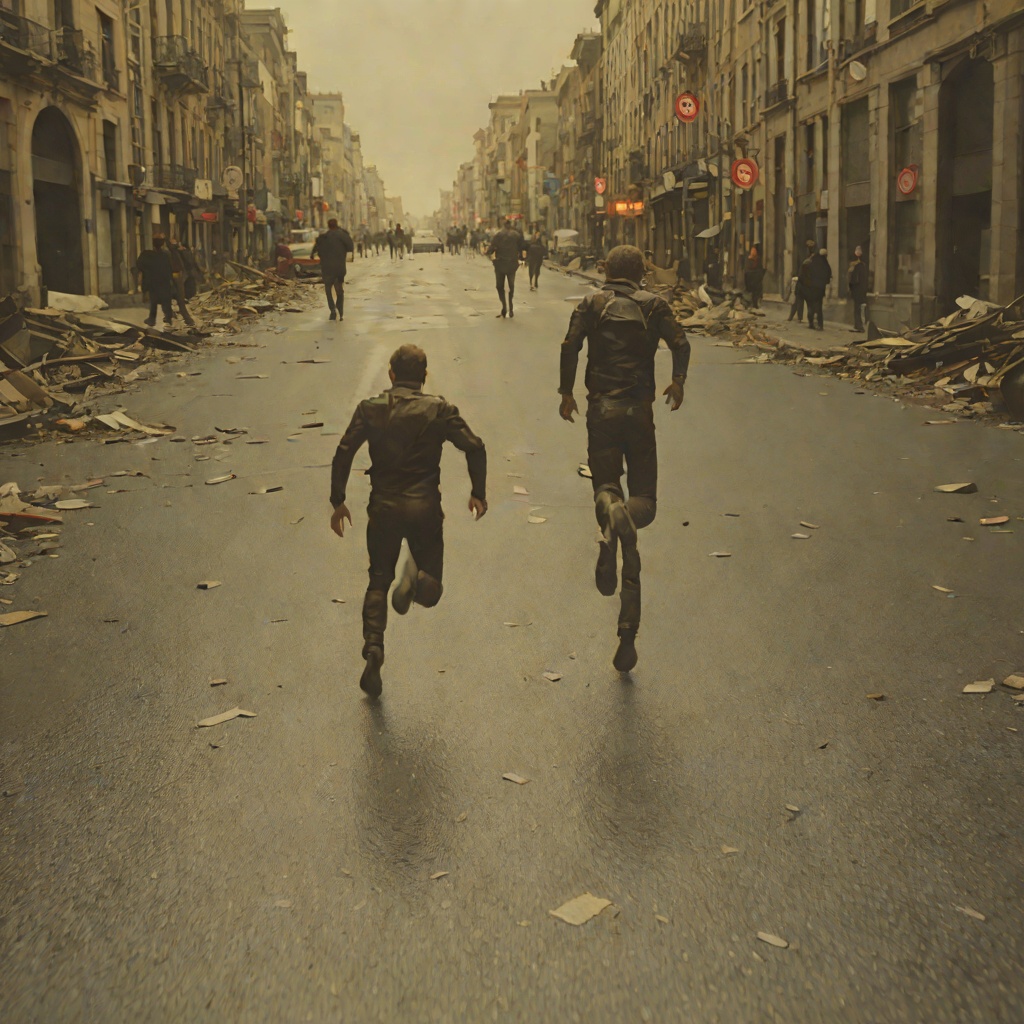
Harding belongs to a wider social order in which poverty is treated as an individual condition rather than a structural failure. Richards’s struggle to find work culminates in a humiliating encounter with a wealthy man who offers him ten New Dollars to submit to sexualized inspection; Richards knocks him down and runs. The episode reveals a city in which unemployment does not merely mean idleness. It exposes the poor to arbitrary degradation while leaving wealth free to convert desperation into entertainment.
The same pressure appears in the family economy. Richards considers entering the Games because the promised hourly payments could support his wife and sick child, even though the contract offers only a twelve-hour head start before professional Hunters pursue him and advertises a billion-New-Dollar prize for surviving thirty days. The apparent voluntariness of his choice is therefore constrained by the absence of meaningful alternatives. Harding’s poverty is not background decoration: it is one of the conditions that makes a lethal spectacle present itself as employment.
The city also exists within a culture of managed information. The television presentation of Richards turns a local man into a public threat, digitally and rhetorically reshaping his face into an urban monster and presenting Sheila as a grotesque caricature who supposedly awaits the reward for his capture. Later broadcasts describe him as a wolf who walks among ordinary people and falsely attribute murders and incitement to him. Harding is the “home city” from which this spectacle draws its emotional force, allowing the broadcast to convert local familiarity into fear and surveillance.
Harding in the Geography of Flight
During his escape, Richards moves through a network of improvised routes, shelters, vehicles, and disguises rather than through secure civic spaces. A taxi carries him only as far as Robard Street, five blocks from his intended destination, while its working Free-Vee broadcasts the closing credits of The Running Man. The journey demonstrates how thoroughly movement through the city is mediated by screens: even a temporary vehicle becomes an extension of the hunt, and Richards hopes for a broken television because visibility itself has become dangerous.
Harding is also contrasted with the more distant places through which the pursuit expands. When Richards gives a false account of being abandoned near a deserted shopping center, he claims to have been dropped after crossing the New Hampshire border. He later learns that Voigt Field is more than a hundred miles away, in Derry, showing how the chase has displaced him from the city named in his official identity. The farther he travels, the more Harding becomes an origin to be concealed and a destination that remains psychologically present.
Return and Final Horizon
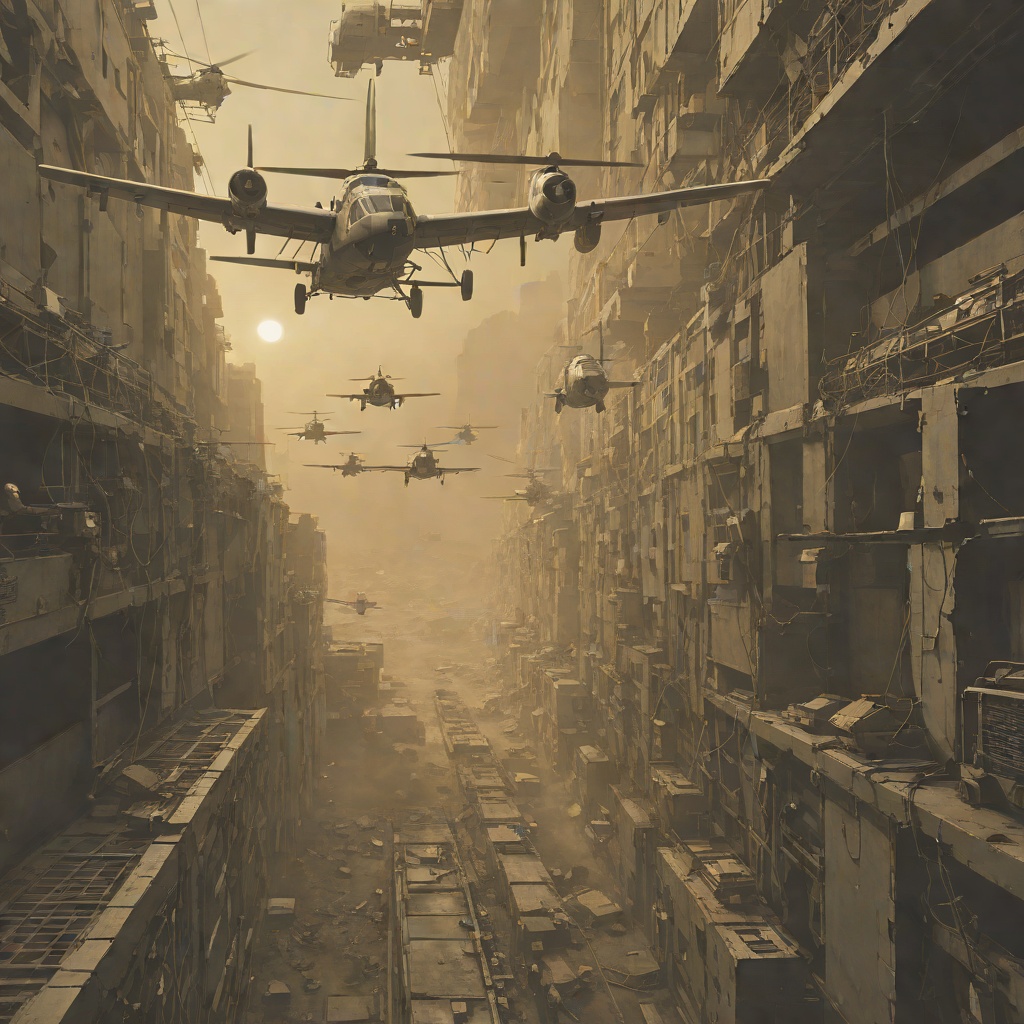
At the end, Harding appears through the plexiglass windows of the hijacked aircraft. Richards is exhausted and badly injured, lying over Holloway’s body and struggling even to lift his head, yet he forces himself to look at the twin controls as they continue their movement. Below him, Harding is visible; the plane is too far away for an ordinary return, but its course is directed toward the Games Building in Co-Op City.
This final image gives Harding a double meaning. It is the place from which Richards was administratively defined and socially impoverished, but it is also the landscape from which he makes his last act of agency. The city does not become a restored home, and the evidence does not present a peaceful reconciliation with it. Instead, Harding remains a charged point of origin whose presence at the climax binds private memory, public spectacle, and violent retaliation into one closing geographical line.