Network
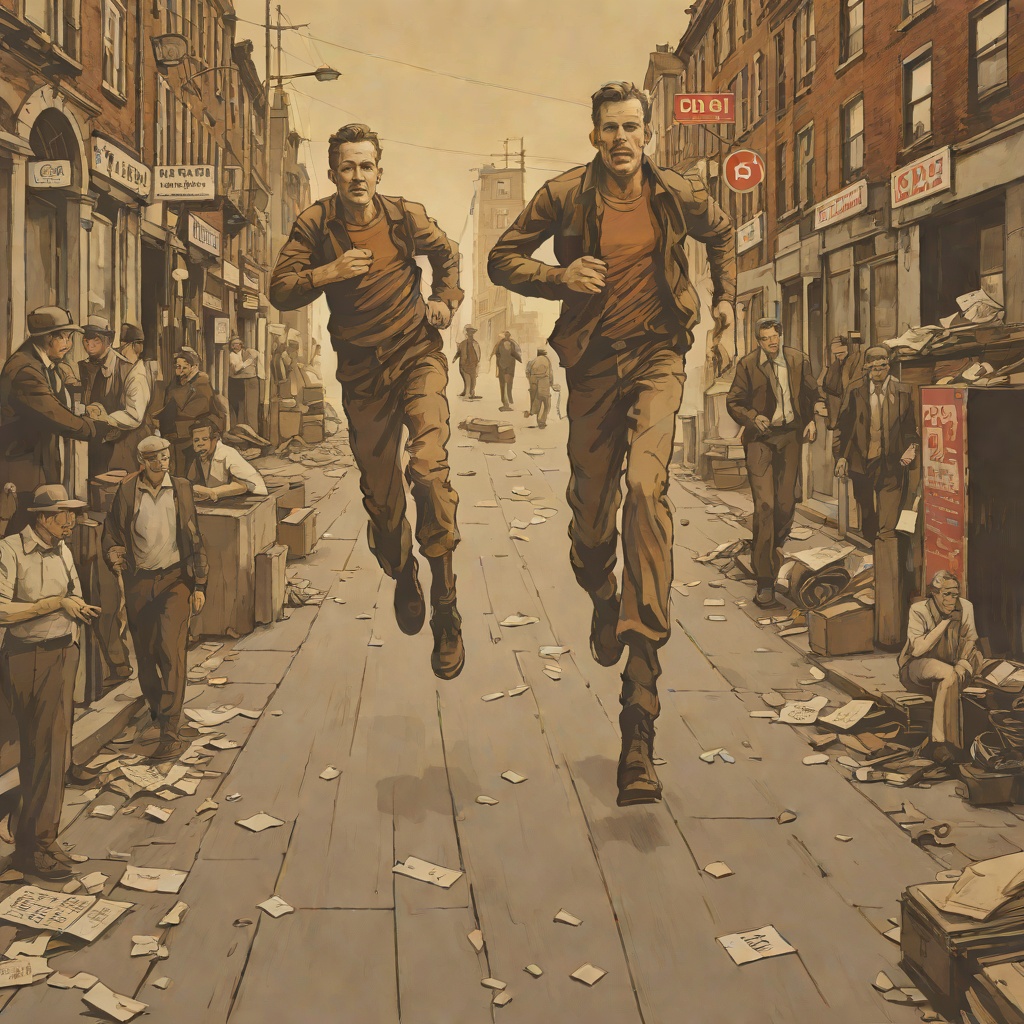
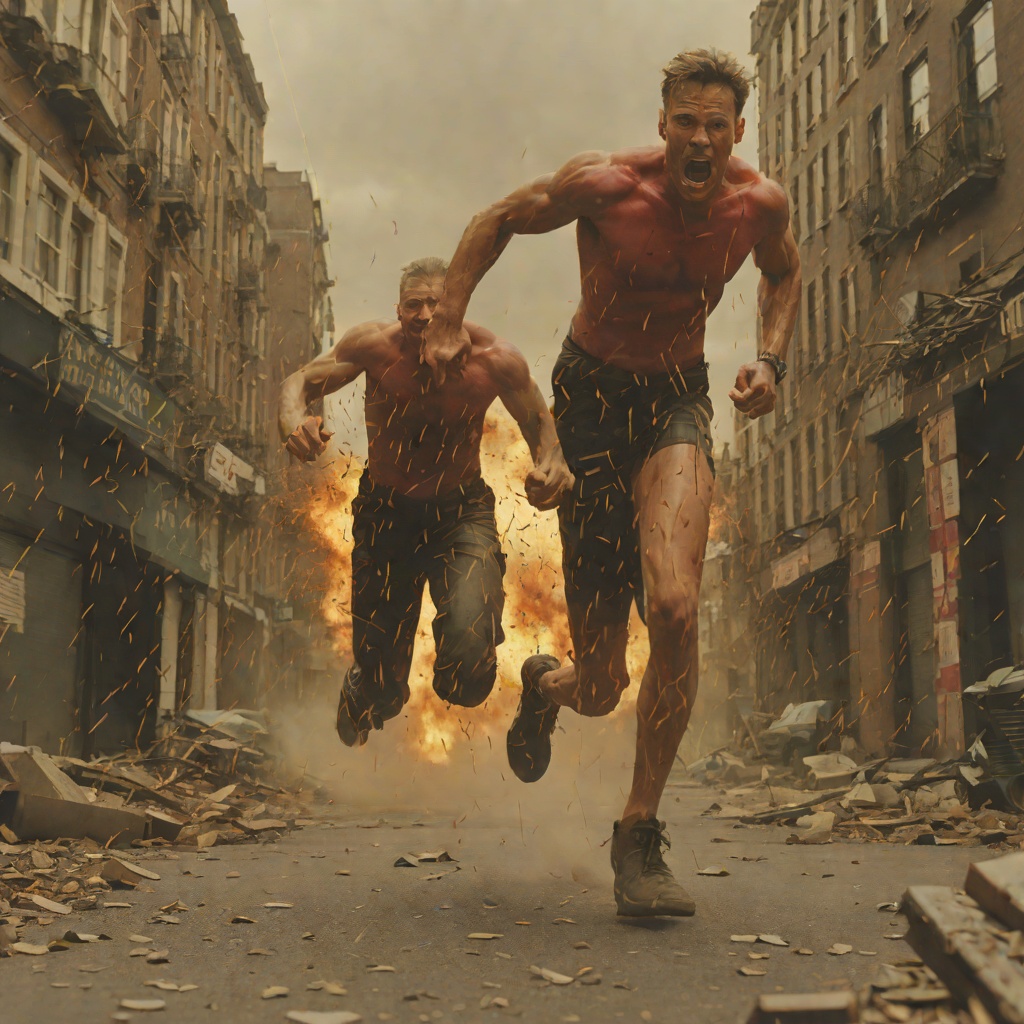
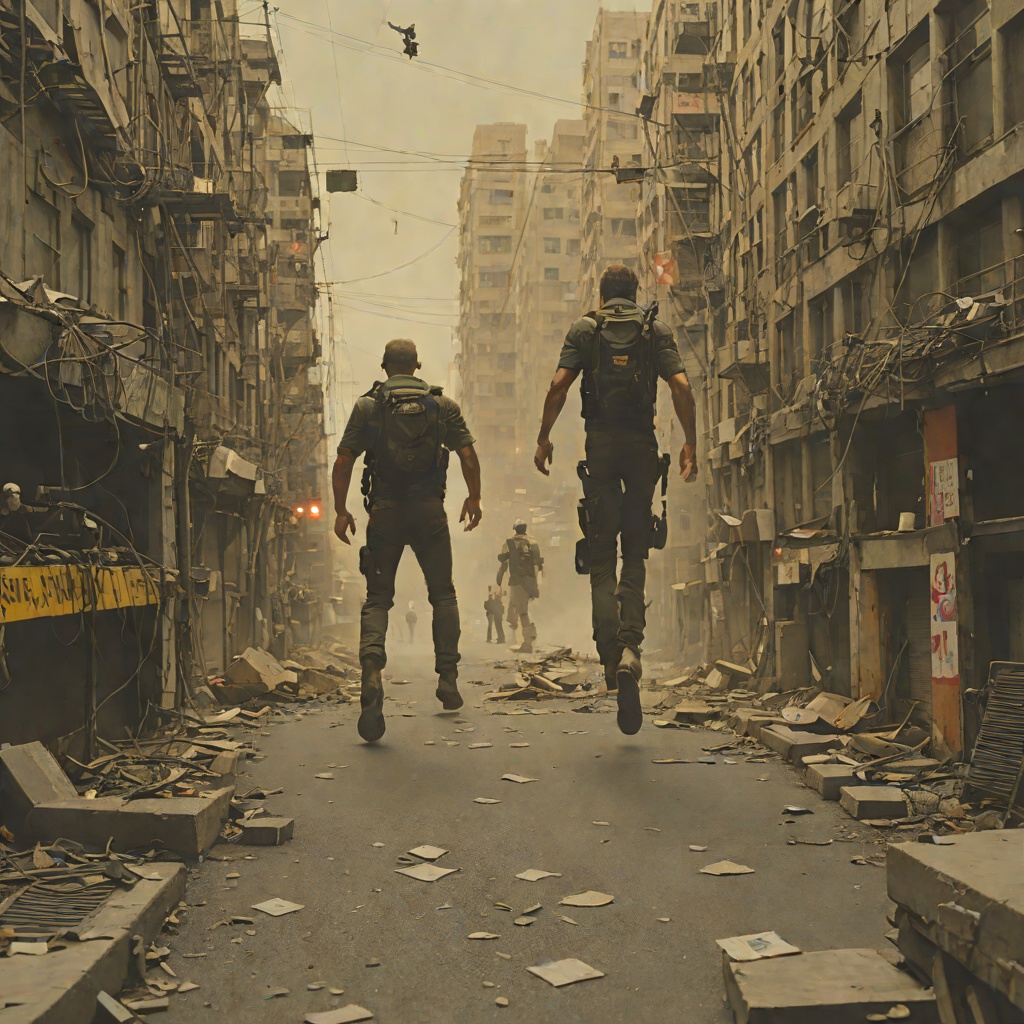
The Running ManNetwork is the communications and entertainment apparatus that governs visibility in the world of 2025. It does not merely broadcast programs: it connects television, policing, public participation, transportation, surveillance, and payment into a single system that converts poverty and danger into spectacle. Its decisive power lies in making pursuit appear to be a game while ensuring that the game’s rules distribute violence overwhelmingly toward the contestant.
Nature and Infrastructure
Network’s most pervasive material presence is Free-Vee, whose cables are buried safely beneath the streets. In the impoverished districts south of the Canal, Free-Vee remains available even where employment, lighting, transport, and ordinary public services have deteriorated. It is described as the “bread of life,” a free dream machine that runs continuously, while access to better goods and services depends on New Dollars available mainly to employed people. The contrast makes broadcasting appear universal even as the society around it is sharply divided by class.
The Network Games Building embodies this hierarchy. It rises one hundred stories above New York City, with its upper half lost in cloud and smog, while police and commercial security become denser as Ben Richards approaches the cleaner and wealthier districts. The physical arrangement is also a political map: the poor are surrounded by broken infrastructure and exposed to the consequences of unemployment, whereas the Network’s elevated headquarters occupies the protected vertical space of authority.
Network’s power depends on an assemblage of older and newer systems rather than on television alone. A speed shuttle carries Richards from Boston to New York after a routine identification check; a hotel videotape camera records ten minutes of sound and image at a time; a janitor’s access card activates the basement elevator; mailboxes transmit the contestant’s tape clips back to the studio; and later portable spotlights turn a hostage scene into a brightly staged public image. These devices provide mobility, storage, access, illumination, and tracking, but their apparent neutrality conceals their political function. The same infrastructure that lets a person travel or communicate also makes that person legible to institutions and crowds.
Entertainment as Governance
Network presents The Running Man as mass entertainment, but its executive producer, Dan Killian, openly identifies the program as a method for eliminating “embryo troublemakers.” The program has operated for six years without a survivor, and Network expects that record to continue. Its public language of contests and prizes therefore masks a planned political disposal: a dissident is not simply arrested but placed inside a commercial format in which his destruction can be watched, discussed, and monetized.
The program’s rules turn survival into a measurable commodity. Richards or his surviving family is promised one hundred New Dollars for every hour he remains free, with forty-eight hundred dollars supplied as running money on the assumption that he will evade the Hunters for forty-eight hours. He receives a twelve-hour head start, and surviving for thirty days supposedly earns a Grand Prize of one billion New Dollars. The unspent hourly balance is refundable if he dies before the allotted time, giving the rules the language of accounting even when the underlying transaction is a human life.
Network also assigns a price to participation in the hunt. Richards is promised an additional one hundred dollars for each Hunter or law representative he dispatches, while a verified sighting pays one hundred New Dollars and a sighting leading to a kill pays a thousand. Independent cameramen receive payment by the foot of film. The system thus recruits strangers, informants, police, and freelance image-makers into a distributed labor force. Watching is no longer passive: attention becomes evidence, evidence becomes a tip, and a tip becomes either money or death.
The production apparatus reinforces this structure through technical demands. After leaving the studio, Richards is given a compact tape machine and sixty short tape clips, equipment designed to fit inside a coat pocket. He must deposit two clips each day in a mailbox or face legal default of payment. The camera’s small size and automatic recording mechanism suggest technological triumph, but the device is also a contract instrument. It obliges the hunted man to produce the material through which Network will package his own pursuit.
Framing and Censorship
Network controls not only what viewers see but how they are instructed to interpret it. Bobby Thompson, the host and emcee of The Running Man, appears in a carefully constructed public persona: a natty green tunic, attractive silver hair, and impeccable manners. His polished presentation contrasts with the violence he introduces into the home. In one broadcast, he tells the people of Boston that five policemen died in the Boston Y.M.C.A. basement at the hands of Richards, presenting the fugitive as a wolf who has set a clever and merciless trap.
The broadcast then inserts Richards’s own filmed address to unemployed people, residents of Developments and ghettos, cycle gangs, and young people arrested for crimes they did not commit. His attempt to describe a conspiracy is abruptly stripped of intelligible sound; the image continues while the audio becomes squeaks, pops, and gargles. Thompson immediately declares that the audience need not hear more of the murderer’s “radical ravings.” The interruption is more than editorial trimming. It converts a counter-narrative into mute visual evidence and restores the official frame before viewers can evaluate Richards’s claims.
This control is especially effective because Network has made Free-Vee the society’s primary source of shared reality. Richards later recognizes the system’s authority in the logic that if something appears on Free-Vee, it must be true. Network’s strength therefore rests on a suspension of belief sustained by repetition, formatting, and collective viewing. Its authority is not limited to the studio; it is reproduced in homes, hotels, bars, streets, and among people who have learned to treat broadcast visibility as proof.
The apparatus can also make a spectacular event appear immediate while preserving editorial control. The program is broadcast live when possible, but later installments combine tapes, films, and live tricasts. Scheduled programming may be interrupted when a contestant approaches a particularly dramatic defeat. Even apparent spontaneity is thus absorbed into a preexisting structure of selection and timing. Crisis becomes a programming decision, and death becomes a moment chosen for maximum attention.
Counteruse and Exposure
Richards does not escape Network’s reach, but he learns to exploit its dependence on public credibility. In Rockland, he calls the newsie line and receives safe conduct because the public is watching. He understands that Network’s own Free-Vee authority constrains the police: if the country witnesses police murder a well-to-do hostage, the institution risks damaging the belief system on which its power depends. The same medium that makes nationwide pursuit possible can therefore impose a temporary limit on official violence.
His strategy turns the Network’s audience into a contested political resource. He describes the newsies as one card in a poker hand and the people around him as another, recognizing that the system possesses the men, weapons, and time while he must improvise from whatever social connections remain available. His later threat at the jetport demonstrates the reversal. By claiming to carry twelve pounds of Black Irish explosive fitted with a General Atomics Imploder ring, he transforms the crowd and the police from spectators of his impending death into participants forced to respond to his instructions.
Network’s spectacle cannot fully control what the audience sees once Richards seizes the initiative. At the jetport, spectators creep back despite the threat of catastrophe, with wide, wet, sexually charged eyes, while portable spotlights illuminate the car and its shattered windshield. The event remains a media spectacle, but the image no longer belongs entirely to the institution that created the game. Richards uses the audience’s attention as leverage, exposing the dependence of authority on what can be shown and what viewers are willing to believe.
Social Effects and Significance
The system’s consequences reach beyond its contestants. A Free-Vee contestant on Treadmill to Bucks misses a Bonus Question and suffers a simultaneous heart attack while the audience applauds as he is carried away. The scene places bodily collapse inside the ordinary rhythm of entertainment, making spectatorship itself part of the violence. Network does not need to invent extraordinary cruelty at every moment; it normalizes the conversion of injury, fear, and death into a familiar evening program.
The organization also produces a society trained to classify people by economic and political usefulness. The unemployed poor are addressed as a mass audience, but they are simultaneously treated as potential informants, targets, and expendable bodies. Middle-class viewers are encouraged to hate Richards, while the poor are encouraged to recognize that his persecution resembles their own exclusion. Network’s categories divide the public even as its signal reaches across those divisions.
Its relationship with the Games Federation reinforces the impression of a concentrated communications power. Richards imagines the Federation as a remote hierarchy of wealthy, insulated people connected to the world through an immense communications link, towering over the population like the Games Building itself. Network is therefore both a technical network and a social one: cables, cameras, broadcasts, money, police, and viewers form a chain through which authority circulates.
Yet the story also shows that networks are vulnerable to the relations they attempt to manage. Richards’s people, the newsies, a hostage whose social position complicates the use of torture, and the very audience that validates broadcast truth all create points of resistance. Network can assign prices to sightings and edit voices into silence, but it cannot eliminate the need for belief. Its greatest strength is the ability to make violence look procedural and entertaining; its greatest weakness is that every procedure depends on material devices, human cooperation, and an audience whose attention can sometimes be redirected.