Psychological trauma
The Running ManPsychological trauma is presented as an active disturbance of body, memory, perception, and speech rather than as a private feeling that can be cleanly separated from political violence. Across the experiences of Ben Richards and Amelia Williams, terror produces crying, freezing, hallucination-like imagery, emotional disconnection, and abrupt changes in conduct; the surrounding institutions then exploit or intensify those reactions through spectacle, pursuit, and coercion.
Definition and Immediate Bodily Response
Psychological trauma first appears through involuntary bodily reactions. When someone pounds on the door and calls for Frankie, Ben Richards stiffens, freezes with fear, and plays a statue rather than responding. The moment reduces him to immobility: danger is registered before deliberation can begin, and silence becomes the only available defense. Later, after a bullet has carved a deep wound in his side, he drifts in and out of consciousness while remaining preoccupied with the next movement and the likelihood that the wound will reopen. His physical injury and psychological strain reinforce each other, making endurance a matter of reflex rather than confidence.
Amelia Williams shows a different but equally immediate form of traumatic activation at the Winterport checkpoint. After seeing tanks outside, she speaks in a light, chatty, hysterical voice and then begins to cry. Her fear is not presented as an orderly assessment of danger; it arrives as an unstable mixture of forced conversational normality, repetition, and tears. When the checkpoint machinery suddenly produces a grinding roar, she screams aloud. The sound demonstrates how trauma can make an ordinary sensory shock carry the full force of the surrounding threat.
Fear, Pursuit, and Manufactured Perception
The narrative places trauma inside a system that deliberately manufactures images of terror. On the television broadcast, the Games authorities present Ben Richards through a hidden-camera portrait altered by airbrushing: his eyes are deepened, his forehead lowered, and his mouth reshaped into a jeering expression. The resulting image turns him into an urban death figure, a frightening public enemy whose supposed animal cunning is made visible for viewers. The broadcast does not merely report danger; it supplies a visual object around which collective fear can gather.
The same machinery invades Ben's family life. Sheila Richards is displayed in a still image that has also been brutally altered, transforming her ordinary face into a caricature of greed and sexual vulgarity. Ben lunges forward when he sees it, and the police restrain him. The televised humiliation converts intimate relationships into public bait, making his wife part of the hunt and denying him even the authority to identify her own image. When Bobby Thompson asks how long Ben expects to hold out, the audience's screams drown out his attempt to say that the woman shown was not his wife but a cheap fake. His inability to correct the image becomes a trauma of witnessing: he sees the falsification, understands its consequences, and cannot make the surrounding crowd hear him.
The broadcast repeats the assault through narrative framing. Bobby Thompson calls Ben one of the wolves who walks among the audience, while edited clips make him appear to advocate killing, riot, rape, and destruction. Thompson then juxtaposes Ben's image with photographs of young policemen and the sound of Taps, assigning responsibility for their deaths before any alternative account can be considered. The effect is psychologically coercive as well as propagandistic. Ben must watch a false version of himself circulate as public truth, while the deaths of others are arranged into an accusation that leaves him no legitimate voice.
Nightmare, Dissociation, and Intrusive Memory
Trauma becomes especially visible when the narrative changes its mode of perception. Ben has an unusually bad dream, despite the fact that the former Ben Richards had never dreamed. He is not an actor within the dream but an invisible watcher, observing a dim underground room where water seems to drip in the darkness. This separation between the self that experiences and the self that watches anticipates the later dissociative patterns in which consciousness divides between immediate survival and images that seem to belong to another layer of the mind.
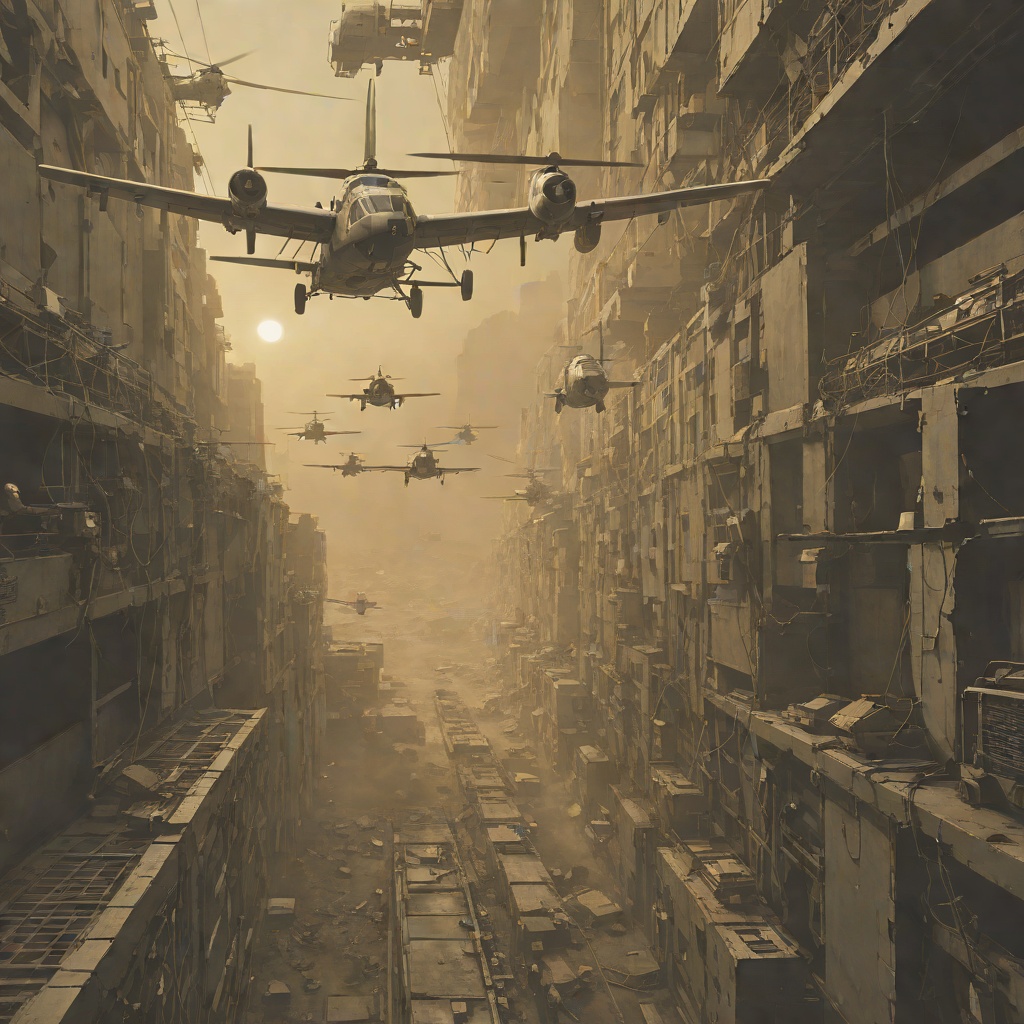
During the aircraft journey, Ben's mind becomes divided between practical navigation and a dark, nearly autonomous sequence of visions. He remains awake enough to deal with the danger posed by Evan McCone, yet another level of consciousness seems to contain something black and remote. The imagery takes the form of huge servomechanisms turning in darkness, infrared eyes, glowing foxfire, dials, and radar scopes. These mechanical fragments translate pursuit into an inhuman visual environment. The threat is no longer encountered only as an external force; it has entered the structure of perception itself.
The same altered state is described as an echoing distance when Dan Killian speaks to him. Ben hears Killian as though the voice were calling down from the bottom of a very deep well, while his mind displays a scrapbook of memories. The images move from Sheila Richards as a schoolgirl, to the couple at the Bay Pier holding hands, to their wedding before a justice of the peace, and then to scenes of work, pregnancy, and fatherhood. The memories are concrete but emotionally suspended. They do not initially produce ordinary grief, love, or loss; they pass with the cool numbness of an anesthetic. Trauma therefore disrupts not only recall but the emotional link that normally gives remembered events their meaning.
Bereavement and Emotional Numbing
The murder of Sheila Richards and Catherine Sarah Richards becomes the central wound around which Ben's later psychic state organizes itself. Dan Killian offers an explanation involving three drugged prowlers, a threatening move, and puncture wounds, while insisting that the Network had nothing to do with the deaths and that the event was a horrible accident. Ben supposes that the account may be true partly because it sounds too much like a lie not to be true, and partly because he knows that accepting the Network's offer would take him to Co-Op City, where he could learn what happened. The explanation does not resolve the trauma; it leaves him suspended between suspicion, partial belief, and the need to verify the facts himself.
The memory of his family then returns in increasingly painful forms. Sheila and Cathy are repeated in his mind like bells whose sound has been worn down into meaninglessness. Instead of grief, he feels a blurred embarrassment and recalls a schoolboy whose trousers fell down during the Pledge of Allegiance. The displaced image gives shape to his sense of exposure and failure: after being hunted, displayed, and manipulated, he feels that he has been made ridiculous as well as bereaved. The inability to mourn directly is itself evidence of psychic injury.
The final scrapbook image is more explicit and more devastating: a police photograph of a small body torn and cut apart in a blood-soaked crib, with blood on the walls, a broken Mother Goose mobile, and a one-eyed teddy bear. The scene condenses domestic safety, childhood, and official documentation into a single unbearable picture. Its photographic framing makes private loss resemble an exhibit prepared for judgment, while the ordinary nursery objects intensify the violation. The image does not restore emotional expression; it pushes memory toward horror while Ben remains largely numb.
Trauma in Interpersonal Conflict
Trauma also changes how people relate to one another. At the checkpoint, Amelia tells Ben that they are not in this together and says that she only wants him to go away. Her statement is frightened but deliberate: she tries to separate herself from him, even as the surrounding tanks and armed forces make separation impossible. Ben notices her bloodstained blouse and her physical vulnerability, but the scene offers no simple intimacy. Fear, distrust, and enforced proximity make perception itself ethically unstable.
When Amelia later cries continuously in the aircraft, Ben wonders what will become of her. He imagines that she cannot simply return to her husband and family because she is no longer the woman who had approached a routine stop sign while thinking about meals, meetings, clubs, and cooking. She has been marked as Shown Red, and he imagines drugs, therapy, and a patient display as possible institutional responses. His language of repair suggests a social fantasy that trauma can be patched with psychological Band-Aids, even while he recognizes that the experience has changed her identity and damaged her former assumptions about ordinary life.
Evan McCone embodies another traumatic pressure: the persecutor who remains outwardly neat and unaffected while hatred darkens his eyes to an almost psychotic intensity. Amelia reaches the stairs panting and frightened, with her hair blown into a disorderly beehive, whereas McCone appears controlled and unruffled. The contrast shows that trauma does not produce one visible form. The hunted body trembles and gasps; the hunter's violence is concealed beneath composure. McCone's quiet insistence that the game has not truly begun turns psychological intimidation into another weapon.
Crisis, Action, and Narrative Significance
The narrative does not treat trauma as a stable condition that simply replaces agency. Ben repeatedly moves between collapse and action. While wounded, he considers a plan to fill in the blanks until an air car is destroyed in an apparent accident, complete with the anticipated official language about a trooper's suspension and the loss of innocent life. He recognizes that the plan is a joke against the massive armory surrounding him, yet continues almost by reflex. Trauma narrows his future into fragments, but it also preserves a stubborn capacity to act within those fragments.
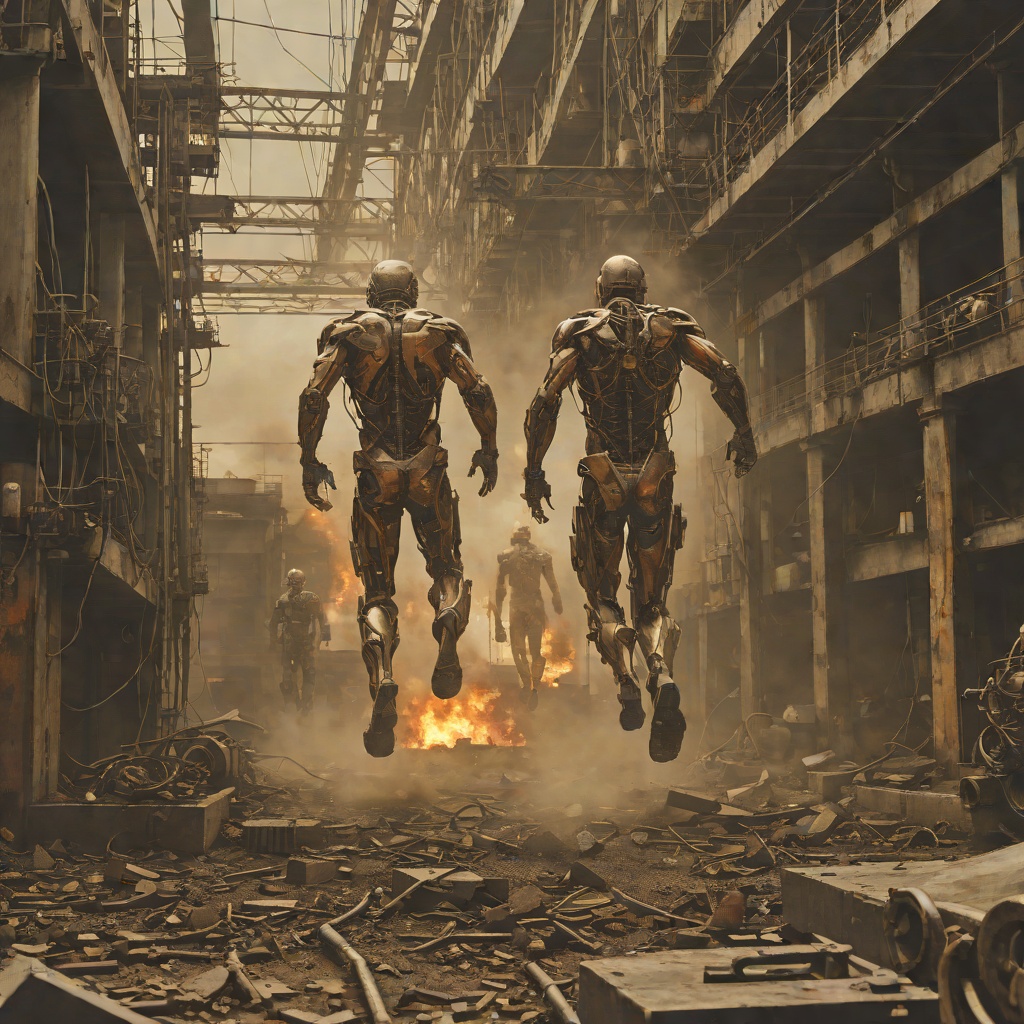
Near the end, the aircraft is empty except for Ben and Otto. As blood drains from his body, the world loses color and becomes gray and ghostlike. He recognizes that he is dying, then screams and forces the world back into painful focus, refusing the final surrender for another moment. He lunges through the galley with his intestines hanging in ropes around him. The scene joins extreme bodily damage to a last surge of consciousness: psychological trauma is not overcome, but it is briefly converted into movement, attention, and resistance.
Through these recurring shifts between startle, immobility, nightmare, intrusive imagery, numbness, and sudden action, psychological trauma becomes both a consequence of the manhunt and a way of representing its deeper violence. The televised distortions assault public identity; the checkpoint and aircraft turn fear into bodily crisis; the deaths of Sheila Richards and Catherine Sarah Richards fracture memory and emotion; and the ending leaves Ben's consciousness fighting to remain present inside a body and world that are failing. The state is therefore personal in its symptoms but political in its causes, showing how organized spectacle and coercion enter the most intimate layers of perception.