Rat
The Running ManRat is a recurring creature whose appearances make the world of Ben Richards physically legible. It is not a single named animal but a persistent urban population, moving through garbage, airshafts, basements, storm drains, and ruined streets. Its presence supplies more than atmosphere: the rat becomes a living measure of abandonment, thriving where housing, public services, policing, and environmental protections have failed.
Habitat and Urban Setting
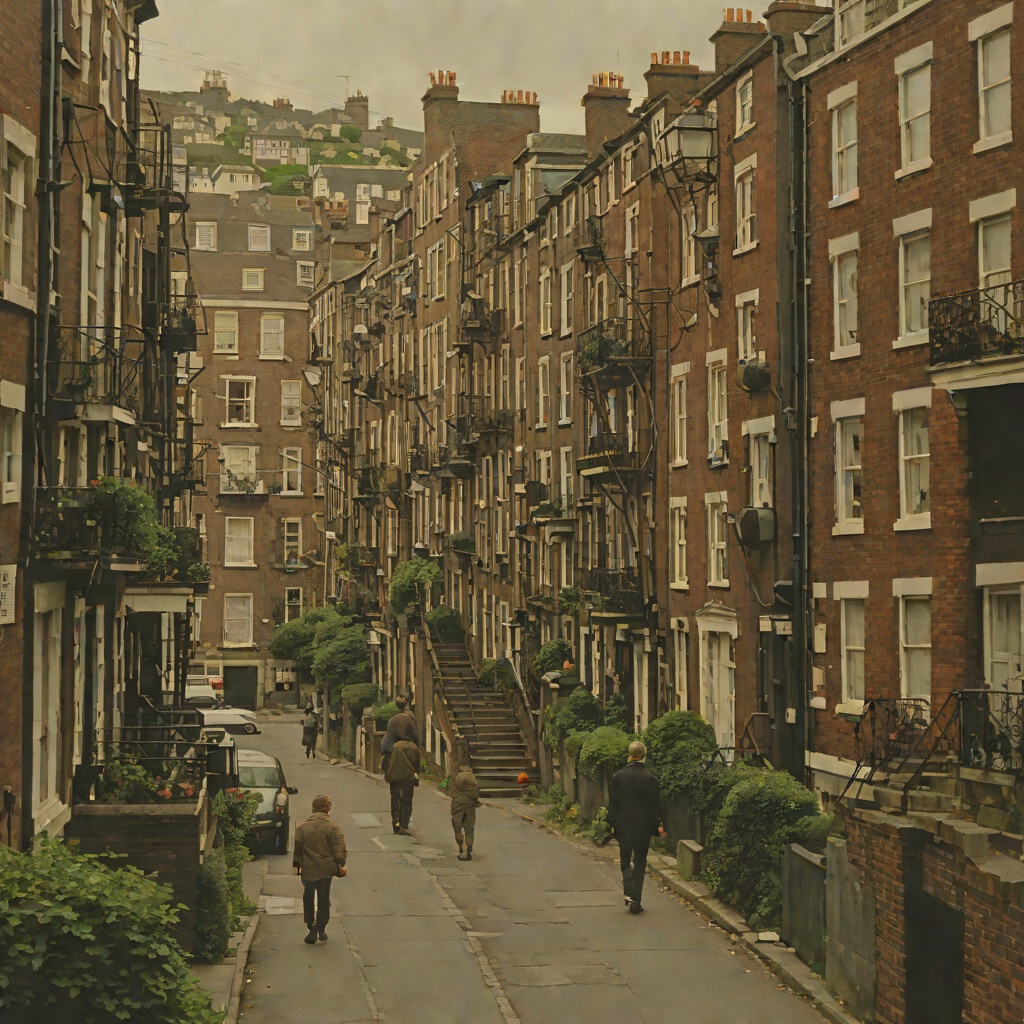
Rat first belongs to the domestic margins of Co-Op City. In the drizzle beyond Sheila Richards, the highrises resemble the gray turrets of a penitentiary, while clotheslines flap above an airshaft through which rats and plump alley cats circulate among the garbage. The animal shares the apartment block's confined infrastructure with its human residents, and its movement through refuse makes poverty appear not as an abstract condition but as a complete material environment.
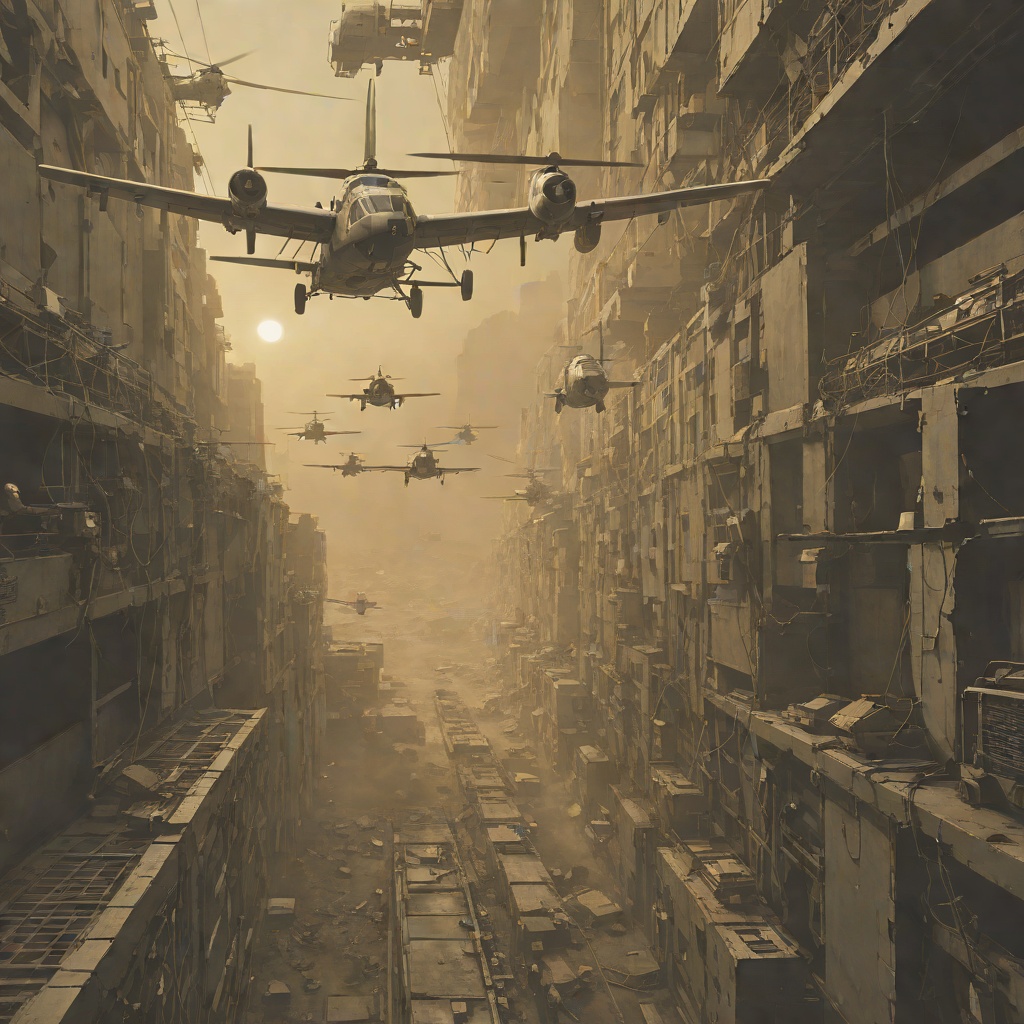
Outside, the same ecology expands across the neighborhood. Co-Op City is described as a radiating rat warren of parking lots, deserted shops, Urban Centers, and paved playgrounds. A stripped 2013 Humber rests on decayed axles, and the cops have left it where it stands; cycle gangs have become the effective law, while ordinary residents travel by pneumo bus or carry a gas cylinder. The rat therefore occupies a landscape where official authority has withdrawn and discarded objects remain in place. Its habitat is produced by neglect, not by untouched nature.
The streets intensify that impression through repeated images of crashed-out windows, wet bags of garbage, cracked pavement, and walls marked with obscenities. Rats move among cats, roach ends, and the other debris of a damaged city. As Ben walks north toward the clean skyscrapers, occasional liquor stores and smoke shops give way to X-Houses, Hockeries, Blood Emporiums, and corners occupied by greasers on cycles. The rat's range follows this social geography: it is most visible where commerce, safety, and public maintenance have been reduced to predation and survival.
Recurring Encounters with Ben Richards
Ben's encounters with Rat are brief, but their placement gives them structural force. A rat crosses the cracked and blistered cement lazily as he leaves home in steady rain, while the thermometer across the street stands at fifty-one degrees and his sick daughter remains in a poorly heated apartment. The animal's casual movement contrasts with the urgency of Ben's purpose. He is carrying the burden of poverty, unemployment, and Cathy Richards's illness; the rat simply continues through the same conditions, apparently adapted to them.
The subterranean scenes make the creature an active guide through a more dangerous version of the same environment. After Ben reaches the basement of the Boston Y.M.C.A., he hears the scurry of a disturbed rat in the darkness. The basement contains rusted heating pipes, dripping water, cracked cement, and thousands of newspapers in which whole families of rats have nested. Their ruby eyes stare from the paper drifts, turning the abandoned room into a crowded, watchful refuge rather than an empty hiding place.
Ben uses fire to escape. He finds a folded book of matches, fails with the first two, and succeeds with the third; when the paper spill catches, a rat runs across his foot and disappears into the darkness. The animal's sudden contact occurs at the instant his plan becomes irreversible. Fire is meant to force pursuit away from him, but it also drives him into the storm-drain system, where the urban refuge becomes a furnace-lined trap.
As the oil tank in the Y's basement explodes, Ben backs through a horizontal pipe while heat travels through the metal. The blast nearly ruptures his eardrums, and the pipe becomes hot enough to threaten him with being baked alive. Later, in the water flowing through the darkness, a rat dog-paddles past him, pauses to look up with glittering eyes, and continues with the current. Ben follows it clumsily. In this sequence Rat functions as an accidental companion and directional marker: the creature has already found a way through the underworld, and Ben survives by moving in its wake.
The Rat as Social and Environmental Index
The novel repeatedly places Rat beside signs of institutional failure. The animals circulate through garbage beneath housing that resembles a prison, remain in streets where police no longer patrol, nest in a YMCA basement full of abandoned newspapers, and inhabit infrastructure that catches fire while its human occupant flees. Their recurrence gives form to slow violence: pollution, poverty, and public abandonment are not presented only through spectacular catastrophe, but through the ordinary persistence of creatures that live inside the consequences.
This ecological image is sharpened by Bradley Throckmorton, who explains that Boston's pollution count can reach forty-two and compares breathing the air on a bad day to smoking four packs of cigarettes. He argues that inexpensive nose filters are ineffective, while the effective General Atomics versions cost six thousand New Dollars. Rat does not speak, diagnose, or organize, yet its repeated presence materializes the world that produces such respiratory illness. The same society that leaves poor districts to rats also distributes protection from polluted air according to income.
Cathy Richards's illness and Cassie Throckmorton's cancer make this connection explicit at the human level. Cathy suffers flu and fever in the cold apartment; Cassie, five years old, has cancer in both lungs that has spread into her throat and belly. Bradley says official records will call such deaths asthma rather than lung cancer, concealing the relationship between industrial pollution and disease. Against that bureaucratic concealment, Rat supplies a visible, recurring fact: the environment is sick, and its most disadvantaged inhabitants share it with animals that have adapted to contamination.
Symbolic and Narrative Function
Rat belongs to the novel's vocabulary of stigma and exclusion. Ben himself is treated by the Network as a throwback and possible danger, an inconvenient human remnant in a system that calculates people by usefulness and visibility. The rat occupies the opposite side of that hierarchy: it is beneath notice, yet impossible to eradicate. Ben's disguises, false wallet cards, altered hair, spectacles, mouth wadding, plastic buck-teeth, and advised limp show a fugitive trying to manage how institutions read his body. Rat needs no disguise because the ruined city has already made it socially invisible.
The creature also punctures the controlled spectacle of the Network. In public apartments, Free-Vee blares through thin walls while contestants lose bonus questions, suffer heart attacks, and are carried away as applauding audiences watch. Outside, rats cross broken streets and move through garbage. The contrast is not accidental decoration: entertainment converts crisis into viewer participation, while Rat records what the broadcast excludes. The televised world promises games, prizes, and vicarious danger; the rat inhabits the unpaid, unedited consequences beneath it.
Finally, Rat gives the escape narrative a picaresque and horror-like texture. Ben passes through a chain of improvised shelters and hostile social spaces, and the animal repeatedly reappears as a small, concrete witness to each layer of decay. In the basement, unseen scurrying creates anticipation; among the newspapers, the hidden population becomes visible; in the pipe, the dog-paddling animal becomes a guide. The progression moves from background unease to bodily proximity and then to uneasy recognition, without turning Rat into a supernatural agent. Its power comes from the fact that it is ordinary, numerous, and perfectly at home in a society that has made human life similarly precarious.
The final destruction of the Network Games Building does not erase the conditions Rat represents. The Lockheed jet strikes the building three quarters of the way up at slightly over five hundred miles an hour, and the resulting explosion rains fire twenty blocks away. That spectacular ending contrasts with the rat's quieter endurance. Institutions may burn in a single violent image, but the rat belongs to the longer aftermath: garbage, poisoned air, broken infrastructure, and the populations forced to live among them.