Stabbers
The Running ManStabbers is a clandestine neighborhood gang in Boston whose importance exceeds its reputation as a street organization. It provides Bradley Throckmorton and Stacey with shelter, weapons, improvised technology, illicit access to books, and a covert communications route for Ben Richards. The group’s methods are shaped by the same hostile society that stigmatizes and polices its members, yet its internal solidarity turns marginality into practical resistance against the Network and the Games.
Nature and Local Structure
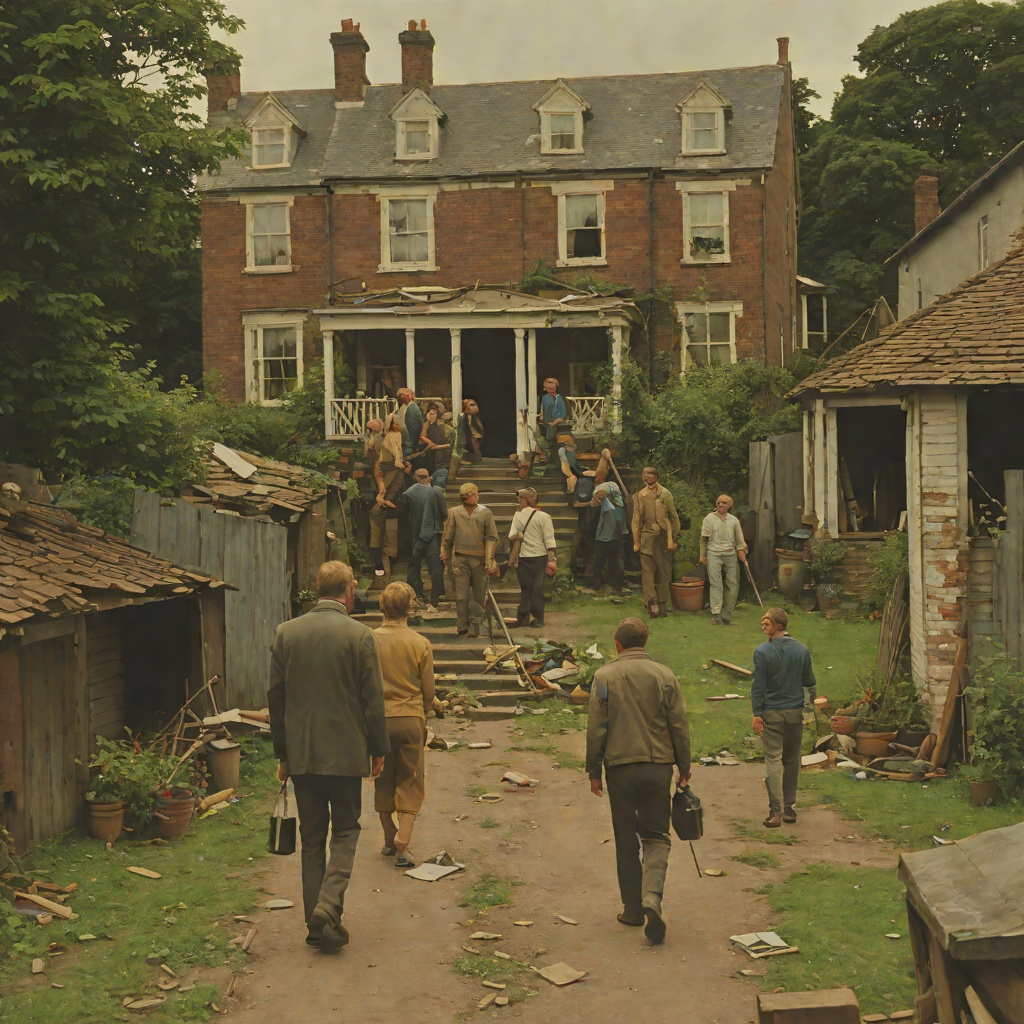
Stabbers appears as a loosely organized collective rather than a formal institution. Bradley Throckmorton tells Ben Richards that he belongs to the gang and that its headquarters are on Boylston Street. The group includes members interested in street confrontation, but Bradley distinguishes between those who merely cruise for Saturday-night violence and others who have spent years pursuing knowledge in the library. This division gives Stabbers a double character: it is capable of intimidation and armed defense, while also functioning as an informal educational and political network.
The gang’s organization depends on shared resources and improvised systems. Its members obtain library access by stealing a card belonging to someone from a family with a guaranteed income, then take turns using it while wearing a common gang suit. They also make a key from a wax blank to enter the reserve section, where they read about pollution, impurity counts, smog levels, and nose filters. The arrangement reveals both the class barriers imposed by official institutions and the practical intelligence with which Stabbers circumvents them.
Protection and Contact with Ben Richards
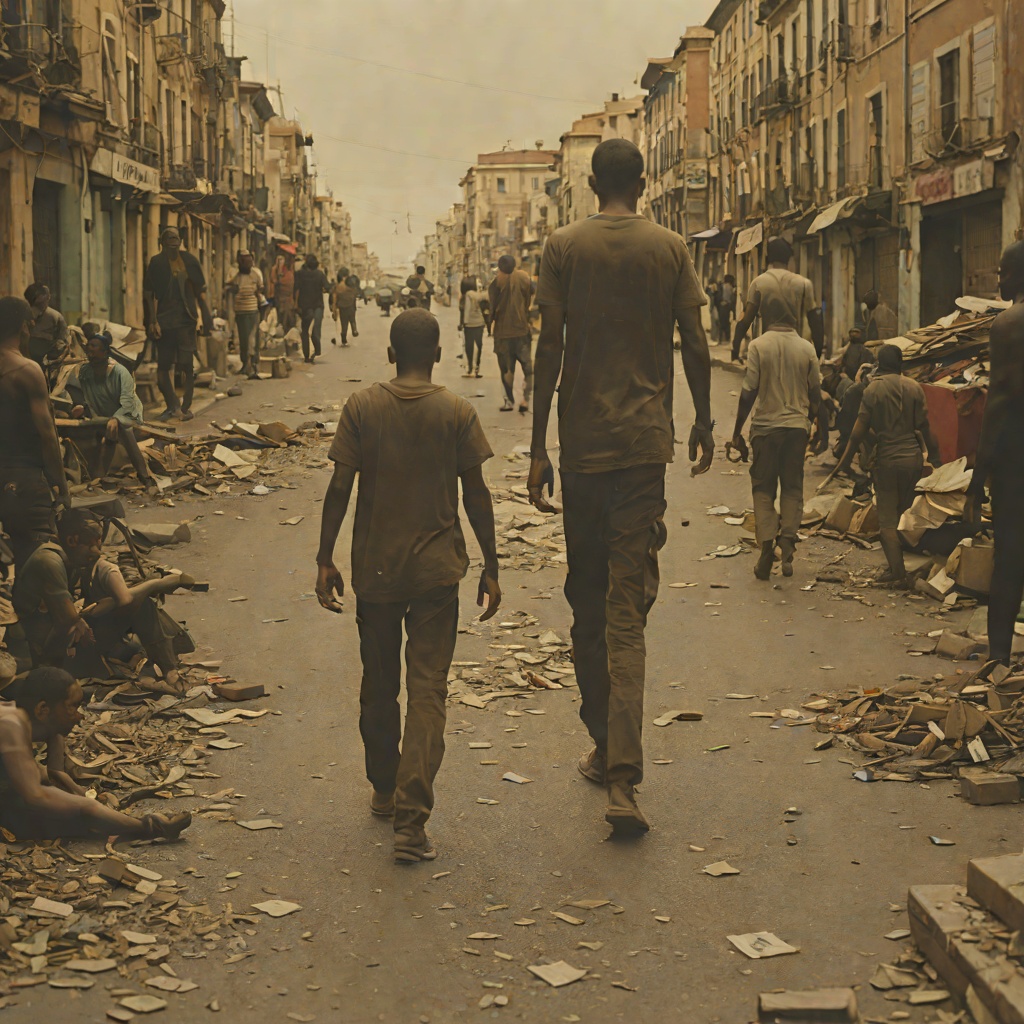
Stabbers first reaches Ben Richards through a frightened boy who has built a cramped lean-to from scavenged boards and bricks. The boy has stolen a car battery and wired it to a lightbulb after Bradley Throckmorton taught him how to repair it. He invokes Bradley and the gang as protection, warning Richards that Bradley would retaliate if the boy were harmed. The episode shows Stabbers extending its influence even into improvised shelters and among children who survive outside respectable social structures.
When Bradley arrives, he initially confronts Richards with a switchblade and demands that he surrender any weapon. Once he recognizes the fugitive from the Free-Vee broadcast, however, suspicion becomes cooperation. Bradley offers to take Richards home with him and Stacey, explaining that the alley is too exposed and that police are cruising through the area. Stabbers therefore becomes the immediate means by which Richards moves from an unsafe hiding place into a coordinated escape route.
Covert Operations and Resistance
Stabbers assists Richards beyond the act of hiding him. Bradley explains that Rich and another member used the gang headquarters’ press on Boylston Street to produce gummed mailing labels. The labels falsely direct packages to Brickhill Manufacturing Company in Manchester, New Hampshire, and Richards is instructed to attach them to his suitcase and mail his two videotapes by Speed Delivery. Bradley will then forward the material to Games from Boston. The scheme converts an ordinary postal procedure into a clandestine channel for moving evidence while obscuring the connection between Richards and the broadcasts.
The gang’s assistance is also an act of collective commitment. When Richards asks why Bradley has done so much and whether he has damaged his standing with the club, Bradley replies that the members understand the situation. His explanation is that people must protect their own or the authorities will eventually destroy them; waiting passively is no safer than choosing resistance. Stabbers’ loyalty is thus presented not as sentimental charity but as a survival ethic produced by shared exposure to poverty, surveillance, and state power.
Education, Stigma, and Narrative Significance
Stabbers complicates the official image of the urban poor as violent and intellectually barren. Bradley can threaten Richards with a knife, yet he also reads technical and environmental material, organizes stolen library access, and designs a mailing operation capable of evading the Games. The gang’s members are denied legitimate entry into public knowledge and legitimate social mobility, so they build substitutes from stolen cards, wax impressions, gang clothing, a printing press, and personal trust.
Its existence also exposes the contrast between public labeling and lived function. The Network’s media apparatus turns Richards into a monstrous “wolf” and presents social discontent as a threat to innocent citizens, while Stabbers recognizes him as someone caught inside the same system of coercion. The gang is not depicted as pure or harmless: its name, weapons, and street culture carry real danger. But the evidence of its reading practices, mutual aid, and logistical skill prevents that danger from becoming the whole meaning of the organization.
Stabbers consequently serves as a miniature counter-network beneath the official Network. It links hidden domestic spaces, stolen infrastructure, forbidden information, and political action. Through Bradley Throckmorton’s protection of Ben Richards and the gang’s preparation of the Manchester mailing route, it changes Richards’ escape from an isolated flight into a collective effort. Its most important resource is not force alone, but the ability to turn shared exclusion into knowledge, coordination, and resistance.