The Hunters
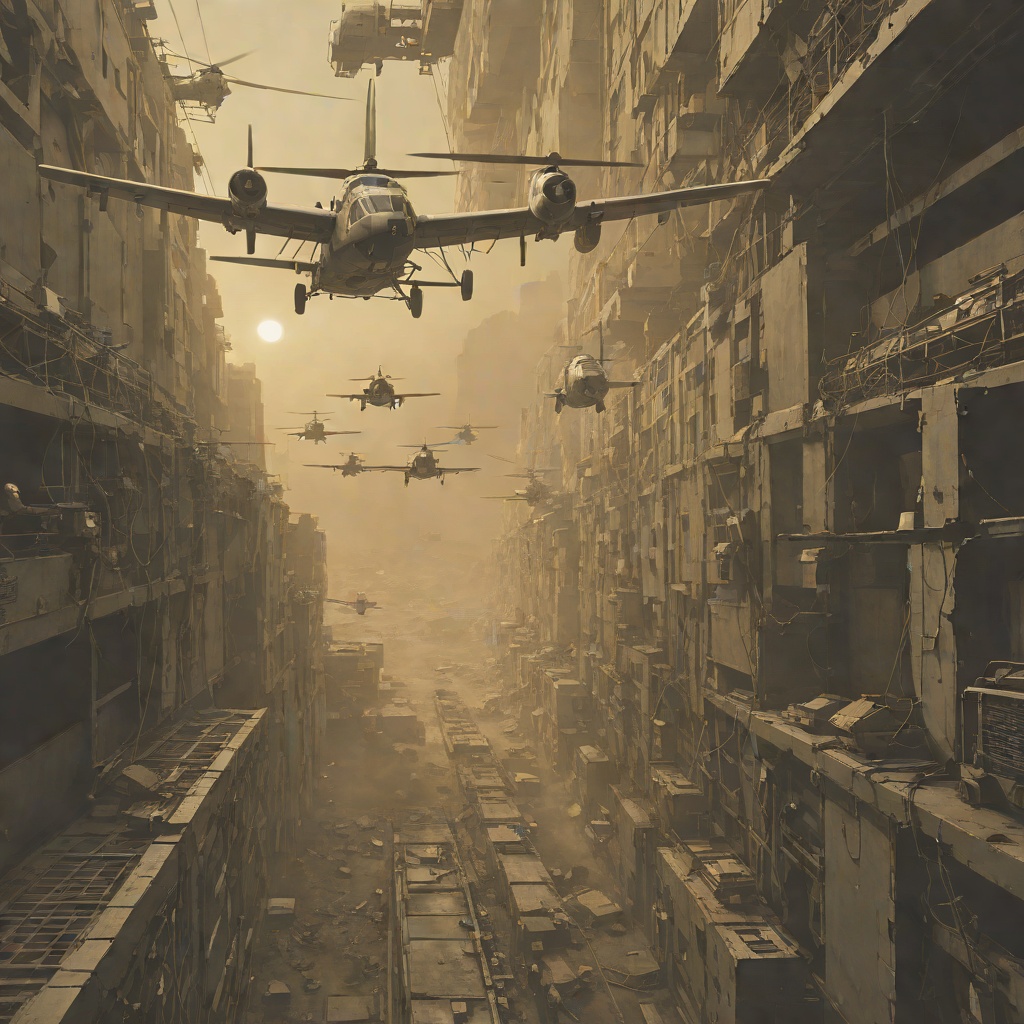
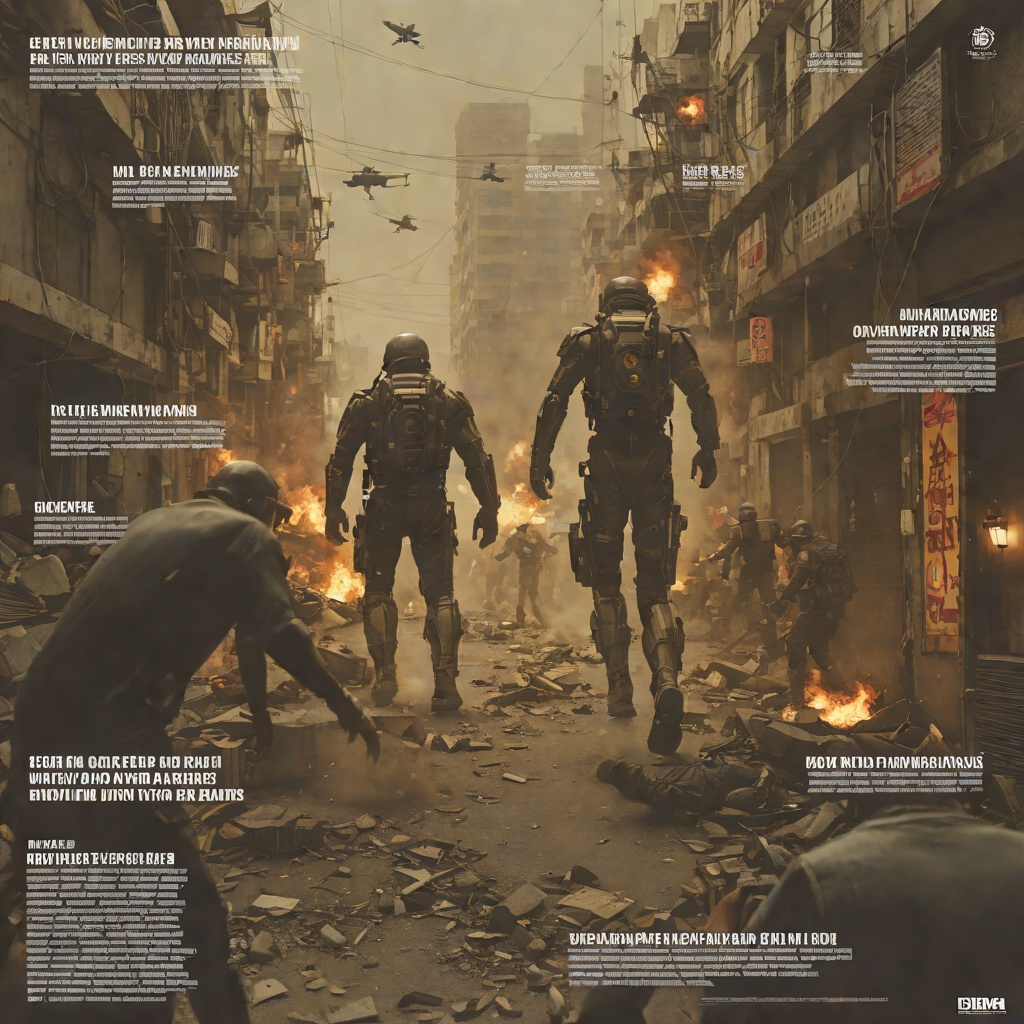
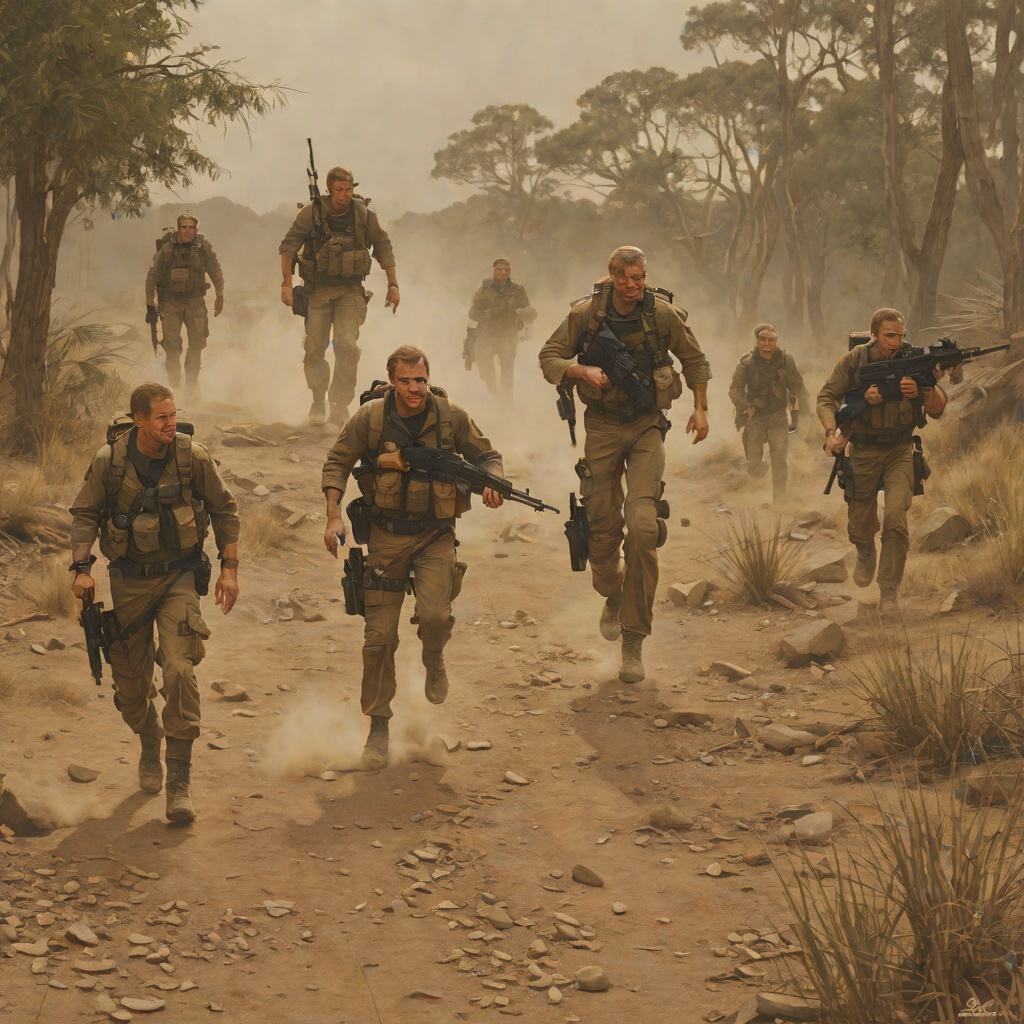
The Running ManThe Hunters are the Network’s elite pursuit force in The Running Man, the agents who convert a contestant’s attempt to remain free into a nationwide manhunt. They are both a concrete operational unit and a cultural instrument: professionally organized, technologically assisted, and surrounded by propaganda that teaches the public to see Ben Richards as prey. Their decisive significance is that they erase the boundary between policing and entertainment. The hunt is broadcast, monetized, and supported by ordinary citizens, so survival depends not only on outrunning trained pursuers but on escaping a social system designed to make every witness an auxiliary Hunter.
Identity and Institutional Role
The Hunters are introduced to Ben Richards through Dan Killian as the force that makes the program’s advertised odds almost meaningless. Killian names Evan McCone and The Hunters together, presenting McCone as the chief operative and insisting that McCone never loses. The claim establishes more than a reputation for efficiency. It places The Hunters outside the sentimental tradition of spectators gathering in bars, hotels, or the cold outside appliance stores to cheer for a fugitive. In this world, the public is expected to want Richards destroyed, and the spectacle becomes more exciting as the violence becomes messier.
Their work is therefore not limited to locating a fugitive. The Running Man’s later programs may combine tapes, films, and live broadcasts, with scheduled programming interrupted when a contestant approaches his personal Waterloo. The Hunters function within that flexible broadcast machinery: their pursuit supplies the danger, while the Network turns each discovery, confrontation, or death into a televisual event. The institution’s apparent professionalism gives the spectacle an aura of legitimacy even as its procedures make killing a scheduled feature.
Methods, Rewards, and Surveillance
The program gives The Hunters a carefully structured economic environment in which pursuit can be performed by professionals and supplemented by the public. Richards or his surviving family is promised one hundred New Dollars for every hour he remains free, with forty-eight hundred dollars advanced on the assumption that he will evade the Hunters for forty-eight hours. He receives a twelve-hour head start, and thirty days would bring a one-billion-New-Dollar grand prize. The figures make time itself a wager, while The Hunters embody the force pressing that wager toward exhaustion.
The Network also pays for the removal of obstacles. A Hunter or law-enforcement representative killed by Richards brings an additional one hundred dollars, and the rules explicitly extend that payment to his estate. The arrangement disguises state violence and pursuit as a game ledger: the pursuer is a representative of order, but his death is also a payable unit in the show’s economy. The Network warns Richards not to kill innocent bystanders, not because it rejects violence, but because it wants violence directed toward usable targets and presented as good theater.
The public is enrolled through an eight-hundred telephone number. A verified sighting pays one hundred New Dollars; a sighting that results in a kill pays one thousand. Independent cameramen are paid ten dollars a foot and upward for footage. These incentives make observation itself dangerous. A hotel clerk, bellboy, taxi driver, stranger, or passerby may become a source of information, a witness seeking money, or a camera operator seeking a place in the broadcast. The Hunters’ reach consequently exceeds the number of uniformed or professional agents. It is distributed through greed, fear, and the promise of visibility.
The fugitive’s required equipment reveals how completely the hunt has been made procedural. After leaving the stage, Richards is given a small tape machine weighing six pounds and sixty clips, each about four inches long, small enough to fit into a coat pocket without a bulge. He must deposit two clips per day into any mailslot so that the material can be delivered express to the Network and edited for that night’s airing; failure to do so constitutes legal default of payment. Even while evading The Hunters, the contestant must feed the system that displays and commodifies his evasion. The pursuit is therefore a closed circuit: escape generates content, content generates attention, and attention increases the number of possible pursuers.
Psychological Presence and Public Imagery
Before The Hunters appear directly, they occupy Richards’s imagination as an almost supernatural threat. At the Brant Hotel, he reasons that they would not be searching for a conventional running man but for a hiding man, anticipating the instinct to make a den and cower inside it. His disguise is hastily assembled, and he imagines that a desk clerk, bellboy, taxi driver, or anonymous observer may already have identified him. The false identification papers supplied by Molie seem fragile because The Hunters can pressure everyone connected to Richards, from acquaintances to the pawnbroker who forged papers. A check of Harding’s three jetports could expose the midnight departure made under the name John G. Springer.
Richards’s daydream turns that possibility into a nightmare of total logistical penetration. He imagines the Hunters extracting the Springer name through torture, obtaining his flight number, searching computer-tabulated hotel listings, replacing busboys, bellboys, clerks, and bartenders, surrounding the Brant Hotel, filling the elevators, climbing the fire escape, and arriving with cameras already recording his destruction. The fantasy matters even where it exceeds confirmed events: The Hunters have become so effective in the social imagination that their pursuit resembles an invisible infrastructure already surrounding him.
The Network’s broadcasts intensify that presence by manufacturing an image of Richards for the public to hunt. His portrait is retouched into the face of an urban boogeyman: brutal, primitive, and cunning. The program then displays Sheila Richards in a deliberately degrading counterfeit image, transforming her into a greedy sexual caricature and presenting her as the recipient of the reward. The Hunters are not merely following a person; they are pursuing a media construction whose face has been circulated in advance. Bobby Thompson tells viewers to remember it because Richards might be beside them on a bus, in a jet plane, near a three-dimensional magazine rack, or outside their homes. The command makes proximity itself suspicious and turns ordinary space into hunting ground.
McCone, Technology, and Operational Power
Evan McCone embodies the personalized command structure of The Hunters. Richards knows his name before meeting him and experiences it as a word designed to produce fear. He imagines McCone as the chief Hunter, the steel within the Network’s public glove, and a figure descended symbolically from the traditions of J. Edgar Hoover and Heinrich Himmler. McCone’s authority is not theatrical bluster alone. At the Voigt Airfield confrontation, he approaches with his own bullhorn and contests Richards’s claim that he is carrying “Black Irish” explosive while holding Amelia Williams hostage.
McCone’s method is controlled skepticism joined to psychological pressure. He declares that the Network knows Richards is lying because a man without a G-A rating could not obtain Dynacore, and he demands that Amelia be released. When Amelia does not break, McCone explains that the authorities cannot use a single E.E.G. without exposing their secret and that they are bringing Canogyn from New York, a substance expected to leave no trace. He then studies the visible bulge in Richards’s pocket and suspects that it is Amelia Williams’s handbag rather than explosive. The exchange shows The Hunters operating through observation, delay, medical secrecy, and calculated inference as much as through weapons.
Their reach eventually becomes explicitly technological and regional. Across the night, General Atomics computers control a glittering network of missiles, whose servos shift in a thousand places to follow lights tracing the sky. The missiles behave like steel rattlesnakes waiting for venomous release, while Richards tracks their movement south of Springfield and west of Hartford. The Hunters’ pursuit thus expands from human search teams to an integrated surveillance-and-weapons system capable of bracketing an aircraft across the northeastern United States.
Narrative Function and Significance
The Hunters define the novel’s central reversal of the hero-and-pursuer relationship. Richards is repeatedly framed by the Network as a wolf moving among innocent citizens, a killer who would mobilize malcontents to rape, burn, and overturn the streets. The broadcast claims that he lies, cheats, and kills, while the deaths of police officers are placed entirely within his guilt. Yet the surrounding apparatus shows how responsibility is selected and arranged: the Network supplies the labels, the Games program supplies the financial rules, the public supplies sightings, and The Hunters supply the disciplined force that makes the labels materially dangerous.
Their menace also depends on contrast. The program advertises a forty-eight-hour assumption of survival even while Killian says there have been no survivals in six years. The Hunters are presented as opponents in a fair contest, but the contestant is unarmed when he leaves the studio, is watched by paid informers and camera operators, and can lose payment through failure to submit the required daily clips. The rules promise choice while surrounding that choice with legal, technological, and social compulsion.
The Hunters finally represent a system that does not need to be omnipresent in the literal sense because it has persuaded everyone to imagine omnipresence. Richards carries their pursuit into hotels, airports, streets, dreams, and memories. In one dream, hooded figures surrounding Bradley Throckmorton are identified as The Hunters, turning the organization into a symbolic tribunal that demands confession before inflicting pain. Whether encountered as professionals, imagined torturers, computer-guided missiles, or a nameless crowd with a telephone number, The Hunters remain the same narrative force: the machinery by which the Network makes fear public, measurable, and profitable.