
Rough Sleeping and Official Numbers
The Salt PathThe book contrasts official snapshots with encounters on the ground, showing how counting rules and public attitudes make homelessness less visible than it is.
increasing Bearing strength in each event
 decreasing
Bearing strength in each eventdecreasingHouseholds Outside the Count
Households Outside the Count
Numbers and hidden need
Ray cites research showing many households asking for help while far fewer are recognized as statutorily homeless. Government rough-sleeping figures use narrower methods that capture only a moment and a limited population.
The numbers shape political understanding of need. What goes uncounted can appear unimportant, even when thousands of people are living without secure housing.
A Narrow Snapshot
A Narrow Snapshot
Visibility depends on timing
Ray compares the official rough-sleeping estimate for London with figures gathered by the Homelessness and Information Network. The discrepancy shows that a one-night count can miss people who sleep elsewhere or are absent during the counting hours.
A statistic may be accurate within its method and still fail to represent the lived scale of homelessness. The book asks readers to notice that limitation.
Newquay’s Soup Kitchen
Newquay’s Soup Kitchen
People outside the official picture
Ray and Moth visit a soup kitchen and hear that rough sleepers may be in woods or elsewhere when a count takes place. Volunteers explain that official totals depend on people being present, identifiable, and willing to confirm their circumstances.
The charity provides immediate food while its workers describe gaps in public provision. The encounter makes the statistical problem tangible.
Plymouth’s Empty Estimate
Plymouth’s Empty Estimate
Encounter contradicts the figure
Official figures list only a small number of rough sleepers in Plymouth, yet Ray and Moth encounter many people bedding down across the city. They find the stated count difficult to reconcile with what they see.
The discrepancy does not require the walkers to calculate a new total. Their night demonstrates how a city can contain visible hardship that official measures fail to capture.
The Uncounted Become Neighbors
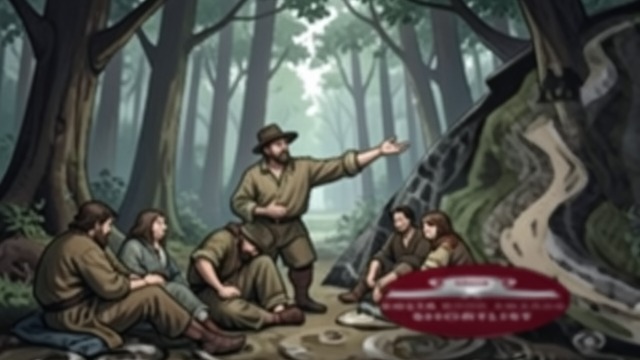
The Uncounted Become Neighbors
People behind categories
John’s forest community includes working people who cannot afford rural rents and move in and out of hidden homelessness. Their lives do not fit the image of a lone person begging in a doorway.
Ray learns to recognize homelessness as a range of unstable conditions. The hidden residents are not merely a statistic or a stereotype but neighbors trying to preserve self-respect.
In Ray’s introductory account of homelessness
In the discussion of London figures for 2013
During the first autumn in Newquay
During the night without a ferry in Plymouth
After meeting the forest community
