Anticipatory grief
The Salt PathAnticipatory grief in The Salt Path is the prolonged, unsettled experience of grieving a shared future before Moth’s suspected corticobasal degeneration has reached its predicted end. It begins in the consultant’s room, where an uncertain diagnosis turns a life built around togetherness into a future imagined in terms of decline and separation. The grief does not proceed steadily toward acceptance: it returns as nightmares, practical fears, silences within the family, and flashes of tenderness, while Ray and Moth try to keep living inside an outcome neither can know with certainty.
Diagnosis and the threatened future
For six years, Moth’s shoulder and arm pain and a tremor had led doctors to consider Parkinson’s disease and nerve damage. Ray and Moth travelled to Liverpool expecting an explanation such as an old injury from his fall through a barn roof, and a remedy. Instead, the consultant said he believed Moth had corticobasal degeneration, or CBD. He stressed that no test could confirm it during Moth’s life; certainty would come only after death. He described an illness that could progressively damage Moth’s body and mind, leading to confusion, dementia, difficulty swallowing, and possibly death by choking. There was no treatment that could stop that course.
The uncertainty did not make the prognosis easier to bear. The consultant estimated six to eight years from the onset of symptoms, while noting that Moth’s illness had already progressed unusually slowly over six years. Ray seized on that discrepancy as a reason to think he was wrong. Moth, too, hoped the diagnosis might be mistaken. But the possibility of a long decline had entered their understanding of the future, making every ordinary plan answerable to the fear that their time together might be limited.
This news arrived as another foundation was collapsing. After losing their home and holiday-rental business, Ray and Moth were packing and preparing to leave, with only days before they would be homeless. Their seven-hour round trip to Liverpool took time they felt they needed for the house, yet it delivered knowledge that transformed the meaning of that loss. Housing insecurity and illness were not the same crisis, but they compounded one another: the couple had lost the material basis of their life just as they were being asked to imagine a future shaped by Moth’s decline.
Denial, dread, and the body
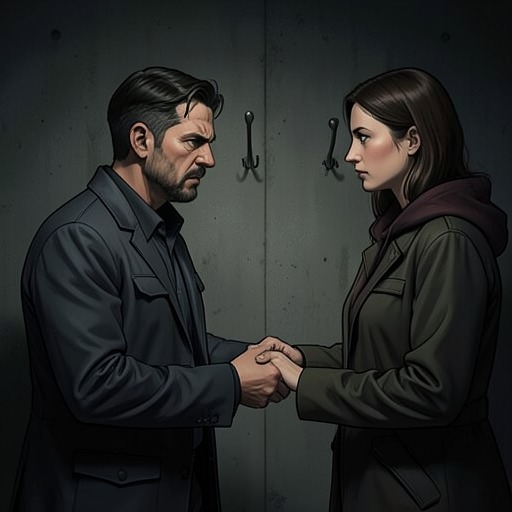
In the hospital car park, Ray and Moth clung to each other in the van, as if closing the space between their bodies could keep the diagnosis from becoming real. Moth cried; Ray could not. Their shared adult life made the prospect of illness inseparable from the prospect of separation. They had imagined dying together at ninety-five on a mountain after watching the sunrise, not in a hospital bed with Moth choking and the other left alone. The contrast between that chosen ending and the consultant’s account makes anticipatory grief a threat not only to Moth’s life but to the couple’s understanding of who they are together.
At first, denial serves as a way to continue. Ray tells Moth they can behave as if the diagnosis is wrong; he answers that they may need to consider what it would mean if it were right. They promise to fight the illness, even as neither can face its end stage. After the appointment, they drive home with the CD player turned up, hiding in the noise. Ray describes the shock as disorienting, as though the world had turned upside down. In the following weeks, fear returns at night as nightmares of Moth choking on mucus, unable to breathe while the family watches helplessly. The absence of certainty therefore brings no relief: the possible future is vivid enough to haunt the present, but not definite enough to prepare for.
Loss, care, and family silence
In the days after leaving their home, Ray understands that finding work and somewhere to rent would ordinarily be the practical response. But she fears that working would take time away from Moth during what might be their last period of relative health. She wants to preserve memories for a future she imagines as lonely. This choice shows how anticipated loss changes everyday priorities: time with Moth becomes something to save, while the usual work of rebuilding a household competes with the need to be together.
The illness also becomes a subject the family struggles to speak about. Ray worries that she and Moth have discussed losing the house without discussing his illness or its effects on their children, Tom and Row. She fears that their silence and the crisis itself may leave lasting scars. Moth says the children have spoken frankly with him; he sees the family as affected and changing, but capable of coping. Ray’s image of an elephant in the room gives way to a giraffe in the tent, a small joke that does not remove the fear but allows it to be approached. The exchange distinguishes silence from indifference: the subject is difficult precisely because it matters to all of them.
Walking between fear and refuge
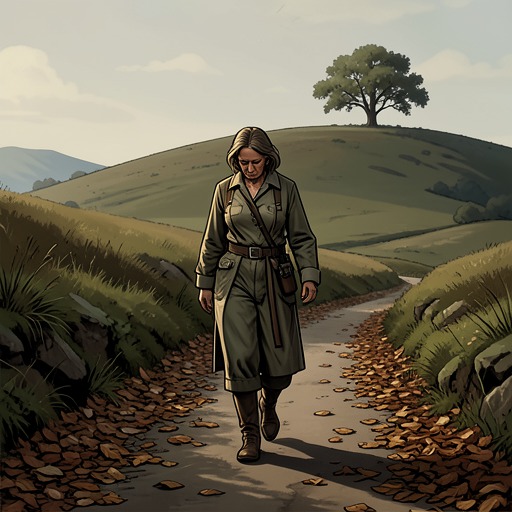
Ray had hoped that walking together over a great distance would give them time to think about their losses and face a future shaped by CBD. Instead, much of the early journey passes in a blank, repetitive rhythm, with conversation focused on food, heat, and rain. As Moth struggles physically, Ray begins to fear that the walk is irresponsible and may be worsening his illness. The consultant had advised him not to tire himself or walk too far, and Ray worries that her decision to leave Wales and undertake the journey has accelerated his decline. Walking is therefore neither simple escape nor uncomplicated therapy: it offers a way forward while repeatedly exposing her to the fear that moving forward may be harming him.
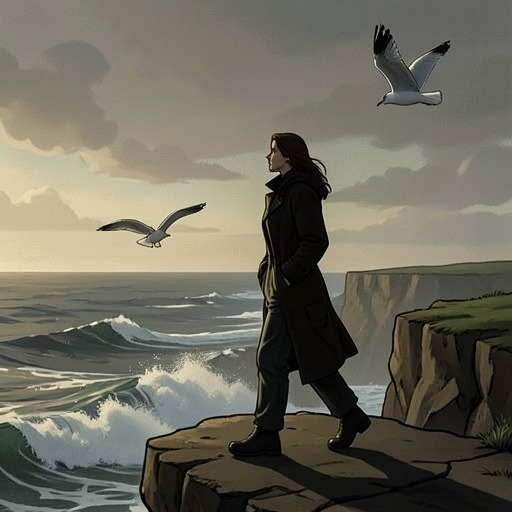
At a sheltered bay, the gulls settle on calm water beneath the cliffs. Moth sees their resting place as protected and says Ray could bring him back there when it is all over. Ray initially understands him to mean the end of the walk; he clarifies that he means death. The brief misunderstanding reveals how differently they are able to approach the same subject at that moment. Later, swimming among the gulls in the moonlit water gives way to the thought that their life together will not simply be over. The scene holds fear and closeness in the same image: the possibility of death is spoken aloud, but the shared experience of the water resists making that possibility the only reality.
Acceptance without surrender
As Moth’s symptoms and uncertainty continue, the feared future becomes present in specific everyday questions. He tells Ray that he sometimes wakes unable to remember what he is supposed to do and has to remind himself to eat, drink, or use the bathroom. He wonders whether this means he is dying. The passage gives bodily change its own reality; it is not merely a symbol of loss, but an alteration in the routines on which independence depends. At the same time, the narrative does not treat this moment as proof that the predicted final stage has arrived.
Later, when the illness has for a while receded from the centre of their attention, Moth raises what he wants to happen when he dies. Their former farm had a field near a hedge, with a view of the mountains, where they had imagined being buried. Now they have neither that field nor a place where he feels he can safely be left. He asks to be cremated and kept in a box until Ray dies, so their children can scatter them together along the coast. The wish directly answers his deepest fear of being separated from her, while adapting their plans to a life in which their home is gone.
Ray finds she can hear him. She understands that Moth expects to fight but believes he will eventually lose, and she lets that knowledge in. In a tent near Lyme Regis, between lobster pots and chalets, they acknowledge death; the narration also describes fragments of their lives drawing slowly back together. The illness has not disappeared, and the future remains uncertain. Yet acceptance changes the terms of their waiting: it makes room for death without reducing the present to a rehearsal for it. Moth’s later joking challenge about keeping up with Paddy signals a renewed capacity for movement and play, not proof of a cure. Anticipatory grief remains part of their life, but it no longer occupies all the space in it.