Bude
The Salt PathBude is the setting for a crisis that makes the material risks of Ray and Moth’s homeless walk unmistakable. After taking three days over a remote, difficult stretch that a guidebook covered in one, they expect the town to offer affordable food and their usual weekly money. Instead, a direct debit leaves them with only £11. Their response is to withdraw what they can, face the scale of the mistake, and carry on with a week’s supply of noodles and water. Bude is both a practical stop on the South West Coast Path and the place where the walkers’ fragile financial margin almost disappears.
Arrival and the town on the route
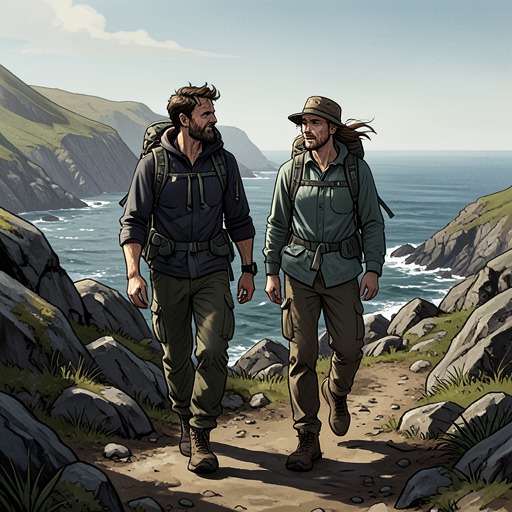
The approach to Bude follows a taxing section from Hartland Quay. The guidebook’s account had made the distance seem manageable in a day; Ray and Moth needed three. The physical strain remained pronounced: Ray describes mornings beginning in pain, while Moth was losing weight and had, on that morning, managed to get out of the tent without help. When the path finally descended into Bude, the prospect of a supermarket and fresh food gave the last hour of walking a particular urgency. They had been imagining bread and fruit as they walked, not simply a meal but supplies that could last the week.
Bude itself is described as a quiet town, unlike the bustle of Ilfracombe. The route skirts its outer edge, and the couple divert into town for the cash machine. That small detour changes the character of the stop: the town is not a place to rest at leisure, but a necessary point of access to money and provisions. Their circumstances make ordinary amenities consequential. A machine, a bank clerk and a supermarket stand between them and the next stretch of walking, while the path continues to lead them out again.
The missing money
Ray inserts the bank card expecting the usual payment to be available. The balance shown is £11. The discovery provokes immediate alarm: the expected money has largely vanished, and the pair cannot tell at once where it has gone. Ray takes the £10 the machine offers, watching the cash tray anxiously in case the transaction is somehow reversed. The remaining pound becomes important too; later, Ray asks to withdraw it.
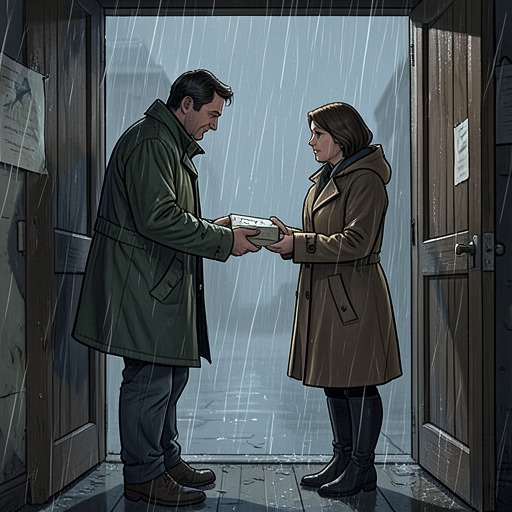
At the bank, a clerk explains that the regular sum had arrived but that a direct debit had gone out. It was an insurance payment for a property Ray and Moth no longer owned, a standing order they had forgotten to cancel. They plead for a refund, but the clerk says the matter must be taken up with the insurance company. They do not have the insurance details, and even a successful claim would take weeks. The mistake therefore cannot be repaired in time to solve the immediate problem: they have to manage the coming week with the money that remains.
The lost payment also brings the house they left into the scene. Ray thinks of furniture stored in a friend’s barn: a pine cupboard bought at auction, the kitchen table that had held family life, Moth’s family pictures and Ray’s father’s chair. Selling these things might have raised a few pounds, but they had not been able to let them go. The memory makes the shortage more than a bad calculation. The property has gone, yet objects connected with the former home remain in storage; meanwhile, the cost of insuring that former property has unexpectedly taken money needed for food.
A breakdown outside the bank
Outside, Ray sits on a wall and breaks down. The distress gathers several fears at once: no money, no food and no home; Moth’s illness and the demands of carrying a pack; and Ray’s fear that bringing him onto the path was wrong when he might have been safer resting. Ray also voices insecurity about age, weight and appearance, wondering whether Moth no longer desires her. The financial shock thus opens into a larger reckoning with illness, dependence and their altered life together.
Moth responds by wrapping his arms around Ray, a gesture Ray presents as familiar between them. He reassures her that she has lost weight and was never ugly. His embrace does not restore the missing money or resolve the practical crisis, but it answers the moment’s personal fear: the two are still facing the consequences together. Ray’s account of the episode makes that closeness part of the means by which they endure hardship, not a substitute for the material necessities they lack.
Leaving Bude with little
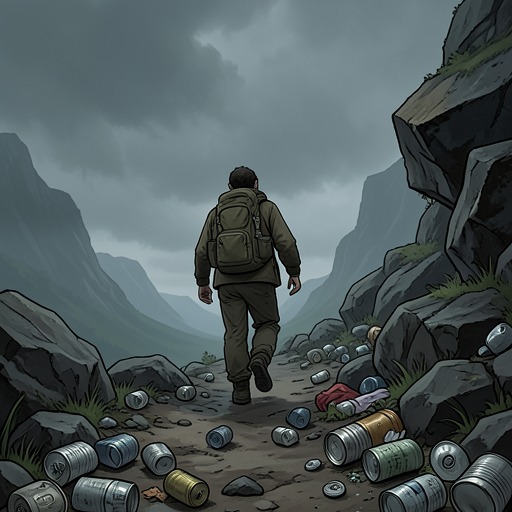
Their immediate plan is austere. They will eat noodles for the week, and Moth insists that they can survive if they can manage as they did at Duckpool. He adds a practical warning: they must not run out of water again. They leave Bude carrying enough packs of noodles costing twenty pence each to last a week, along with plenty of water. The cash shortage has narrowed their choices to cheap, portable food and careful attention to a basic necessity.
The walk out passes a retired ladies’ tennis club and the town’s genteel holiday setting. That calm appearance contrasts with the couple’s sudden entry into a world apart, as Ray describes it: without money, they are no longer moving through the town as holidaymakers might. Near dusk they find a corner in a field of thistles, eat noodles and sleep there. Bude’s narrative significance lies in this sharp reversal. The anticipated stop for money and supplies exposes how little security remains, but the couple still convert what they can afford into provisions, water and another night on the route.