Corticobasal degeneration (CBD)
The Salt PathCorticobasal degeneration (CBD) is the suspected neurological condition that changes how Moth and Ray understand his symptoms, their shared future, and the limits placed on his activity. The consultant could not confirm the diagnosis during life: there was no test, and certainty, he said, would come only after a post-mortem. The memoir therefore presents CBD both as a grave medical possibility and as an uncertain framework that the couple’s experience of walking appears to challenge, but never conclusively overturn.
Diagnosis and clinical uncertainty
Moth’s route to the diagnosis began years before the consultation in Liverpool. For about six years he had experienced debilitating pain in his shoulder and arm, followed by a tremor in his hand. His symptoms had prompted doctors to consider Parkinson’s disease, which was later ruled out, and then possible nerve damage. Other clinicians had also asked about the hand tremor and numbness in his face. One doctor had treated pain and difficulty walking as expected consequences of a life of physical work; Moth and Ray hoped the specialist would instead identify an injury, perhaps related to Moth’s fall through a barn roof, and explain how it could be repaired.
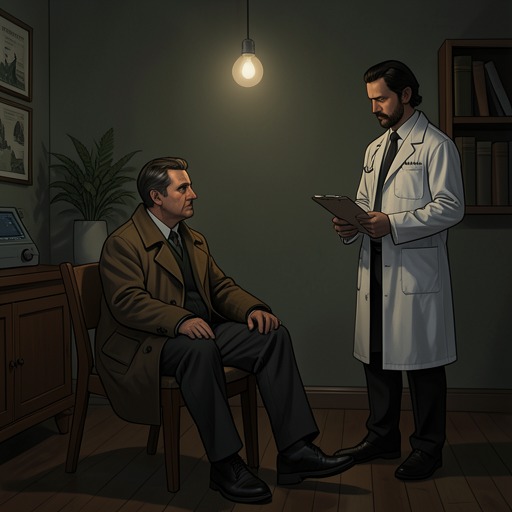
The consultant said he believed Moth had corticobasal degeneration, while stressing that the diagnosis could not be certain without post-mortem examination. He described a typical interval of six to eight years from the onset of symptoms, but thought Moth’s condition seemed to be progressing unusually slowly because six years had already passed since Moth first sought help. That estimate gave the couple a time frame, but not a reliable account of what would happen next: the diagnosis remained provisional, and the course was difficult to predict.
The consultation transformed the meaning of symptoms that had previously seemed potentially local or treatable. Ray understood the consultant’s explanation as a future in which the disease would progressively damage Moth’s body and mind, bring confusion and dementia, and eventually make swallowing difficult, with a risk of choking on saliva. She was told there was nothing to halt it. The diagnosis thus arrived not as a confirmed finding supported by a test, but as a severe prognosis attached to uncertainty—and that uncertainty did little to soften its force.
A diagnosis inside a wider crisis
The news came as Ray and Moth were already losing their home and livelihood. They had driven to Liverpool after a court case, amid packing, bonfires, and urgent calls, expecting a long appointment to explain Moth’s shoulder pain. They were facing homelessness within days. The consultant’s words made the prospect of rebuilding a life feel newly urgent: Ray feared that their time together might consist only of a limited period of relative health followed by decline and death.
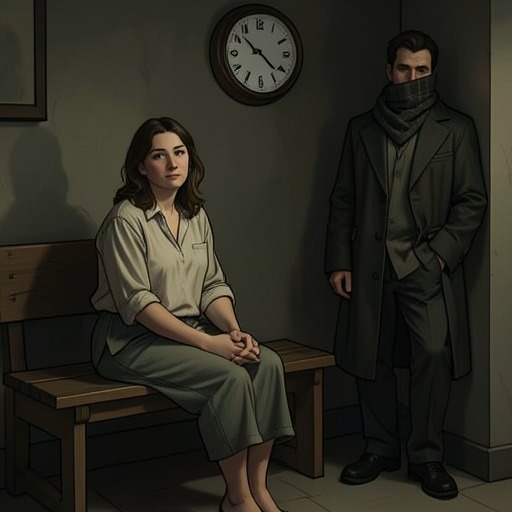
For Ray, the threatened loss was not only Moth’s individual life. She understood their adult life, plans, and identity as inseparable, and had imagined that they would grow old together and die peacefully after watching a sunrise from a mountain. The diagnosis replaced that shared imagined ending with a possible future of separation and dependency. When the consultation was over, they clung to one another in the van in the hospital car park. The gesture could not make the prognosis unreal, but it gave physical expression to the bond that the diagnosis seemed to place under threat.
The practical consequences extended to work and family. Renting somewhere would require income, but Ray felt she could not leave Moth to work when their time in relative health might be short; she wanted to preserve their remaining memories together. Their children, Tom and Row, were students with little money to spare. Later, Ray worried that the family had not spoken openly enough with them about the illness and its possible effects. Moth reassured her that the children had talked frankly with him and were strong. In this account, CBD is therefore not confined to a list of symptoms: its suspected future alters decisions about earning, housing, care, and what can be said within a family already under pressure.
Walking and the apparent change in symptoms
As Ray and Moth walked west from Minehead, Moth described changes that seemed at odds with the consultant’s prognosis. He said he felt stronger, could trust where his foot would land, was dropping things less often, and had less shoulder pain. After stopping Pregabalin, the pain had initially been severe, but somewhere before Newquay he noticed it had eased. He also felt that his head was clearer and that he could think straight. He did not claim to know why: he wondered whether the improvement was temporary, whether it was possible, or whether the symptoms would return as soon as he stopped walking.
Ray connected these observations to sustained physical activity, while Moth speculated that it might be intensive physiotherapy. A companion’s herbal remedies were also raised as a possible explanation. None of these suggestions established a cause. The episode instead records the couple trying to interpret a change they could feel but could not medically explain. During a night when the sea swept over the beach and lifted their tent with their bedding inside, Moth ran up the sand carrying the tent above his head and kept moving through knee-deep water. Ray saw his exertion as evidence that he had changed, in direct contrast to the doctors’ description of CBD as a one-way progression.
Cold, however, complicated the apparent improvement. After a warmer night, Moth moved more easily at dawn, leading Ray to add avoiding cold to her list of ways to counter his symptoms. She remembered the consultant’s advice, given three months earlier, to avoid tiring himself, walking too far, carrying heavy weights, and taking care on stairs. She could not reconcile those restrictions with the improvement she associated with walking. Her hope that they were keeping the disease at bay was not proof that CBD had slowed; it was a response to the contrast between the medical forecast and what Moth seemed able to do on the path.
Stopping, relapse, and competing interpretations
When Moth later took off his rucksack and stopped walking, stiffness returned and neurological pain increased. He slept for twelve hours and struggled to move in the mornings. The pair revisited the consultant and described how much better Moth had seemed while walking, until cold affected him. The consultant rejected their suggestion that repeated movement or increased oxygen might be helping, told Moth that he had made his condition worse and accelerated his decline, and advised rest with only occasional gentle walks. He interpreted their account as denial, a natural phase of dealing with the diagnosis.
The difference between that medical interpretation and Ray and Moth’s observations remains unresolved. The memoir supplies no test result establishing that walking slowed CBD, and the consultant’s warning does not erase the improvement Moth reported or the difficulty he later had after stopping. The symptoms also remained physically specific: without Pregabalin, cold and damp brought shoulder and head pain, an ache in his leg, and a nettle-rash sensation over his skin, enough to disturb sleep and overshadow the day. These episodes keep the illness grounded in fluctuating bodily experience rather than reducing it to a prognosis alone.
Later, while staying on Polly’s farm, Moth described difficulty remembering what he was supposed to do. He had to remind himself to eat, drink, or go to the bathroom because he ought to, rather than because he wanted to, and asked whether this meant he was dying. The moment gives the feared cognitive and functional decline a daily form: not a distant medical description, but uncertainty about ordinary actions. It also underscores the limits of what the earlier improvement could promise. Walking had coincided with a period in which Moth felt clearer and stronger, but his later difficulties did not allow the couple to treat that period as a cure.
Narrative significance
CBD sits at the intersection of an uncertain diagnosis and a crisis already remaking Ray and Moth’s lives. Its predicted progression threatens bodily independence and their shared future; homelessness and lost income make the immediate choices about care, work, and shelter more consequential. The narrative repeatedly sets the consultant’s forecast beside the couple’s observations: a warning against walking beside Moth’s reported gains on the path, and a possible decline beside the daily evidence of what he can still do. Neither side becomes a definitive resolution.
That tension makes the illness more than a plot announcement. The absence of a definitive test leaves Ray and Moth living with a diagnosis they cannot conclusively verify, while every change in pain, movement, temperature, or memory seems capable of revising their understanding. Walking offers activity and a temporary sense of capability, not a medically demonstrated answer. The account preserves both the fear created by the prognosis and the uncertainty created by Moth’s changing experience, showing how a suspected degenerative disease can reorganize a life before its course is certain.