Crisis
The Salt PathCrisis is a homelessness charity cited in the book in connection with research into the scale and measurement of homelessness. Its significance here lies in the contrast the research makes visible: many households sought help because they were homeless or about to become so, while official recognition and rough-sleeping counts captured narrower portions of the problem.
Identity and Role in the Book
The book names Crisis as a homelessness charity and identifies it, alongside the Joseph Rowntree Foundation, as a partner in research on homelessness in 2013. It does not describe Crisis’s services, internal structure, or wider activities. Its documented role is therefore specific: the charity appears as a source associated with evidence about housing need, rather than as an organization shown directly assisting the narrator or other people in the story.
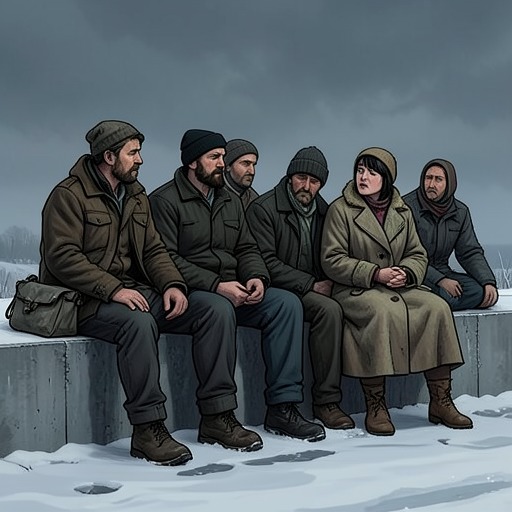
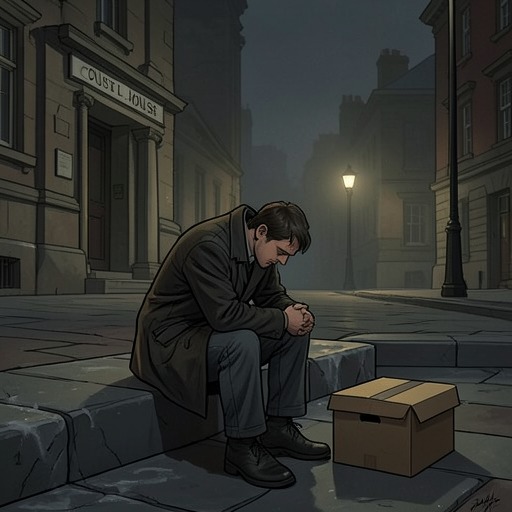
That limited appearance matters because the book sets the statistical account against a familiar public image of homelessness: a person bedding down on a street, perhaps with a dog, and presumed to be begging for money for drugs or alcohol. The narrator presents this as a stereotype that shapes how passers-by respond, ranging from discomfort to aggression. Crisis’s research helps frame the gap between that recognizable image and the larger, less readily seen population in unstable housing circumstances.
Research and the Scale of Housing Need
The research undertaken by Crisis and the Joseph Rowntree Foundation found that at least 280,000 UK households in 2013 said they were homeless or about to become homeless. This figure covered households that had applied to be listed as homeless; it was not a count of individual people. Of those households, officials accepted 52,000 as statutorily homeless under the account given in the book, a category described there as applying to people with neither family nor friends able to house them. Many of the remaining 228,000 households received help from local authorities through a relief route.
The distinctions between households and people, applications and accepted cases, and statutory recognition and other forms of assistance are central to the figures. The research does not present 280,000 as a head count of people sleeping outdoors. Instead, it records a broad measure of households seeking help, while the narrower statutory category reflects an administrative threshold. The book uses that difference to show how a count can describe only one segment of housing insecurity without representing the whole of it.
Counting and the Limits of Visibility
The book places the Crisis-linked household research beside contrasting rough-sleeping estimates. Government figures suggested that 2,414 people slept rough across England during 2013, but this was a snapshot of a single night. Separately, research by the Homelessness and Information Network, funded by the Greater London Authority, counted 6,508 people sleeping rough on London’s streets during that year; the government’s snapshot method gave a London figure of 543. These are distinct sources and measures, not additional findings attributed to Crisis.
That juxtaposition sharpens the book’s criticism of what a count can leave out. A one-night snapshot may miss people whose sleeping arrangements change, while official lists also fail to capture those without a recorded application or trace. The text specifically points toward squatters, sofa-surfers, people sleeping rough invisibly, and others whose circumstances do not enter the count. Crisis’s research provides the broader household figure against which these narrower measures can be considered, but the book does not claim that the charity produced the separate street-count estimates.
Connection to the Narrated Experience
The wider narrative supplies concrete examples of why homelessness cannot be reduced to street sleeping. After losing their home, the narrator and Moth could not afford a campsite charging £80 a week, and housing benefit did not cover campsite fees. Their repossession damaged their credit rating, making private renting difficult; the council offered only low-priority status and, at that point, a bed-and-breakfast room in accommodation mainly used by people with drug and alcohol problems. They chose a tent instead. These circumstances are part of the book’s account, not evidence of direct involvement by Crisis.
Elsewhere, the couple’s housing remains precarious even when it takes forms other than a street doorway: they erect their tent inside a disused meat-packing shed, and later encounter a woodland camp where people come and go as need arises. Against these scenes, the research’s focus on households seeking help broadens the frame from the most visible image of homelessness to unstable and temporary living arrangements. The book gives Crisis a precise but consequential place in that argument: its cited research helps establish the scale of reported need, while the narrative shows how easily individual lives can fall between public stereotypes and administrative counts.