Denial and anticipatory grief
The Salt PathDenial and anticipatory grief are intertwined responses to Moth’s suspected corticobasal degeneration (CBD), a diagnosis that makes the couple’s shared future newly precarious just as they lose their home. The memoir traces their movement from refusing to believe the consultant to acknowledging that Moth may die, while showing how illness, homelessness, care, and continued walking shape that change. Acceptance does not mean certainty about the diagnosis or surrender to it: for a time, the disease is held at bay, and life can be gathered back around the possibility of loss.
Diagnosis and the first refusal
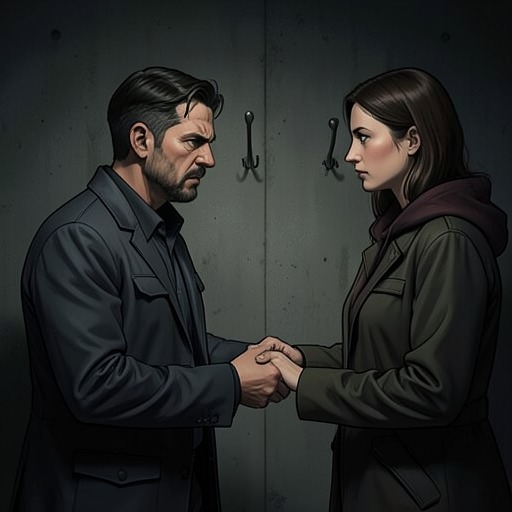
By the time Moth and Ray reach the consultant’s room in Liverpool, the medical question has been deferred for years. Moth has lived with shoulder and arm pain for six years, followed by a tremor and facial numbness. Parkinson’s disease has been considered and ruled out; nerve damage has also been suggested. Ray expects an explanation such as an injury from Moth’s fall through a barn roof, and a treatment that will put it right. Instead, the consultant sits beside Moth, touches his arm, and says he believes Moth has CBD. He stresses that the diagnosis cannot be certain: there is no test, and confirmation would come only at a post-mortem.
The uncertainty offers little comfort. The consultant estimates six to eight years from the onset of the disease, while noting that Moth’s symptoms have already been present for six years and seem to be progressing unusually slowly. He describes a future of bodily and mental decline, confusion, dementia, difficulty swallowing, and no available treatment. Ray’s response is physical as well as verbal: the room slips out of focus, she can hardly breathe, and the future she had imagined becomes inaccessible. Moth asks when the post-mortem might be; Ray insists that the doctor has got it wrong. The diagnosis is at once provisional in medical terms and devastating in its consequences for how they understand their life.
At first, denial becomes a way for the couple to keep living. Moth points to the judge’s error in their recent legal troubles as a reason the doctor might also be wrong. Ray agrees that they can proceed as if the diagnosis is not real; she cannot let it in. Their refusal is not a settled belief in a cure so much as a temporary shelter from a future they cannot yet bear to imagine. The consultant’s words collide with their sense of themselves as one life: they had expected to die together at ninety-five, on a mountain after watching the sunrise, not to face a prolonged illness that might leave them separated and alone.
Loss, care, and the fear of causing harm
The diagnosis arrives amid the loss of their home and holiday-rental business. After the court case, Ray and Moth pack their belongings and leave, knowing they will soon have nowhere to stay. Their children, Tom and Row, are students with little money to spare; the temporary use of Moth’s brother’s house also has a deadline. The couple must confront the possibility that their remaining time together will include a period of relative health followed by severe decline. Ray cannot imagine leaving Moth to take a job when she feels she must spend this time with him and preserve memories for a future without him.
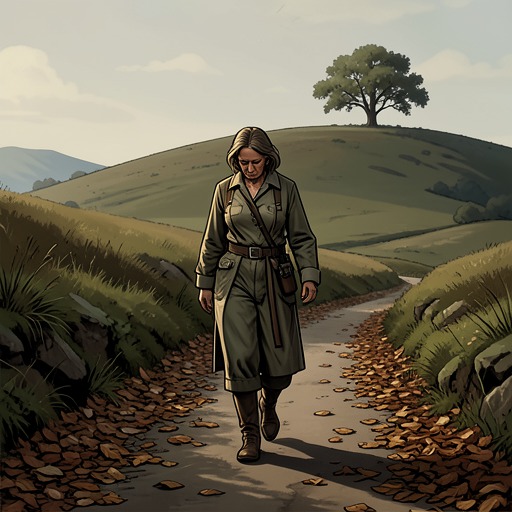
Walking initially seems to offer space in which to think, but the journey does not bring the planned clarity. Ray and Moth mostly talk about food, heat, and rain. The regular rhythm of putting one foot in front of another offers a strange relief from thought, while Ray’s fear gathers around Moth’s visible struggle. She worries that the walk is irresponsible and may be accelerating his CBD; a consultant had advised him not to tire himself, walk too far, or be careless on stairs. The question of whether walking helps or harms remains unresolved. What is clear is that Ray’s hope of thinking their way through the loss gives way, at times, to blankness and guilt.
The conditions of the walk sharpen the conflict between care and denial. On Carrick Luz, with October approaching, they sleep in thin sleeping bags in a tent exposed to wind off the Channel. A hostel, a friend’s garden, warmth, and access to a bathroom were imaginable alternatives, but instead they camp on the headland and manage their needs in the dark among wet blackthorn. Ray recognizes that ordinary care would mean trying to ease Moth’s suffering, yet she cannot accept the illness and acts as if he will never need a doctor. The scene makes denial concrete: it is not only a refusal of the diagnosis but a way of continuing a life that leaves both of them cold and exposed.
The illness also remains difficult to discuss within the family. In the tent, Ray worries that she and Moth have spoken with Tom and Row about the loss of the house but not about Moth’s illness or its effect on them all. She fears that their silence may leave lasting scars. Moth explains that the children talk frankly with him and that the family can cope if they try to face what is happening. Their exchange shows that grief does not unfold identically for each member of the family: Ray experiences the subject as an unspeakable presence, while Moth says the children have already discussed it with him.
The body and the lives already lost
By the time the couple are living in a meat-packing shed, the loss of their former home has become inseparable from the threat of future loss. Ray remembers the first small house they restored and the work that went into building a life with land: reroofing a barn, digging drainage ditches, and sacrificing holidays to their plans. The home meant family memories and the security of knowing where they would sleep, but the walk has also given her another attachment—to the path, its changing weather, and the possibility of a horizon beyond the next headland. At night, waking in a room, she feels the gulf between that newly valued freedom and the thought that Moth is slowly dying.
Ray’s understanding shifts in those nights. Books may call her state pre-bereavement grief, but the phrase does not dispel it: she imagines Moth’s death in advance and is haunted by versions of him that belong to a future not yet reached. She begins to believe the doctors may be right and realizes that she may have to live without him. This is not a single conversion from denial to certainty. Her thoughts move between dread and resistance, while the anticipated loss repeatedly overtakes present experience.
Moth’s bodily difficulties make that feared future tangible in everyday work. A trained master plasterer, he returns to skimming plasterboard in the shed, but the familiar action now makes his body hurt as though he had never lifted a trowel. Ray cannot substitute for the skill he has built over a lifetime. Mornings become harder: she lifts him from bed and helps move his reluctant limbs until he can begin work, and he crawls through the effort of making the room habitable. He later describes forgetting what to do and having to remind himself to eat, drink, or use the bathroom. His question about whether this means he is dying brings the possible future into a mundane routine, not only into the consultant’s worst-case account.
Acknowledgement without resolution
Eventually, the narrative gives the couple a period in which death is no longer constantly looming over the tent. CBD has not miraculously disappeared, but Moth feels it has been held at bay, and the reprieve allows clearer thought. He tells Ray that he wants to be cremated. Their earlier plan had been to be buried together in a field at their farm, near a hedge with a view of the mountains; now the field and their former home are gone, and Moth does not feel there is a religious or other place where he can safely be left. He asks that Ray keep his ashes until she dies, so their children can bring them together and release them on the coast, in the wind, facing the horizon.
Ray can now hear the wish without being overwhelmed by it. In a tent near Lyme Regis, she holds Moth, unable to speak, as they acknowledge that he will fight the disease but may eventually lose. The change is not an abandonment of hope that the diagnosis might be wrong, nor a claim that the illness has ended. It is a new capacity to let death into their shared understanding—and, with it, to let life return. The memoir describes the scattered fragments of their lives drawing together again, making acceptance less a final answer than a condition in which they can continue.
That distinction matters when the pace of the walk rises again. Moth jokes about Ray preferring him when he was ill, and they agree that they can manage the faster pace. The exchange does not establish that CBD has been cured or that its course is known. It marks a moment in which the illness no longer exhausts the whole scene: uncertainty remains, but so do humor, movement, and their decisions made together. Anticipatory grief continues alongside ordinary life, rather than replacing it.