Homelessness and social invisibility
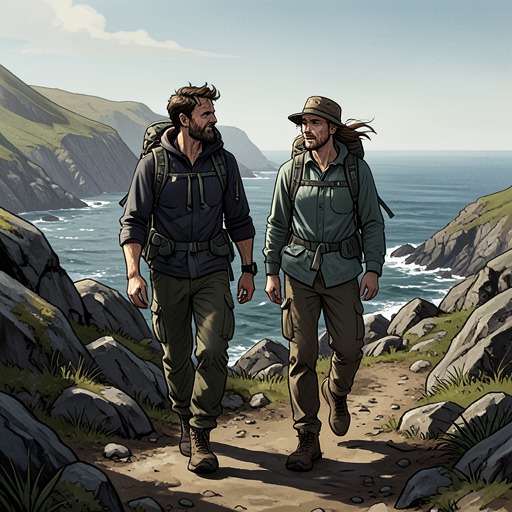
The Salt PathHomelessness and social invisibility are linked throughout The Salt Path: losing a home means not only losing secure shelter but also encountering systems and public attitudes that recognize only a narrow, often misleading image of homelessness. Ray and Moth’s experiences—from being unable to afford a campsite or qualify for suitable housing to meeting people sleeping rough or living in a woodland camp—show a broader spectrum of precarious housing. The book makes invisibility concrete: people can be present in doorways, woods, or temporary shelters and still disappear from public sympathy and official counts.
Beyond the stereotype
The book opens its discussion of homelessness by challenging the familiar image of a rough sleeper bedding down on a street, perhaps with a dog and a request for money. That picture, the narrative argues, shapes public reactions: passers-by may feel discomfort or respond aggressively, while the stereotype of addiction can discourage people from offering help. It leaves little room for the varied circumstances that bring people into homelessness, or for people whose living arrangements do not match the image of someone visibly sleeping outdoors.
The figures presented in the book reveal how much depends on who is counted and how. Research by Crisis and the Joseph Rowntree Foundation found that, in 2013, at least 280,000 UK households said they were homeless or at risk of becoming so. These were households seeking help, not a count of individual people. Officials accepted 52,000 as statutorily homeless because they had neither family nor friends able to house them; many of the other 228,000 received assistance through local-authority relief routes. The difference between a household requesting help and a person meeting a statutory definition is itself a form of exclusion: the number that enters public discussion depends on the category used.
Counting who can be found
Official rough-sleeping totals are narrower still. Government figures recorded 2,414 people sleeping rough across England during 2013, but the method was a snapshot of one night. In London, the Homelessness and Information Network, funded by the Greater London Authority, reported 6,508 people sleeping rough that year, while the government’s snapshot figure was 543. The contrast is not merely a disagreement between estimates. It points to how a brief count can make a much larger population appear negligible, especially when people are not in the designated area at the designated hour or cannot be asked to confirm their situation.
That problem becomes tangible in Newquay. Amid the holidaymakers, Ray and Moth see rough sleepers gathered around shopping areas, wet and curled in doorways. A tall, broad former soldier accepts that they are homeless too and directs them to a soup kitchen; Moth gives him coins and his last chocolate bar. The kitchen is at St Petroc’s, a charity focused on single homeless people who fall through gaps in social care. Ray and Moth are redirected there despite being a couple, making visible another boundary in the services available to people in need.
A volunteer explains that Cornwall is variously said to have the second- or fifth-highest rate of rough sleeping in the country outside London, while the reported total is only around forty or sixty-five people. The counting rules help produce that uncertainty: people must be on the street in the relevant area during the set hours and confirm that they are sleeping rough. Someone asleep cannot be awakened to answer. People sheltering in woods are also absent from a street-based count. In a pointed image, the soup kitchen’s guests could seem to account for every homeless person in Cornwall, even as the rules exclude many others from view.
Shelter, eligibility, and instability
Ray and Moth’s own housing options show that homelessness is not limited to sleeping directly on a street. Long-term camping is considered, but the cheapest campsite they can find costs eighty pounds a week, and housing benefit does not cover campsite fees. There is no spare room among their acquaintances, no garden they can use for more than a few weeks, and no available caravan in a summer holiday destination. Each possibility offers only temporary shelter or requires money and access they do not have.
Renting proves difficult after their home is repossessed: their credit rating is severely damaged, and the council can place them on a waiting list but regards them as low priority. The immediate offer is a bed-and-breakfast room in accommodation mainly used by people with drug and alcohol problems. At the council offices, a staff member dismisses Moth’s illness as insufficiently serious because he might not die within the next year. The exchange clarifies how formal eligibility can fail to reflect a household’s actual insecurity. Faced with these options, Ray and Moth decide that the tent is preferable.
Later, the changing forms of shelter continue to mark the limits of security. In a disused meat-packing shed, they pitch their tent indoors and huddle in its familiar enclosure. Rain strikes the corrugated roof; the shed still resembles a processing room, with moss in the windows, insulation hanging from open rafters, and a wood burner that has melted the nearby plastic covering. It has a roof, and they are grateful for it, but its defects and their dependence on another person’s permission distinguish refuge from a settled home. A later offer from Anna to rent her flat in Polruan, with the coastal path passing its front door, suggests a possible move toward greater stability without erasing the uncertainty that precedes it.
Hidden homes and public judgment
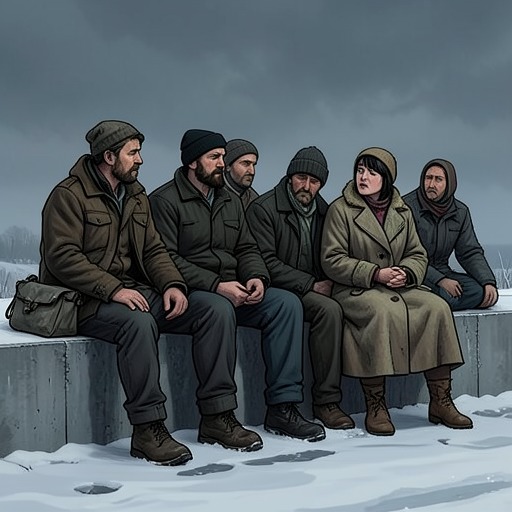
The woodland camp Ray and Moth visit makes the gap between homelessness and the stereotype especially clear. Reached by dark tracks under pine trees, it contains tents, tarpaulins, and shelters made from fallen branches. Its residents sit together, talk, cook, and share supplies brought back from a shopping trip. One man explains that he became homeless after the farm where he worked was sold: the tied cottages were separated from the land and bought as second homes, while his wages could not meet the cost of rural rent. Others joined him, and the camp became a changing village of people who came and went as their circumstances required.
The camp is a home in the practical sense that it provides a place to sleep and a community, but it is vulnerable to pressure from authorities seeking to clear people from the woods for a public-access space. The residents need overnight shelters, one person argues, rather than attractive paths that remove what little safety the woods provide. New shelters, with ten beds in one place and ten in another, are better than nothing but far from enough. Here, the demand to make public space accessible and orderly can conflict with the immediate need for a place to stay.
Ray and Moth also experience the social force of the label directly. While resting on a bench, they are challenged by an older couple who imply that respectable people do not lie in the street and call them tramps. Ray answers that the bench is a place to sit and enjoy the view; when the couple repeats the insult, Moth turns back and waves, and Ray calls the man a gull feeder. The encounter exposes how quickly a visible resting place can be read as evidence of moral failure, even when the people using it are not sleeping there.
Invisibility as a narrative problem
The book connects material insecurity to the stories that can safely be told about it. When Ray and Moth explain truthfully that they are homeless because they lost their home, conversations tend to end and people walk away. Saying instead that they sold their home for an adventure elicits admiration. In public perception, the word sold changes their position: homelessness accompanied by money and choice can seem inspirational, while homelessness caused by loss and poverty makes them social outsiders. The contrast shows that invisibility is not only a failure to count people; it is also a refusal to hear an account that unsettles assumptions about who becomes homeless.
That pressure persists as Ray and Moth continue walking. Repeating their more acceptable story lessens, but does not resolve, their grief; the walk becomes a discipline of attention to each step, each combe climbed, each day survived. Against the narrow image of a rough sleeper and the narrow measures used to count one, the book sets a succession of actual living arrangements: a tent, a proposed campsite, an unsuitable council placement, a woodland settlement, a makeshift shed, and the possibility of a rented flat. Their variety is the point. Homelessness appears not as one visible scene but as a shifting condition, shaped by money, eligibility, housing access, and the public willingness to recognize someone’s account of their own life.