Leaving the Welsh farm
The Salt PathLeaving the Welsh farm is both a forced expulsion and the beginning of a chosen journey. After twenty years spent rebuilding a ruined home and making a life there, Ray and Moth lose the farm, their business, and the future they had imagined. With bailiffs waiting to change the locks, they walk out hand in hand. The South West Coast Path does not offer a secure destination; it gives them a reason to keep moving when home, work, and certainty have all disappeared.
The life left behind
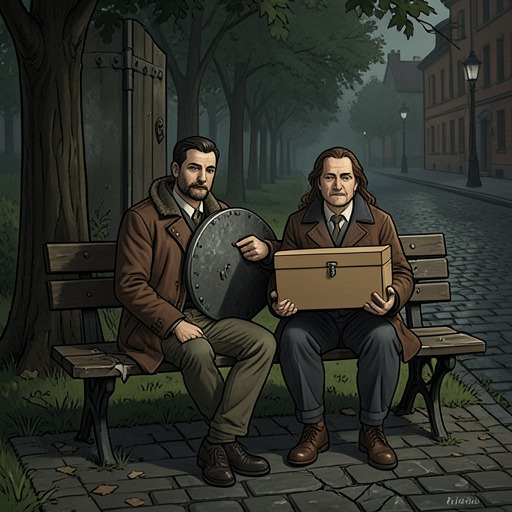
Ray and Moth had met when Ray was eighteen; she was fifty when they faced leaving. Together they had restored the ruined farm stone by stone, taught themselves plumbing, grown vegetables, kept hens, raised two children, and built a barn where visitors could share their lives and help pay the bills. Their loss is therefore not simply the loss of a building. The farm held decades of work and family life, and leaving it meant abandoning the life those efforts had made possible.
That life had been dismantled through a three-year legal struggle. They had defended themselves against judges and highly paid barristers, but they lost the case, the house, and, in Ray’s account, themselves. The farm’s collapse had already been made painfully tangible by the death of Smotyn, buried in the field beside her sisters; Ray understood that the dream of the farm was buried with her. Now the household faced another irreversible separation, this time from the place they had rebuilt together.
The decision at the door
While bailiffs searched the back of the house for a way in, Ray spotted Five Hundred Mile Walkies in a packing box. The book, about a man walking the South West Coast Path with his dog, suggested an alternative at the moment when ordinary plans had failed. Ray proposed that they walk. She did not yet understand the scale of the undertaking: 630 miles on a frequently narrow path, wild nights, and climbing equivalent to Mount Everest nearly four times. The prospect had seemed idyllic; the actual route would be relentless. But with their home already lost, walking was not just an adventure they could accept or refuse. It was the remaining way forward.
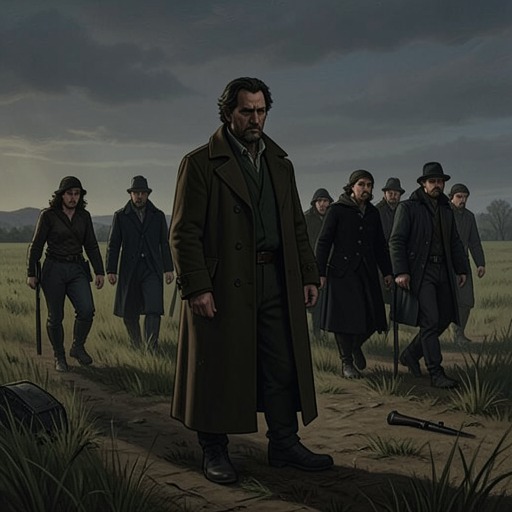
At the front door, the bailiffs waited on the other side, ready to change the locks. Ray and Moth were leaving a centuries-old house that had sheltered them for twenty years, knowing they could not return. Moth asked whether they would face what came next together; Ray answered that they would. Their joined hands turn the departure into more than a practical move: the house and its familiar life are left behind, but the partnership survives the threshold. The movement from the dim house into daylight marks a sharp change from concealment and defeat to exposure and motion.
From temporary shelter to homelessness
After the final departure, they had two weeks to put their few belongings in a friend’s barn and work out what to do. Their children were students in shared accommodation and could barely support themselves. Moth’s brother was away, so the couple could stay at his house temporarily, but only until he returned with his family. They were close to home, yet unable to go back. The short distance did not make the loss less absolute.
Renting and finding work offered a logical route to a new life, but the house had been their holiday-rental business as well as their home, and its loss meant their income was gone. At the same time, they were absorbing what the doctor had told them: their life together might consist of a limited period of relative health followed by paralysis and death. Ray felt she could not leave Moth to work when their time together might be short. The practical need to earn a living collided with the desire to preserve memories of their remaining time together.
In early August, after temporary stays and a drive to Somerset, they stood beside their rucksacks on the road in Taunton. Ray distinguishes this from travelling or living in a van: on those earlier journeys, there had always been a door to return to. Here there was no door. The place where they stood felt, for the moment, safer than moving on, even though moving was the reason they had come. They took a bus to Minehead to begin the path, spending ten pounds each and finding that only fifty pounds remained; forty-eight pounds was due in the bank each week. Their new mobility was thus shaped by both decision and constraint: they could choose the next step, but had no secure home to return to.
A journey with limits and choices
The walk did not proceed as an untouched, uninterrupted trek. A later bus journey to Barnstaple and a change of buses to Westward Ho! left Ray feeling that she was cheating; the break had made the couple feel disconnected from the trail. The detour shows how poverty and physical need could interrupt the route, while the couple’s sense of what counted as continuing the walk remained unsettled. At other points, their choices were more explicit. After more than 250 miles of pain, hunger, exhaustion, wild nights, and weather, they considered taking a bus away and returning to the familiarity of Wales. They watched it leave, then chose to continue because they had nothing to lose and still had something to walk for.
That choice did not make the journey easy or turn it into a purist test. At Portland, after John drove away, Ray was drained enough to suggest missing the island and taking a slower few days along Chesil Beach. Moth agreed: they were not on a purist mission. Near Plymouth, the path’s certainty—pack the tent, walk again tomorrow—stood in contrast with the uncertainty beyond it. The final ferries seemed to mark the approach of a future they could not plan, including the question of what would happen to Moth when they stopped walking. Leaving the farm began as flight from a home already lost; continuing the walk became a way to retain some control over when and how they moved.
Loss read through the landscape
As the route carried them away from Wales, its landscapes offered other histories of homes and livelihoods disrupted or remade. At Tyneham, villagers had been displaced when the army requisitioned the village in 1943; the restricted access and military use that followed also allowed wildlife and vegetation to thrive. The outcome joined dispossession to an unexpected form of conservation, without restoring the villagers’ lost sense of home. That history sharpened the distinction between a place’s continued existence and the lives once rooted there.
The trail also crossed landscapes transformed by industry and later repackaged as heritage. Geevor’s tin mine closed in 1991, ending work that had sustained miners for generations, before becoming a tourist attraction within the Cornish Mining World Heritage Site. North of St Austell, the china-clay industry produced five tonnes of waste for every tonne of clay, building the spoil heaps known as the Cornish Alps. At Morwenstow, Ray and Moth sheltered in Robert Stephen Hawker’s driftwood hut, imagining themselves shipwrecked from life. These places did not cause the couple’s departure, but they made visible the layers of loss, adaptation, and uncertain shelter through which the walk passed. Leaving the farm remained irreversible; walking gave Ray and Moth a shared, if precarious, way to live after it.