Looe
The Salt PathLooe is a fishing village divided by a river, encountered by Ray and Moth as they walk west along the coast path from Poole. Its narrow, tourist-filled streets briefly compress their immense journey into an everyday urban scene: bus groups, lost ice creams, a tiny café and curious questions about their packs. In Looe, the couple’s homelessness and their chosen way of travelling become visible to strangers, and an exchange of simple facts about their route leaves them feeling unexpectedly lighter.
Setting on the route
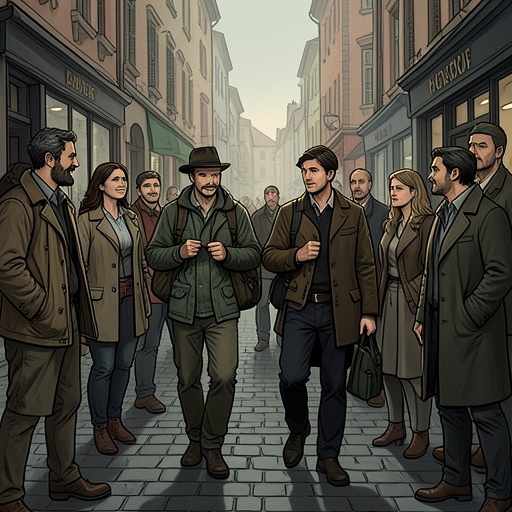
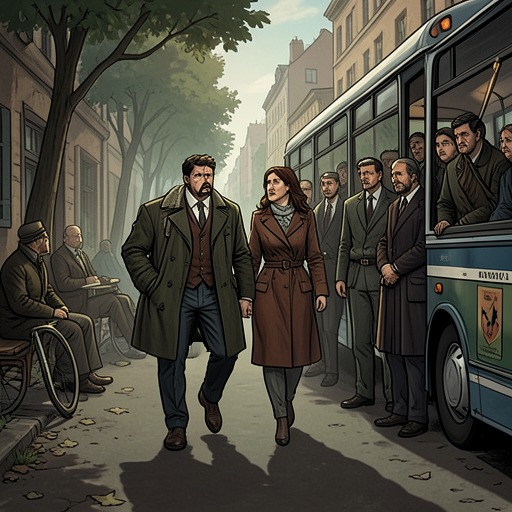
As the journey nears its end, the coast’s colours—blue, green and black, edged by white water against dark cliffs—mark the approach to Looe. The path drops into the village, where the river divides the settlement and tourists fill its narrow streets. The walkers have to squeeze past bus trips of older women and children crying over lost ice creams; an alleyway, taken in the hope of avoiding the crush, leads instead to a dead end.
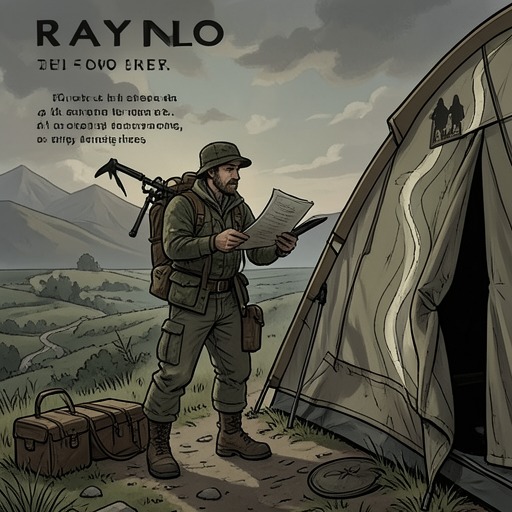
That dead end opens onto a small café with only three tables. The scale of the place sharpens the contrast between the crowded village and the pair’s long, exposed life on the trail. They are not arriving as holidaymakers taking a brief break from the coast: they are dirty and threadbare, carrying large packs and sleeping in a tent. Yet the café is not a dramatic refuge or a destination in itself. It is a short pause in a route that has continued through hunger, fatigue and uncertainty, and the ordinary encounter there becomes part of what the place means in the narrative.
The café encounter
A red-haired Polish waitress brings them a pot of tea for one, with two cups. She asks about their conspicuously large packs and where they are headed, then asks where they have come from. Moth raises his eyebrows at the question about Seaton: after so many miles and place names, the Seatons along the south coast have begun to blur together. Ray answers that they have come from Poole, in Dorset, with Devon between it and their present location. The exchange turns a vast journey into a sequence a stranger can grasp: a departure point, counties crossed, and a destination still ahead.
The waitress also asks whether they are staying in guest houses. Ray explains that they are sleeping in the tent and wild camping. Her response is immediate admiration. She says their walk is the most amazing thing she has heard, and imagines telling a friend who wants an adventure but has no money. She calls the walkers old and inspirational; Ray gently objects that they are not so old. The conversation is brief, but it shifts how the couple’s appearance is read. Their worn clothes and heavy packs, which might have marked them only as people under strain, become evidence of an undertaking someone else finds possible to admire.
Recognition beyond the café
After leaving the village, Ray and Moth are dirty and threadbare but feel strangely lighter. The waitress’s admiration has warmed them, and its effect becomes tangible when a young woman on the opposite pavement waves, runs across the road and asks whether they are really sleeping in a tent and how far they have walked. Her friend has phoned her and urged her to come out and see the older people with the big rucksacks. Looe’s streets thus carry the café conversation beyond its original table: a story told by one person reaches another almost at once, and the walkers find themselves briefly recognized by people they have never met.
Ray tells the young woman that they have come from Poole, though the previous year they walked from Minehead to Polruan. In a day or two, they expect to have finished the whole path. When asked how long it is, Ray says six hundred and thirty miles, adding that they have missed about forty and hope to return for those sections another year. The detail complicates the neatness of a completed route: their achievement is immense, but not presented as a perfectly unbroken passage. Looe is a stopping place close to completion, where the scale of the walk can be stated plainly without hiding the distance still to come or the miles omitted.
A brief change in perspective
The encouragement in Looe matters against the insecurity that shapes the journey. Ray and Moth became truly homeless in Taunton, without a door to return to; walking gave them a reason to keep moving and a way to shape a future when their former home was gone. By the time they reach Looe, the practical questions have not disappeared. Ahead lies the hope of finding student accommodation, with a student loan having to outweigh their poor credit rating. The route offers movement and purpose, but it does not itself guarantee somewhere to live.
That distinction gives the village scene its modest force. In other encounters, telling people they were homeless had brought conversations to an abrupt end, so Ray and Moth had sometimes used a more palatable account of their circumstances. In Looe, they speak openly about wild camping and disclose the journey’s length. The waitress and her friend respond not with recoil but with interest and encouragement. Their reaction does not resolve the couple’s housing or financial uncertainty; instead, it gives the walkers a moment of recognition while they are still travelling through it.
The scene also echoes Ray’s later argument that attempting the walk mattered even though it could not undo what had been lost. Walking, like defending the court case, made it possible to discover resilience and avoid being left with an unanswered question about what they might have done. Looe supplies no grand turning point: its narrow streets, small café and two curious strangers make the significance quieter and more human. For a moment, the couple’s battered appearance is not simply a sign of hardship. It is the beginning of a story that someone else wants to carry onward.