Lyme Regis
The Salt PathLyme Regis matters in Ray and Moth’s journey not as a settled home but as the place where they let the reality of Moth’s eventual death be acknowledged. In a tent at the town’s edge, between lobster pots and chalets, they face that future together; the next day, they leave the sea for the Undercliff, a landscape whose own history of sudden change echoes the passage from loss towards life.
A camp at the edge of town
The account places Ray and Moth on a patch of grass at the edge of Lyme Regis, sleeping in their tent. They have no permanent place to return to: the coast path and the exposed places where they camp are part of a life shaped by homelessness. Elsewhere, Ray describes the difference between travelling with a door to return to and having no door at all. On the path, however, the choice to keep walking can still feel like a form of control. Lyme Regis holds both conditions at once: precarious shelter for the night and a pause in which the couple can confront what lies ahead.
Acknowledging death
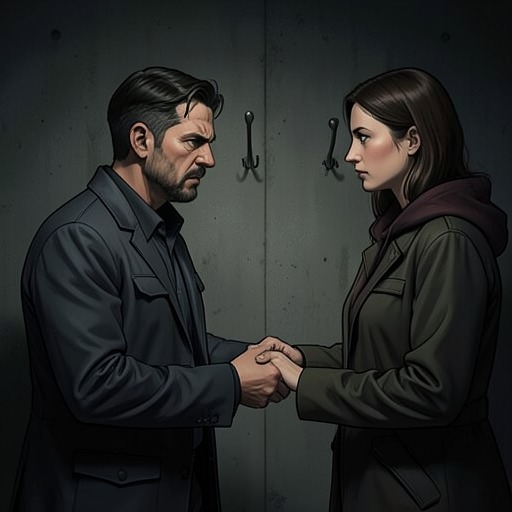
At Lyme Regis, Moth’s fear of being separated from Ray after death comes into the open. The place they had once imagined as their burial ground, a field on their farm, no longer exists as a secure shared home. In the tent, Ray holds on to Moth, unable to speak as the prospect of his eventual death is acknowledged. He will fight, but eventually he will lose; Ray becomes calm enough to accept that truth. The passage does not present acceptance as the end of their life together. As they lie there, death enters their awareness, and the broken fragments of their lives begin to draw together again.
The Undercliff beyond the shore
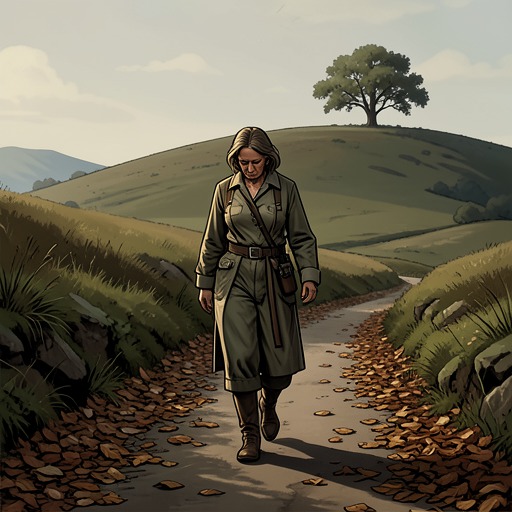
Leaving the sea, the couple enter the woods carrying fossilized ammonites from the beach. The path takes them into the Undercliff, formed when eight million tonnes of soil slid towards the sea on Christmas Eve 1839, leaving a vast chasm. The landslip carried away sheep, rabbits, a tea room and an area known as Goat Island; a field of wheat slid intact and was harvested the following summer. Left alone, the affected ground became a damp, wooded landscape: seven miles of ferns, ivy and trees, threaded by a path that runs for eight miles before the walkers emerge into the light.
A place of change and passage
The Undercliff is more than scenery on the way out of Lyme Regis. Its terrain preserves the consequences of a sudden disaster while also showing how life takes shape in the altered ground: plants grow without being forced into a single form, and the walkers must follow the one path in or out. The movement from the tent, where Ray and Moth face mortality, into this enclosed landscape gives the passage a distinct turn. Lyme Regis becomes a threshold between acknowledging loss and continuing forward, while the Undercliff makes change visible as both rupture and gradual renewal.