Moth applying to university and planning to become a teacher
The Salt PathMoth’s application to university was an attempt to build a future around what he could still do, as physical work became harder and his condition appeared to worsen. He proposed studying in Cornwall and training as a teacher, and was accepted after applying and completing a Skype interview. The decision offered a possible route beyond farm labour and homelessness, but neither his health nor their housing situation was secure enough to make the new life certain.
The circumstances behind the decision
By the time Moth began considering university, he could not see himself returning to physical work. Ray found him plastering around the flue pipe of a newly installed Rayburn, stiff and hunched, scarcely able to lift his hands above his shoulders. The contrast between the task he was doing and the work he had once relied on made the question urgent: he needed another way to use his abilities.
He had spent much of his life working in the environment and believed he had skills worth passing on. Teaching therefore emerged not as an unrelated change of direction, but as a possible way to draw on that experience without depending on the physical labour he could no longer manage. He considered a degree followed by teacher training, a sequence that might let him start again professionally.
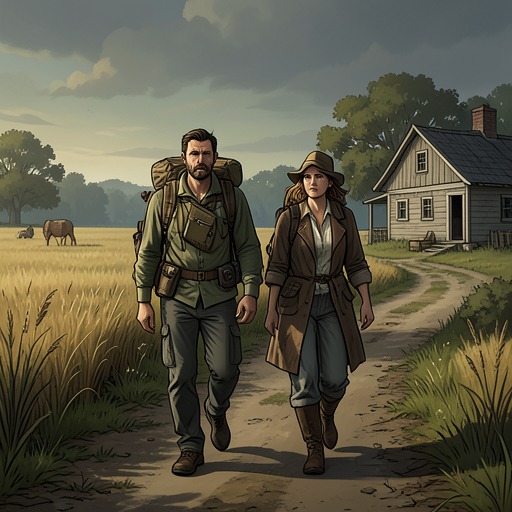
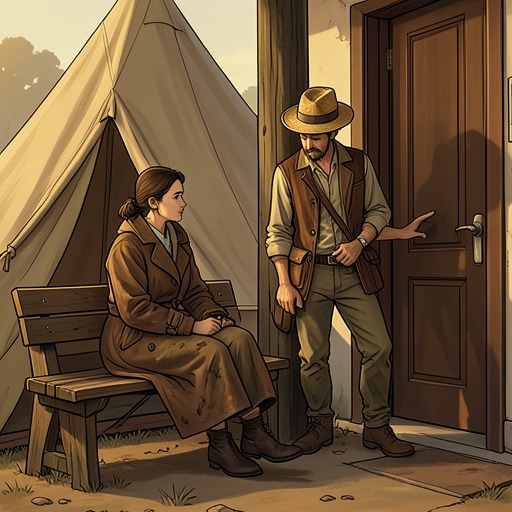
The plan took shape while the couple were living on Polly’s farm. Polly had offered them a roof without rent in return for help with the building and farm, and Moth had begun plasterboarding and plastering. Their arrangement provided shelter and work, but did not by itself establish a lasting life there. Ray acknowledged that being among familiar friends had been comforting, while also doubting that they could create a new life on the farm indefinitely.
A plan tested against illness
Moth had been thinking about the possibility for two months before he told Ray. She worried that he was already much worse than when they had set out, and asked whether he could manage the demands of study if his condition continued to deteriorate. Her concern exposed the central uncertainty in the proposal: university could offer a new direction, but it could not guarantee that his body or mind would allow him to follow it.
Moth answered with a possibility rather than a promise. He had been searching online and found a campus in Cornwall that was part of Plymouth University; he could take a degree there and train to teach somewhere else. Vacancies were still available, and he thought it was not too late to apply. He also drew on his experience of walking: forcing himself to keep moving had, he felt, improved him physically, and he wondered whether challenging his brain might help in a similar way. The comparison expressed his determination to try, not certainty that the same result would follow.
Applying and making the finances work
Moth made the application, took part in a Skype interview, and was accepted. Ray and Moth then applied for student finance. Their credit history did not prevent them from receiving the reliable, fixed income they hoped a loan would provide. They calculated that the two of them could live on one student loan until Ray found work, noting that they had managed on less before.
Acceptance made the idea practical, but did not settle the question of where they would live. They agreed to wait and see what happened with the packing shed before making a firm decision. Giving up the security of a roof in order to return voluntarily to homelessness seemed unnatural, even if student accommodation offered the prospect of a fresh start. The application therefore advanced alongside, rather than resolving, the couple’s immediate housing dilemma.
Significance and limits
The application marked a change in how Moth imagined contributing to their future. Instead of measuring what remained possible through physical labour, he proposed a course of study that could turn his accumulated environmental knowledge into something teachable. His decision also carried risk: he was in pain, Ray believed he was worsening, and the couple could not yet know whether the move would be sustainable.
The evidence records an application, an interview, acceptance, and an initial financial plan; it does not establish that Moth began the degree or completed teacher training. Its significance lies in that opening rather than in a confirmed career outcome. At a time when shelter, income, and health all remained unsettled, applying gave the couple a specific possibility to consider, without removing the uncertainty that had made the plan necessary.