Newquay
The Salt PathNewquay is a coastal town on the South West Coast Path where surf tourism and holiday crowds share space with rough sleeping and poverty. During Ray and Moth’s journey, the town first offers shelter from rain and a moment of connection with other people; it also exposes the gap between official counts of homelessness and the people living on its streets.
Setting and changing identity
After the wilderness, Newquay’s sprawling urban presence comes as a shock, yet its proximity to people is briefly welcome. The built-up stretch runs from Porth to The Gannel, among headlands and sandy beaches that catch some of the country’s best surfing waves. The town’s reputation grew with the surf culture of the 1960s, but that heyday has passed. A handful of surf shops remain as reminders of that history and as a possible source of renewal, while much of the town appears worn down.
Newquay’s tourist economy rests on an uneasy bargain. Stag and hen parties bring business to pubs and restaurants, particularly when winter trade is needed, but their noisy presence, fancy dress, discarded bottles and vomit-filled doorways put off local people, families and surfers. The visitors keep businesses going while making the town less inviting to other visitors: a catch-22 visible in the streets as well as in the town’s dependence on its seasonal trade.
Arrival and shelter
Ray and Moth reach Newquay after a break in their walk. They take a bus to Barnstaple and change there for Westward Ho!, feeling that the interruption has left them disconnected and slightly lost. The episode makes their movement different from walking the path: the bus carries them forward, but the ride does not restore the continuity or sense of direction they associate with travelling on foot.
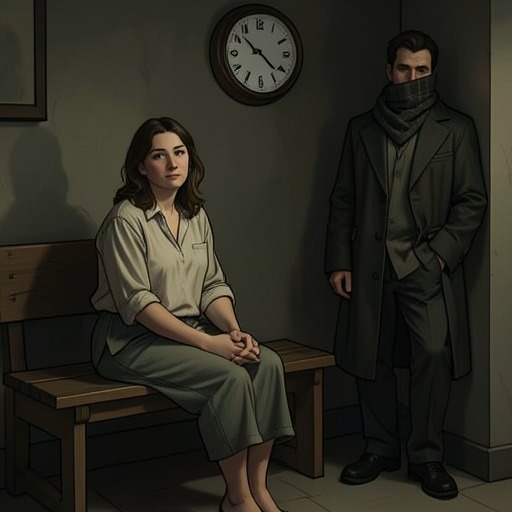
In Newquay, the rain drives them into shelter. After stretches of isolation, being among other people is comforting, though only briefly; Ray watches the town through the narrow opening of a tightly zipped waterproof hood as a westerly storm lashes it. The encounter holds both sides of the place in view: the crowded holiday town and the exposed conditions of those who have nowhere dry to go.
Rough sleeping and mutual aid
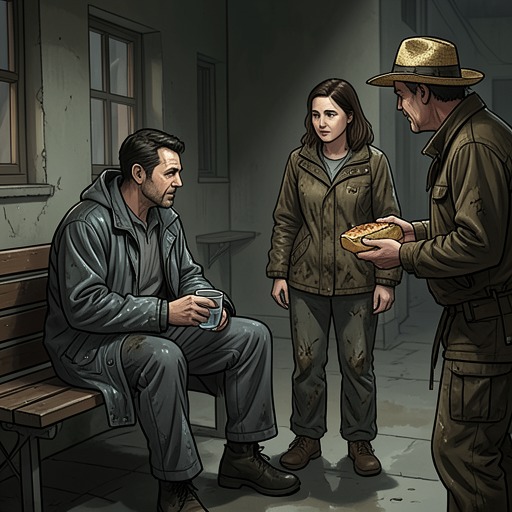
Beyond the holidaymakers, Ray sees rough sleepers lining the shopping areas in greater numbers than she had encountered since Glastonbury. The people curled in doorways are not presented as practiced beggars but as hardened street dwellers. A tall, broad former soldier asks Ray and Moth for money. When they explain that they have none and are homeless themselves, he accepts their account without challenging it and directs them to a soup kitchen. Moth gives him coins and his last chocolate bar, even though the couple have very little for themselves.
The directions lead them to St Petroc’s, a charity intended to help single homeless people who fall through gaps in social care. Ray does not ask what provision exists for couples in the same position; the charity redirects them to the soup kitchen. The scene reveals a mismatch between service categories and lived circumstances: Ray and Moth are homeless as a couple, while the charity’s stated remit is for single people. They nonetheless reach a meal, sharing the same place with people who might otherwise be counted only as isolated figures in the shopping streets.
The scale of homelessness is difficult to reconcile with official figures. Cornwall is described as having either the second- or fifth-highest rate of rough sleeping in the country outside London, while estimates put the number at about forty or sixty-five people. Ray imagines that, if either estimate were true, every rough sleeper in Cornwall might currently be dipping bread in tomato soup in a disused church in Newquay. A volunteer explains why the count can miss people: only those found in a given area during set hours qualify, and they must confirm that they are sleeping rough. Someone asleep, or appearing to be asleep, cannot be woken to ask. The count therefore depends not only on who lacks shelter but on who is visible, awake and able to be identified at the appointed moment.
Food, visibility and departure
When the rain clears, Ray and Moth sit on a bench on the steaming pavement and watch shoppers, holidaymakers, parents with children in new school uniforms, skaters, dog walkers and a homeless boy carrying a duvet. They belong to the same public scene as these passers-by, yet also experience its divisions; their homelessness makes them at once present among the town’s people and difficult to place within its ordinary categories. At a bakery by the post office, the last pasties are selling for twenty-five pence each. Moth buys as many as he can, gives one to each person sitting on rags in doorways and keeps the rest for the couple.
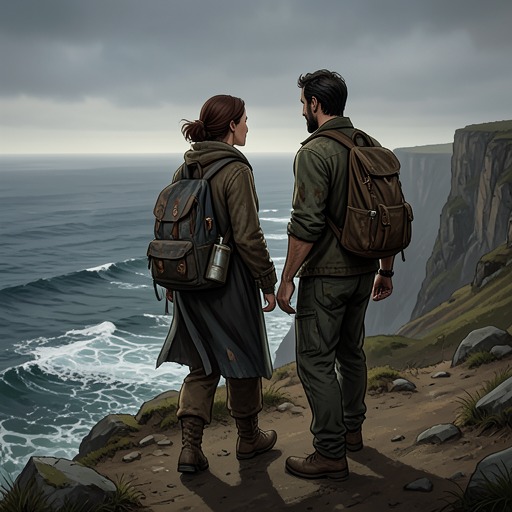
Their route then returns to the coast. Fistral Beach is loud with waves and surfers in wetsuits heading out to sea; nearby, young men in vans watch the water for a good set. Ray and Moth cross The Gannel estuary over its wooden footbridge just ahead of the tide and continue over the open headlands to camp. The following morning, Moth makes tea while Ray remains in the sleeping bag beneath a thermal blanket they had traded for Robinson Crusoe at a charity shop in Newquay. Sheep scatter when he opens the tent, and the pair leave Kelsey Head and its crowded wildlife behind as they press on. Newquay’s place in the journey is therefore not a destination but a revealing interval: a town where the comforts of shelter, food and human company coexist with the precariousness of life without a home.