Polly
The Salt PathPolly is Ray’s longtime friend, whose support helps Ray and Moth move from the coast into temporary shelter and work on her farm. Her assistance is generous but practical: she offers them a place to stay without rent in exchange for labor, then finds Ray paid work when the farm is under financial pressure. Through Polly, friendship becomes a material means of getting through homelessness, without making the insecurity disappear.
Friendship and Shelter
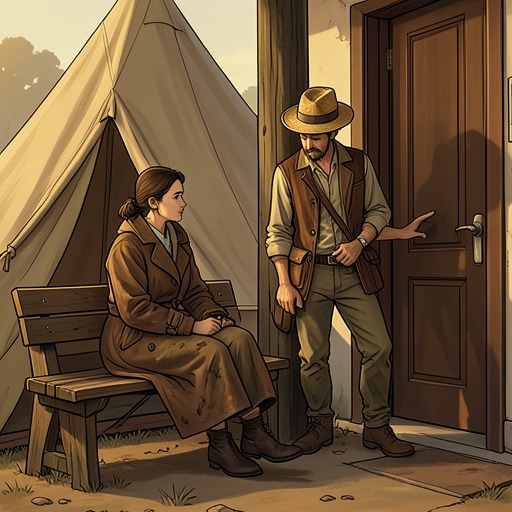
Ray and Polly had known each other through teenage crises and adult anxieties. When Polly learned that Ray and Moth could not stay on the south coast through the winter, she offered them the Abandoned meat-processing shed on her farm. It had a bathroom, but its walls were still lined with plastic, and the couple would have to finish the work on it themselves.
Polly did not ask for rent. Instead, she proposed that Moth help with the building and that the couple work on the farm. She was glad they had come and saw the arrangement as a way for each side to help the other. For Ray and Moth, the shed provided a roof; for Polly, their labor offered a contribution to the farm.
Work and Reciprocity
The shelter was far from settled or comfortable. Rain beat against the corrugated roof, and the couple put up their tent inside the shed. Moth, a trained master plasterer, worked to make the room habitable, but his illness made the familiar task increasingly difficult. Ray helped him out of bed and moved his limbs before he could begin. The work offered the prospect of greater security, even as his declining strength made the exchange harder to sustain.
Polly also found Ray work beyond the building repairs. In early May, she rushed into the shed to tell Ray that the shearing team needed a wrapper and ask whether she would do it. Ray accepted despite having no experience at that scale: the team included three competition-standard shearers, each able to shear a ewe in under four minutes, and the contract covered more than eight hundred ewes. The job lasted two and a half months. When the season ended, Ray received £1,500, a striking change from the day in Bude when the couple had only £11 to last the week. Polly’s offer had turned a friendship into a direct route to paid work and a measure of financial breathing space.
Financial Pressure and Departure
The farm’s finances remained precarious. Later, as Polly struggled to explain that she needed additional income, Ray told her about Moth’s university application. Ray also made clear that they would leave as soon as Gordon’s rent for the shed could help Polly. Their departure was not a simple resolution to homelessness: they packed with £200 between them, while Moth’s health was at its lowest point so far, and they faced more than two months without somewhere to go as they waited for his student loan.
Narrative Role
Polly’s support is concrete and reciprocal rather than a promise of permanent security. She provides a roof, asks for help with the building and farm, and connects Ray with seasonal work; the couple’s labor and eventual departure are tied to the farm’s need for income. Her role shows how a longstanding friendship can make immediate survival possible while leaving the larger problems of insecure housing, limited employment, and Moth’s illness unresolved.