Poole
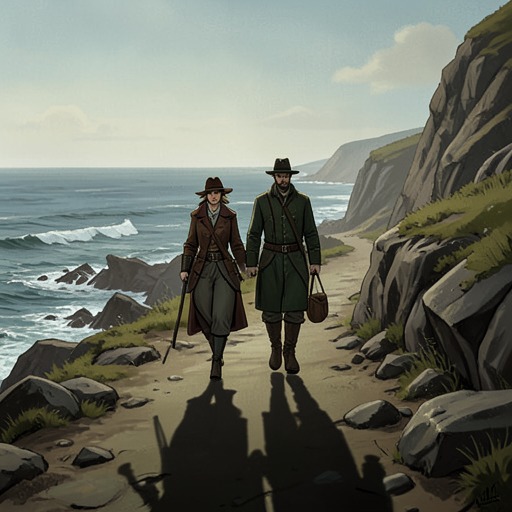
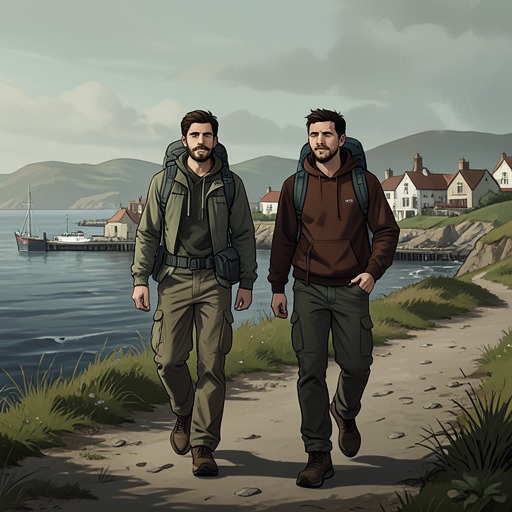
The Salt PathPoole occupies two positions in Ray and Moth’s journey along the South West Coast Path: it is first the distant end of a plan to walk the whole coastline, and later the place from which they set out to complete what they left unfinished. The shift gives the town a significance beyond its place on the route. Poole marks a goal that moves nearer as they walk, then a return point from which they choose to continue after a long interruption.
Place on the Route
At the outset, the proposed walk runs from Minehead through north Devon, Cornwall, and south Devon to Poole. Ray can imagine crossing hills, beaches, rivers, and moorland, but the undertaking still feels as remote as escaping the immediate crisis beneath the stairs. The plan follows losses that have unsettled their lives: they have lost their case, their house, and, as Ray puts it, themselves. Poole is therefore initially less a visited place than the far end of a route that might give the couple somewhere to go and a reason to keep moving.
That destination becomes a planning problem as well as a hope. Ray rereads Five Hundred Mile Walkies and considers walking the trail in reverse, from Poole to Minehead. The section from Minehead to Padstow seems hardest, while the later stretch from Plymouth to Poole appears easier; beginning at Poole might give Moth time to adjust before the more difficult stages. The plan depends on their circumstances, not on a desire to follow a prescribed direction. Yet the guidebooks Ray searches all describe the route from north to south, leaving her without the whole-trail guide she wants for a south-to-north walk.
A Destination Deferred
The proposed direction is not the one the couple can immediately take. In early August, after losing their home and staying temporarily with a friend, they stand in Taunton with their rucksacks and no fixed place to return to. They decide to travel to Minehead and begin there instead. Bus fares, food, and other expenses have left them with fifty pounds, while the prospect of weekly tax-credit payments depends on an address they can no longer use as a home. Against those pressures, the long walk offers a structure for the next day, even if its far endpoint remains uncertain.
At the start of the trail, Poole enters their conversations as a destination they will not promise to reach. When other walkers ask about their plans, Ray says they may carry on to Poole if they make it to Land’s End. Moth helps preserve a less revealing backstory, and the couple present the journey as something they can take as it comes. As the route continues, Ray repeats that they might go on to Poole. The distance seems impossibly long, but saying the name aloud makes it feel a little closer. The town becomes a practical marker of possibility: not a fixed guarantee, but a future the pair can approach one stretch at a time.
Movement, Interruption, and Choice
The journey’s progress is not continuous. After a lift and a bus ride to Barnstaple, Ray and Moth take another bus to Westward Ho!, breaking the trail on the way. Ray feels that travelling by bus is cheating and arrives disorientated, while Moth is irritable and wants a beer. The interruption reveals the tension between a journey imagined as walking every step and the compromises imposed by tiredness and circumstance. Poole remains ahead, but reaching it does not depend on an untouched, perfectly continuous route.
The walking itself changes what the destination means. Ray describes the trail as a daily rhythm shaped by pain, hunger, thirst, and the demands of each new stretch of ground. Repetition can soften grief without resolving it: the next step becomes a reason and a future, while each difficult climb offers a small victory. The movement toward Poole is thus not simply distance covered. It gives the couple a way to inhabit time while their housing and financial future remain unsettled.
A decisive choice comes after more than 250 miles, when Ray and Moth could take a bus away and return to the familiarity of Wales. Instead, they watch the bus leave and walk on. They are cold, hungry, wet, and tired, but Ray emphasizes their freedom to choose whether to continue or stop. That choice reframes the walk: continued movement is not proof that they have escaped hardship, but a form of control they can still exercise. The route toward Poole, first conceived as an endpoint, belongs to a journey they can actively choose to resume.
Poole as Starting Point and Measure of Completion
Later, Poole becomes the departure point for the couple’s return to the unfinished South West Coast Path. When asked where they have come from, Ray answers that they have walked from Poole in Dorset, with Devon between them and their destination. She explains that the previous year they walked from Minehead to Polruan; now they expect to finish the whole path within a day or two. They have covered 630 miles in total, though about forty miles remain to be made up on another occasion.
This account makes Poole both a real starting point and part of a divided chronology. The walk from Minehead to Polruan belongs to the previous year; the later stretch begins from Poole and carries their earlier effort toward completion. Their admission that they have missed sections refuses a neat image of an uninterrupted, flawless traverse. The route’s completion is substantial without being absolute: they expect to finish the whole path now, while acknowledging that some ground will have to be walked another time.
Poole’s narrative role lies in this changing relation to the route. It begins as a distant destination considered under financial pressure, grows nearer through repeated speech and daily walking, and later becomes the place from which the final approach starts. The town gives a long and uncertain journey a shape, but it does not remove uncertainty about what follows. By the time Ray and Moth are close to completing the path, the security of knowing where they will walk tomorrow is itself difficult to leave behind. Poole consequently signifies not only arrival or departure, but the work of making a future through movement when home and longer-term plans remain unsettled.