Ray and Moth's partnership
The Salt PathRay and Moth’s partnership is the book’s central bond: a life begun in youthful fascination and sustained through shared work, family, illness and homelessness. When the farm they rebuilt is lost and Moth faces a suspected diagnosis of corticobasal degeneration, their closeness becomes both a source of strength and a measure of what is at risk. The South West Coast Path does not resolve those losses, but their shared steps give them a way to keep choosing a life together.
Meeting and making a life
Ray first saw Moth in a sixth-form college canteen when she was eighteen. He was wearing a white collarless shirt and dipping a Mars bar into tea. She watched him cross the grounds in an old army trench coat and riding boots, then spent weeks watching him from a distance before they spoke. The attraction became a friendship and a partnership marked by intense conversation, laughter and physical closeness. Their life together took Ray into Moth’s eco-warrior world: they walked wind-scoured moors, attended Campaign for Nuclear Disarmament rallies and music festivals, and shared pizzas in the park. The narration contrasts their continuing passion with couples around them who seemed to settle into routine and later separate.
Their bond was also made through work. Ray met Moth at eighteen and, by fifty, had spent thirty-two years with him. Together they restored a ruined farm, repairing its walls and stones, growing vegetables and keeping hens, raising two children, and creating a barn where visitors could stay and help pay the bills. The farm was more than a home they occupied; it embodied years of common effort and a future they had built together. Its loss therefore threatened their shared history as well as their material security.
Loss, illness and interdependence
After losing the case, the house and, as Ray puts it, themselves, Ray and Moth hid beneath the stairs while bailiffs tried to enter and change the locks. In the packing box Ray found Five Hundred Mile Walkies, a book about walking the South West Coast Path. Her suggestion that they could walk was made before she had worked out the distance, cost or practicalities; she had not even told Moth that he was coming. When he asked whether they would be together, she answered that they would always be. They left the house hand in hand, facing the immediate loss as a pair rather than separately.
The diagnosis of a degenerative brain disease unsettles the future they had imagined. Ray describes their life as inseparable: not his life or hers, but a shared life, with an old plan to die together at ninety-five on a mountain after watching the sunrise. The doctor’s account of Moth’s possible decline and death in a hospital makes that imagined ending feel suddenly unavailable. In the hospital car park, they cling to one another in the van; Moth cries, while Ray cannot let herself begin to cry for fear the grief will overwhelm her. Their physical closeness cannot undo the diagnosis, but it expresses the unity they are trying to preserve against the prospect of separation.
Illness also changes the texture of their ordinary intimacy. Pregabalin, prescribed for Moth’s nerve pain, alters their relationship and creates a physical distance that Ray finds difficult, even as she still feels he is her closest friend. On the trail, she sees the familiar way he eats a Mars bar and finds that it can still lift her spirits. The gesture links the exhausted, homeless couple to the young people they were, without pretending that the years or the illness have left them unchanged.
Walking together through uncertainty
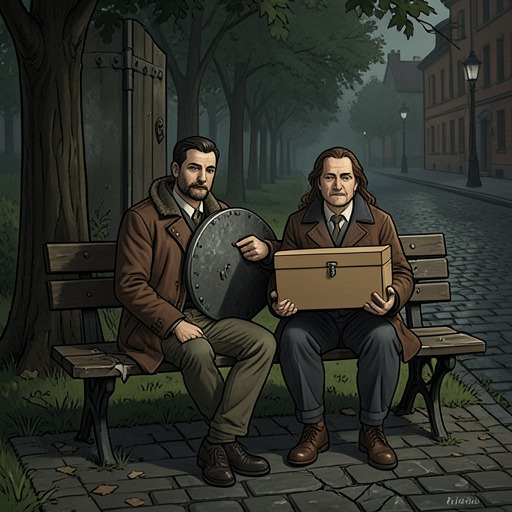
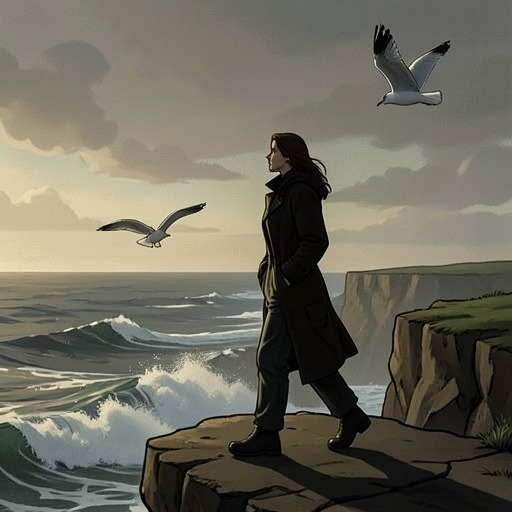
The walk begins at Minehead with both of them excited and afraid, homeless and conscious of Moth’s illness. Their bodies quickly meet the realities that the book they found under the stairs had not prepared them for: on the steep zigzag above Minehead, they stop on a bench to catch their breath and reread Paddy Dillon’s guidebook, whose description of the path as drifting uphill seems an understatement. Later, climbing and descending steep coastal ground, their legs, hips and shoulders hurt in the heat. Ray experiences the height and wind as exhilarating freedom, while Moth walks with a lean away from the sea. Their shared route does not mean they experience the terrain or the illness identically; it means they keep moving beside one another through those different bodily realities.
Ray had hoped the long walk would give them time to think through the loss of their home and their future with corticobasal degeneration. Instead, they often talk about food, heat and rain, while the repetitive act of walking quiets thought. She worries that the daily physical strain is worsening Moth’s condition and feels guilty that the journey might be accelerating it, especially in light of the consultant’s warning not to tire himself or walk too far. At the same time, the path gives them a purpose when they have nowhere settled to go. Each climb becomes a small achievement, and each day completed a reason to face the next.
Their changing account of why they are walking shows how their circumstances affect them as a couple. When people recoil after hearing that they are homeless because they lost their home and have no money, Ray and Moth begin saying instead that they sold it to take a midlife adventure. The more often they repeat the more acceptable story, the less sharply they feel the grief. Walking becomes a kind of meditation: salt wind, dust and light fill the space where a plan has not yet formed. Ray wonders whether this practice of evasion also shapes her hope that the doctor may be wrong. The journey sustains them, but it does not instantly make them able to face every fear.
Help, work and the meaning of home
Their life on the route depends partly on accepting other people’s offers. When Grant invites them to camp in the orchard of the farmhouse he rents, they accept a lift, a place for their tent beneath apple trees and a meal of lasagne and beer. The hospitality offers immediate relief to two tired walkers, but it also places their precarious circumstances in a social exchange: they are guests whose story attracts questions. Later, Ray and Moth stay at Polly’s farm, where their old friendship makes a practical arrangement possible. Polly does not ask for rent; in return, Moth is to help finish a building by putting up and plastering plasterboard. Their assistance to each other offers shelter and useful work, though it does not restore the sense of belonging they had at their own farm. Ray is grateful for a roof but feels hollow and alone among friends, conscious that a guest may be welcome for a time because of what the guest can do.
The loss of the farm reaches back beyond the final eviction. Ray recalls that she and Moth had already poured years of work into an earlier home, a small Victorian terrace, before selling it and investing the money in their dream of a place with land. They reroofed barns and dug drainage trenches while other families went on holiday. Their shared life had been organized around making a home through labour and ambition; when it vanished, the past itself seemed drained of value. Yet Ray’s sense of home begins to change. On the path she discovers that the strip of earth beneath their feet can provide a form of belonging that does not depend on owning land. As she becomes less consumed by anger and the effort to reverse what cannot be changed, she describes herself as part of the wind, rain and sea, rather than as someone whose identity has disappeared with the farm.
Choosing a future together
When Ray and Moth return to the coast after months inland, the familiar path brings relief. They camp on Ballard Down, looking across the bay at the lights of Swanage. Moth, in pain after taking four painkillers, asks whether returning to the trail was the right decision. Ray answers by setting out a practical future they might build: they can pay for a room with money they earn, Moth can retrain, and she can find work or retrain as well. What matters to her is that they might have somewhere of their own rather than living on other people’s goodwill. She tells him that coming back to the path is the most right thing they have ever done. Their new sleeping bags, bought at the cost of fifty pounds and space in their packs, are a small but concrete investment in continuing together; they decide warmth matters more than plates or a spare torch.
That renewed direction does not erase their vulnerability, but it marks a change in how they approach it. Their shared future is no longer the old plan of a particular home and a distant, imagined death together on a mountain. It is a set of immediate choices about work, training, shelter and the next stretch of walking. Near the end of the supplied narrative, Anna offers them the chance to rent her flat in Polruan after her tenants leave, noting that the coastal path passes its front door. The offer is not yet a settled home, but it makes a possible future tangible: security might come without requiring them to give up the route that has helped them recover a sense of direction. Across the partnership’s crises, Ray and Moth’s defining pattern is not that they can prevent separation, illness or loss, but that they keep making their next decision together.