Ray and Polly's friendship
The Salt PathRay and Polly's friendship is tested and partly rebuilt when Polly gives Ray and Moth a place to live on her farm after they lose their home. Their arrangement offers shelter and the possibility of stability, but it is not a return to their earlier friendship: Ray is also Polly's rent-free tenant and unpaid worker, and the difference between their circumstances gives Polly control. The relationship therefore holds two truths at once—the real value of longstanding affection and the strain of receiving help from a friend who possesses what Ray has lost.
A friendship renewed through practical help
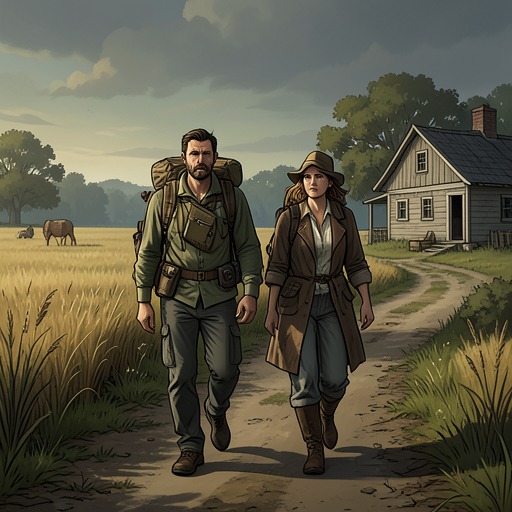
Ray and Polly had been friends through teenage crises and adult anxieties. When Ray and Moth came to live in a disused meat-processing shed on Polly's farm, Polly welcomed them and did not ask for rent. Instead, she proposed an exchange: Moth could begin by fitting and plastering the building, while the couple helped with the farm. The arrangement was presented as something that could benefit both sides, giving Ray and Moth a roof while offering Polly help with the building and farm work.
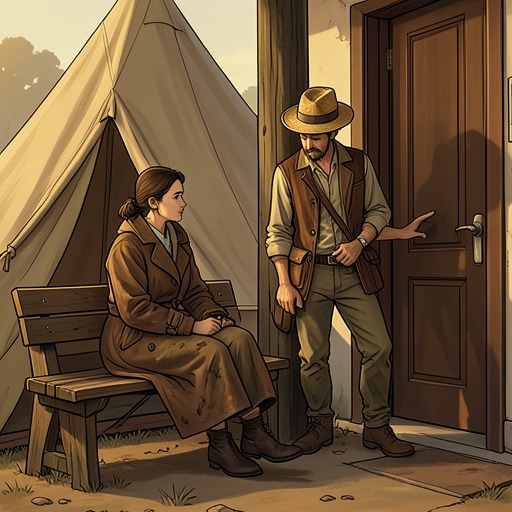
The shelter itself was far from a ready-made home. Rain beat against the corrugated roof; the couple put their tent in the middle of the shed and huddled in its familiar enclosure. The room still felt like a processing space, with peeling plastic wall covering, moss at the windows, exposed insulation, and a wood burner that had melted the plastic nearby. Even so, it was a roof, and Ray was grateful for it. That contrast frames the friendship’s immediate stakes: Polly’s offer did not erase the couple’s displacement, but it gave them a place from which they could try to recover.
Rebuilding, and the changed balance between them
As the work continued, Ray and Polly recovered some of the closeness they had shared when they were young. Ray describes the friendship as being rebuilt through conversation and time together, while also insisting that it could never be quite the same. The help came with a changed social position. Ray worked on the farm and the shed without wages, lived there without paying rent, and depended on Polly’s willingness to let them stay. What had begun as a practical arrangement became a relationship in which affection and dependence were inseparable.
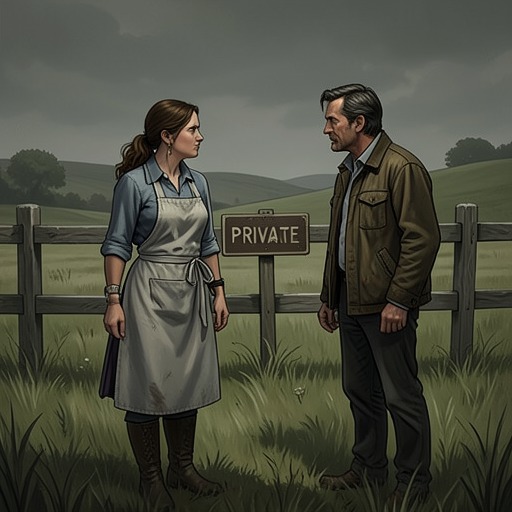
Ray makes the imbalance explicit: Polly was at once friend, landlady, and employer, while Ray was tenant and worker. Ray was grateful and obedient, and conscious that Polly held authority over the arrangement. Polly also possessed a life that represented what Ray had lost. This awareness complicates any simple account of generosity. Polly’s offer mattered, but it could not make their circumstances equal; being helped meant living within a structure in which one friend controlled the home and the work available to the other.
The farm as home and workplace
The farm’s daily routine deepened that tension. Ray joined the shearing team, moving between small family farms and large industrial units, and worked through weeks of warm, dry early summer, with wet days as the main breaks. At the same time, the shed was made more habitable: the Rayburn was plumbed in, the decorating finished, and blinds hung. These concrete improvements suggested the possibility of a settled base, even as Ray’s labor remained unpaid and her place there depended on the relationship with Polly.
Their friendship nevertheless had moments that were not defined only by work or obligation. On rare occasions Polly invited Ray to the farmhouse, where they sat together in the garden on the hillside and watched the stars. The Plough in the north held its place while everything around it changed. The image joins continuity to upheaval: an old friendship could still offer companionship and a shared view of the night, but neither that closeness nor the improvements to the shed could restore the life Ray had lost or remove the unequal roles they now occupied.
Polly expressed a willingness to extend the arrangement indefinitely, telling Ray, ‘The shed’s looking great, better than I hoped. Stay as long as you like, stay forever if you want.’ Ray registered the possibility of a home, a place to be and a platform from which to rebuild, but also questioned whether it was real and whether it could work. The offer held out security; the question marks show that security had not yet become a certainty.
Disclosure and departure
The arrangement reached a turning point when Polly explained that the farm needed extra income and its finances were tight. Ray understood the difficulty and recognized that Polly was struggling to say what was on her mind. She chose to disclose Moth’s university application, reasoning that if their lives were to move forward, they needed to act. Ray told Polly, ‘Gordon said you’d showed him around the shed, so if his rent will help, we’ll go as soon as we can.’ The exchange shows Ray responding not with a claim to stay, but with a willingness to leave if rent from Gordon would help Polly.
Ray and Moth then packed their belongings, taxed and insured the van, deposited enough for a rent deposit and a month’s rent, and returned the keys. They could not immediately secure a rental home because they had to wait for Moth’s student loan, leaving them with more than two months without a place to go and only two hundred pounds. Moth’s health was at its lowest point so far. Their departure therefore reopened the insecurity that Polly’s farm had temporarily interrupted, even though Ray describes feeling the wind in her hair as they drove away.
The friendship does not end in a quarrel or a simple rejection of Polly’s help. Its significance lies in the coexistence of care and constraint: Polly gave the couple shelter and a chance to contribute, while Ray’s account records how dependence altered the old bond. Their return to homelessness followed a period of renewed friendship, practical cooperation, and real but uncertain hope. Leaving the farm was both a loss of shelter and a decision to move toward a different future.