Ray and Rowan’s mother-daughter relationship
The Salt PathRay and Rowan’s mother-daughter relationship changes under the combined pressure of losing the family home and facing Moth’s illness. Ray wants to remain the protective parent who can make everything all right, but life on the road exposes the limits of that role: Rowan is an adult with decisions and risks of her own, while Ray must learn to stay connected without being able to control what happens to her daughter.
A mother’s old role under pressure
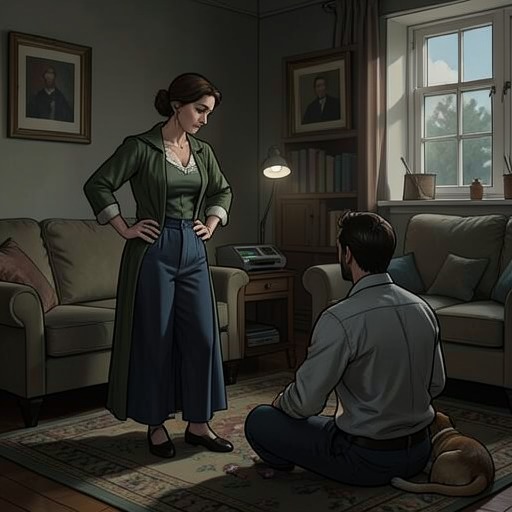
After Ray and Moth secured a lightweight tent for thirty-eight pounds, Ray called Rowan, excited to share a small piece of good news and to ease the gloom that had hung over the previous two weeks. But the call also brought home what the family’s losses meant. Although Rowan and the other children had grown up and left, the home they had lost had belonged to them too; Moth’s illness was as difficult for them to accept as it was for Ray. Ray felt that the balance in her relationships with her children was shifting, and that there were things she could no longer protect them from.
Ray understands her protectiveness as central to her identity. She had wanted to keep her children’s lives in a perfect bubble, and she is not ready to relinquish that impulse. She recognizes, however, that they are surprisingly well-adjusted adults and that she is the one still trying to hold the world at bay. The prospect of no longer being their protecting hand leaves her asking what remains of the self she recognizes. The tent, a modest and immediate sign of a possible way forward, cannot resolve that deeper uncertainty.
Rowan’s worry and practical care
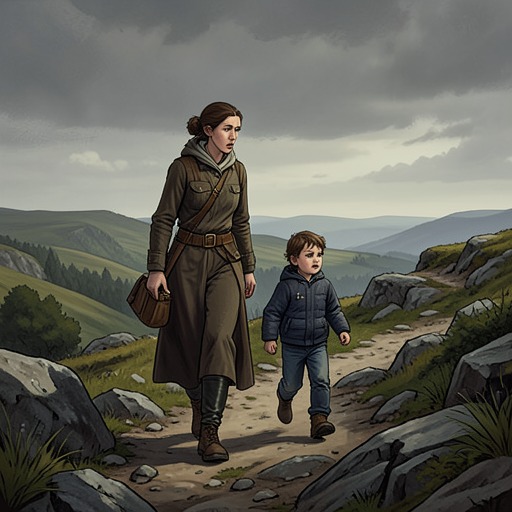
Rowan’s response makes the risks of Ray and Moth’s plan unmistakable. She questions whether Moth might fall from a cliff, how the couple will eat without money, where they will camp, and what will happen if Moth becomes unable to move on a cliff path. She also asks whether Ray has told Tom. Her objections are not abstract: they connect the proposed walk along the South West Coast Path to Moth’s illness, their lack of money, and the price of campsites.
Ray acknowledges that the plan is crazy but says they cannot sit waiting for a council house and need to do this; as long as she and Moth remain together, she believes they will be all right. The silence on the crackling phone line leaves the reassurance suspended rather than resolving Rowan’s concerns. Rowan then makes a concrete offer of care: she will send Ray a new mobile with a battery that lasts more than ten minutes, asks Ray to call every day and answer her calls, and tells her to inform Tom. The exchange reverses their accustomed positions. Ray had called wanting to be the mother who brought comfort; Rowan, in turn, tries to make sure her mother can be reached.
Distance, helplessness, and a changed bond
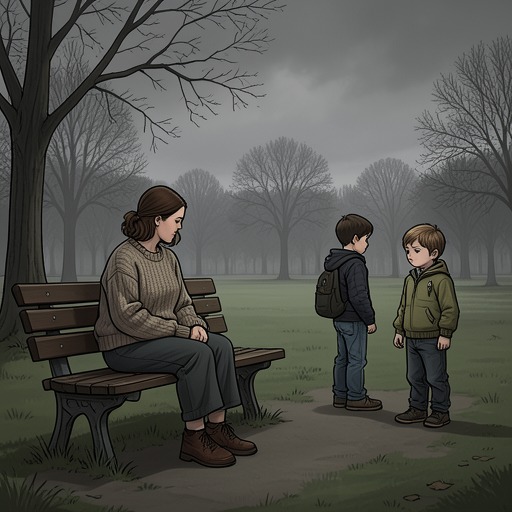
Later, during a storm in Rocky Valley, Ray takes a call from Rowan, who is travelling to a late-summer job in Croatia and is stranded in Venice, afraid she has missed her connecting bus. The situation recalls the parent Ray used to be: in the past, she and Moth would have sent money to put Rowan on a flight and make her safe. Now Ray experiences herself as a helpless friend, sheltering in a rock crevice and unable to intervene materially while her daughter panics far away.
The call ends when Rowan discovers that the bus is there after all; it is late, not missed. She tells Ray she loves her and urges her to be safe. The immediate danger passes, but Ray’s response reveals how much the altered relationship hurts: she curls up on the rock ledge and sobs, while Moth holds her and strokes her hair until she can breathe again. Rowan’s independence is real, but Ray’s grief is real too. The scene does not present the change as a clean transfer of responsibility; it shows a mother still feeling responsible, even when she cannot fix the problem.
Independence and continuing connection
After two nights at a campsite, Ray and Moth leave Tintagel and pause by St Materiana’s church to drink water. Rowan calls again with news that she has been offered a job with a public-relations company in London and must start straight away. Ray wonders how Rowan will get back, only to learn that she is already on the train and has worked it out for herself. As with the delayed bus in Venice, the crucial development is not that Rowan never needs support, but that she can manage the immediate problem without Ray arranging the solution.
Across these calls, practical gestures and ordinary declarations of affection keep the relationship active even as its old structure loosens. Ray still wants to protect Rowan; Rowan still checks on Ray, insists on regular contact, and tells her she loves her. But Rowan’s worry does not prevent her from acting independently, and Ray’s inability to rescue her does not end their intimacy. Their bond is therefore shaped by a difficult adjustment: Ray must recognize her adult daughter’s competence while accepting that love can persist without the power to keep danger or uncertainty away.