Raynor and Moth’s friendship with Dave and Julie
The Salt PathRay and Moth’s friendship with Dave and Julie takes shape on the South West Coast Path through shared miles, mutual attention, and practical kindness. Dave and Julie are not simply fellow walkers: their company becomes a welcome distraction from the pressures of Ray and Moth’s lives, and their eventual parting registers as a real loss. A broken tent pole gives the friendship a concrete form, while the final goodbye makes clear that the connection will outlast the walk.
A companionship formed on the trail
Dave and Julie followed Ray and Moth’s route after leaving Tyneham Cap, usually staying about a mile behind. They did not follow every stretch identically: they took a different way into Lulworth Cove, but remained close enough to meet again along the path. The small distance between the couples captures the character of the connection—companionship without requiring them to travel in lockstep.
Their walking brought them together amid the ordinary physical demands of the journey. At one meeting, Dave joked that he could give Ray CPR if she passed out, then protested that he did not want to grow old with ailments such as angina, diabetes, and arthritis. Julie answered his hope that continued walking would keep them well with a brief, qualified reply. The exchange mixes concern with humor rather than turning the conversation into a solemn discussion of illness. Moth gave Ray a look asking her not to respond; to the others, he appeared to be laughing and drinking tea. The moment shows how the walkers’ banter could sit alongside a private understanding between Ray and Moth.
Shared strain and practical help
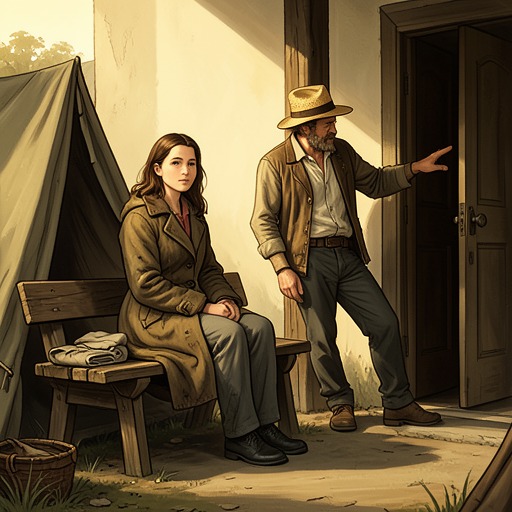
The companionship continued into a later stretch of the journey. Ray and Moth camped near West Bexington, where mackerel fishermen worked along the shingle shore at night and left at first light with buckets of fish. As Ray and Moth took down their tent the next morning, a pole split where its plastic sleeve met the alloy ferrule. The damage threatened an essential piece of their shelter, not merely a piece of equipment they could readily discard.
Dave responded with tools from his large pack: pliers, a small saw, and duct tape. Together they cut away the broken plastic, bound the split, and carried on. The repair was improvised and practical, but its importance lay in the immediate circumstances: the tent was their shelter on a journey where they depended on carrying what they needed. Later, below Thorncombe Beacon, Ray and Moth found that the ends of almost all the plastic tubes were beginning to split. They bound the poles with tape and carefully forced them back through the narrow sleeves, aware that a high wind or a few more days could leave the tent unusable. Dave’s help had therefore addressed one break in a wider, worsening problem with their shelter.
The meaning of parting
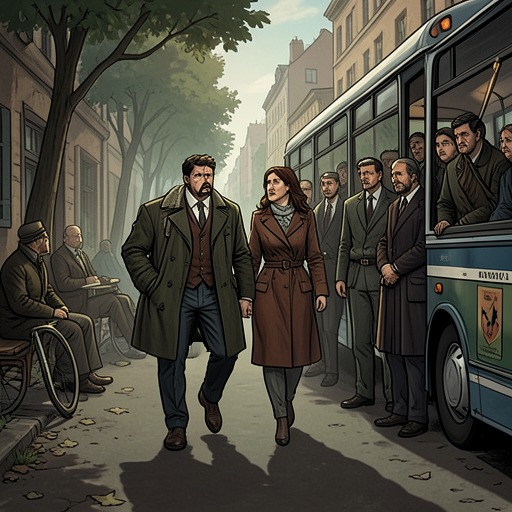
Ray and Moth left Dave and Julie in West Bay as the friends prepared to catch a bus home. The goodbye felt final: Ray and Moth knew this time they would not meet again on the path. Ray describes their company as a relief and a happy distraction from the lives she and Moth were carrying with them. Once they had hugged goodbye, the sunlight seemed dimmer. Ray and Moth bought a roll of duct tape and continued walking, looking back for miles in the expectation that Dave and Julie might reappear. That repeated backward glance gives the separation its force: the walkers had become part of one another’s immediate landscape, and the path felt different when the other couple was no longer behind them.
Their parting also belongs to the uncertain, temporary nature of life on the trail. Ray and Moth had described the path as a way to retain some control over their lives, even while they faced difficult choices about shelter, money, and what would come after walking. Dave and Julie’s company did not remove those pressures; its value was that, for a while, the journey was shared and attention could turn outward to other people, conversation, and the work of getting along the coast.
A friendship beyond the walk
The book’s acknowledgments return to Dave and Julie after the account of the journey, thanking them for their continuing friendship. That later recognition qualifies the apparent finality of the West Bay farewell: it was the last time the couples walked together on the trail, not the end of their relationship. The friendship’s narrative arc is therefore shaped by both movement and continuity. It begins as companionship between walkers keeping near one another, becomes visible in humor and hands-on help, and survives the moment when their routes separate.