St Ives
The Salt PathSt Ives is a north-facing town surrounded on three sides by the Atlantic, where reflected light gives its painted houses a shimmering quality. The book presents it as a place shaped by successive changes: an artistic community grew around its distinctive light, tourism expanded as fishing declined, and the town’s beauty remained visible even as its working life changed. For Ray and Moth, that beauty is encountered from the path, under the pressure of limited money and the need to keep moving.
Light, art, and the changing town
Even at dusk, St Ives seems luminous. Its high level of ultraviolet light, reflected from the sea, lends the painted houses an almost unreal appearance. The town’s artistic history began with Bernard Leach, who established a pottery there in 1920; Barbara Hepworth and her large sculptures followed, and artists arrived from around the world. A small fishing village became a bohemian colony, then a tourist destination, with Tate St Ives and ever more visitors. As pilchards disappeared, the local economy changed: fishermen took visitors on boat trips rather than trawling, and galleries came to outnumber artists. The crowded resort does not erase the light, which still glows across the narrow streets and terraces of fishermen’s cottages.
Arrival without a place to stay
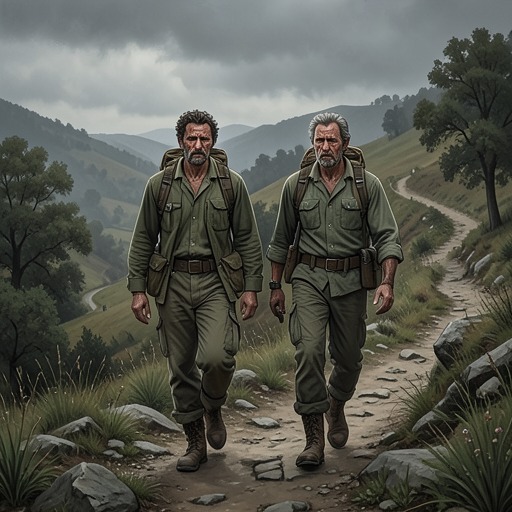
Ray and Moth arrive by bus an hour before dark, on the wrong side of town from an open headland. The speed of the journey unsettles the sense of distance they have learned on foot: road miles pass as time, while walking makes each stretch of ground physically known. In St Ives, they would like to stop for a day and look around, but they have nowhere to camp. The town’s artistic attractions are therefore not simply available for leisurely exploration; their access is limited by the practical demands of life without a home.
Coins, food, and the poets
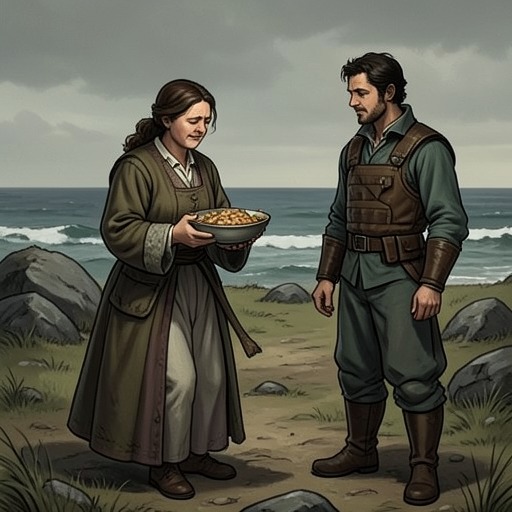
At the quiet end of the harbour, Ray and Moth empty a hat and count the coins repeatedly: twenty-eight pounds and three pence. Their exuberant reaction turns the sum into a moment of relief. They spend money on bread, fruit, green vegetables, woolly jumpers from a charity shop, and chips, replacing some of the noodles that had dominated their meals. The coins offer a short-lived abundance, but not enough to make staying in St Ives possible.
A poster in a gallery window announces that Simon Armitage is walking from Minehead to Land’s End and will give a free reading in St Ives on Sunday. The event is already fully booked. Its appearance gives the town another literary dimension, while also placing the walkers’ own experience beside a poet’s journey along the same coast. They learn who he is, but the notice cannot alter their immediate constraint: with no campsite, they must leave rather than remain for the reading.
A place seen in passing
St Ives gathers several of the book’s recurring tensions into one brief encounter. It is a place of intense visual appeal and cultural history, yet the couple experience it through the limits of their budget and their need for somewhere to sleep. The harbour’s counted coins, the unavailable reading, and the missed chance to stay for a day make the town both a temporary point of connection and another stage in a journey that cannot pause for tourism. Its enduring light survives successive changes in the town; Ray and Moth, by contrast, have to carry their brief encounter onward on foot.